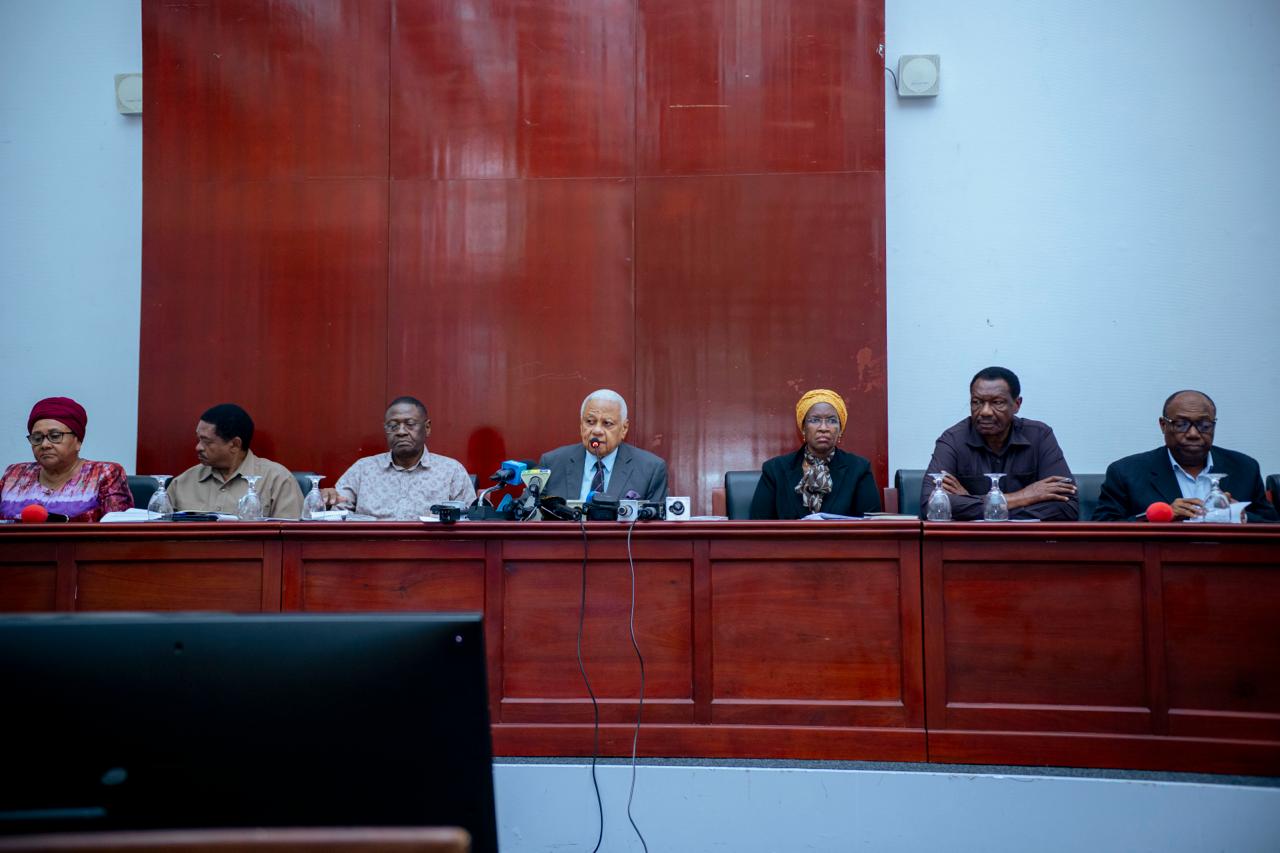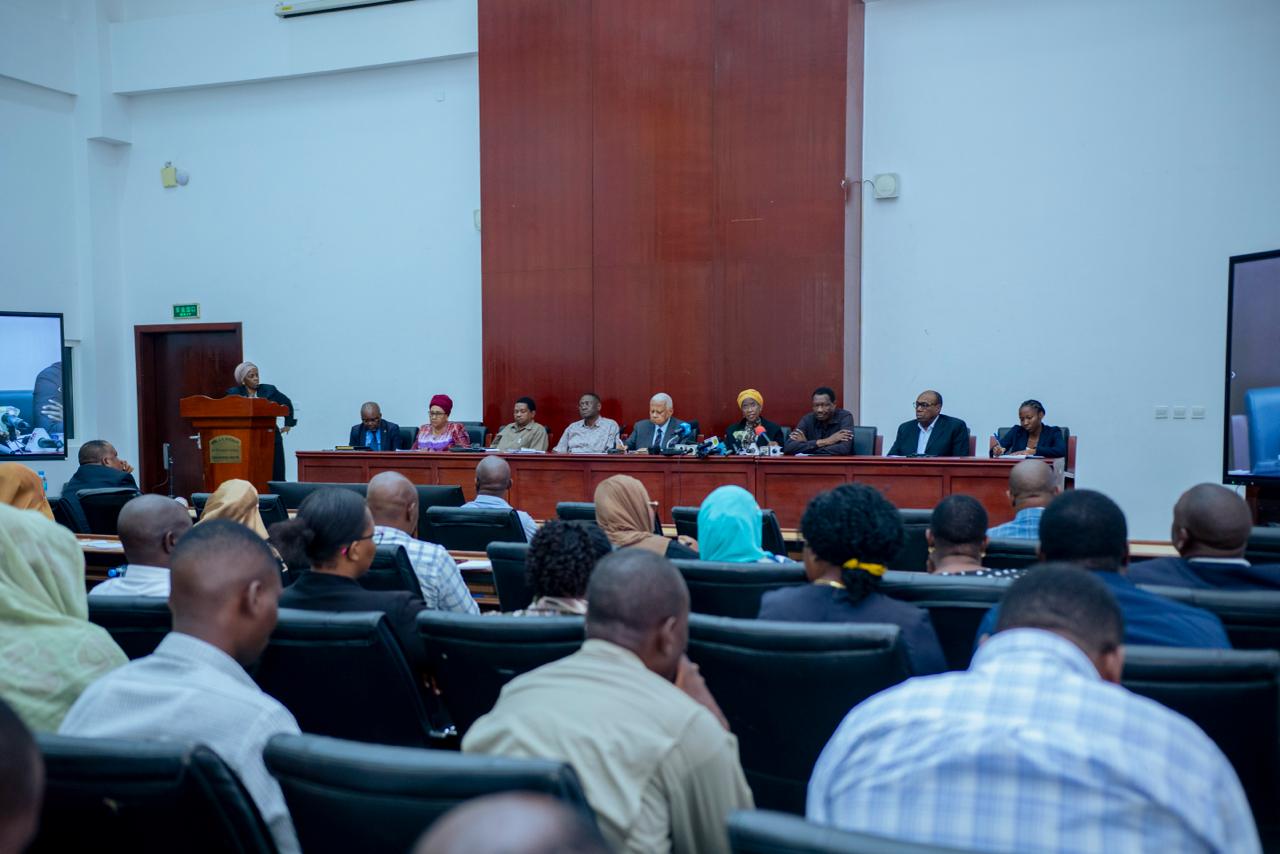
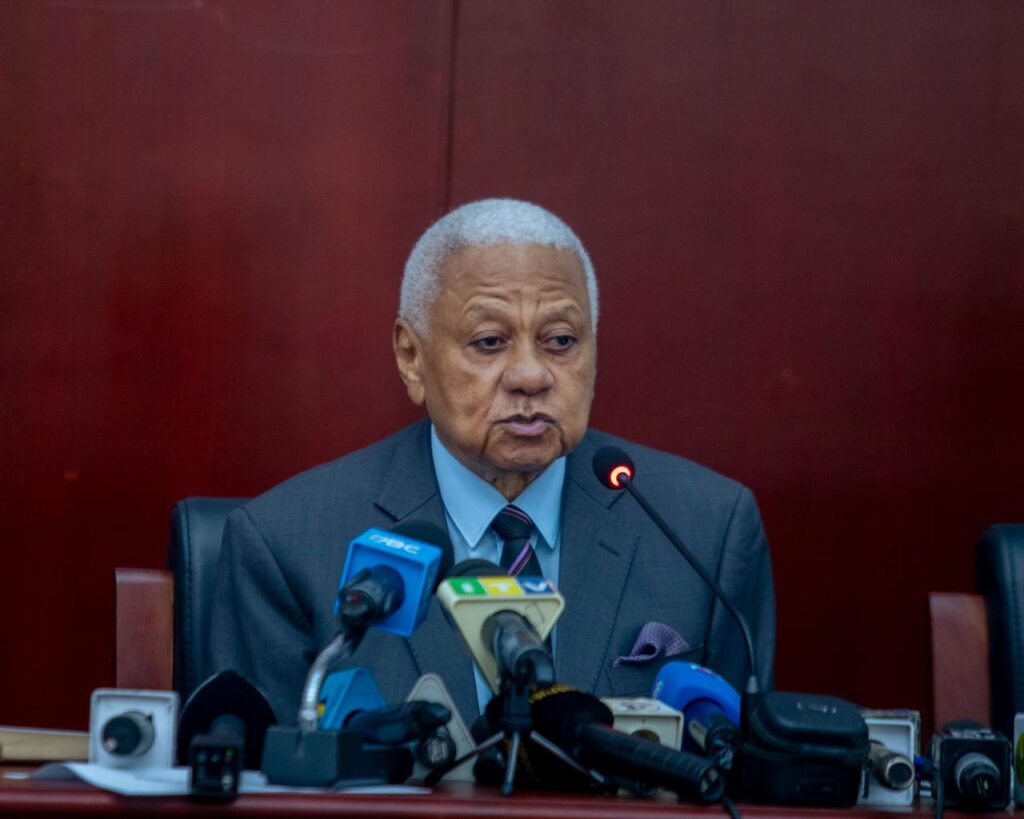
Addressing editors and journalists in Dar es Salaam on Tuesday, members of the commission outlined the scope of the inquiry, describing it as one of the most extensive public fact-finding exercises undertaken in the country’s recent history.
The commission’s chairperson, Retired Chief Justice, Mohamed Othman Chande, said the panel’s central responsibility was to establish facts surrounding the violence that erupted during and after the October 29, 2025 election.
“The commission’s core responsibility was to establish the facts based on the evidence submitted before it,” Chande said, adding that the inquiry was guided by clear terms of reference that required investigators to identify the causes of the violence, the individuals and groups involved, and the social, economic and human impact of the unrest.
He said the commission was also tasked with recommending measures to prevent similar incidents in the future, an objective that has become increasingly important as Tanzania seeks to strengthen democratic stability and national cohesion.
According to the commission, the inquiry relied heavily on direct public engagement and testimony collection. .
Justice Othman (retired) revealed that investigators received 953 sworn statements from members of the public and an additional 26 statements from police officers.
“We had not expected to receive evidence from the police. The bulk of the evidence came from victims and others affected by the violence,” he said.
In what commissioners described as an unprecedented effort, the inquiry conducted face-to-face engagements with 6,205 people over a period of 153 days.
Justice Othman said the scale of participation reflected both the seriousness of the events under investigation and the willingness of Tanzanians to contribute to the search for truth and accountability.
“It is uncommon for any commission globally to engage such a large number of people within 153 days,” he said, noting that commissioners interviewed an average of 40 witnesses each day.
Commission member Said Mwema, retired Inspector General of Police, said evidence gathered by the inquiry pointed to a highly coordinated operation behind the violence.
According to Mwema, testimonies, photographs and other material presented before the commission showed that more than 16 tactics were used to organise and sustain the unrest.
“The evidence clearly showed that more than 16 tactics were used to ensure these acts succeeded,” he said.
Mwema added that incidents linked to the violence were recorded in 202 locations across the country, including areas such as Magomeni, Kimara, Kinyerezi and Ubungo.
He further disclosed that some witnesses admitted they had been promised money to participate in the unrest. The testimonies came from a wide cross-section of society, including motorcycle taxi riders, food vendors and members of community groups.
“No one on the commission simply imagined these conclusions. We heard directly from witnesses who themselves admitted what happened,” Mwema said.
Despite the commission’s findings and its efforts to engage widely with the public, some members said they had faced backlash after the report was submitted to President Samia Suluhu Hassan.
Commission member and former Chief Justice Prof Ibrahim Juma said commissioners received more than 300 abusive messages following the publication of the report.
He warned that such reactions reflected a worrying trend of intolerance toward differing opinions.
“There are people who do not want the findings we collected through a methodology of listening to people to be shared with Tanzanians,” Prof Juma said.
He cautioned against attempts to silence alternative viewpoints, saying healthy public discourse depended on the ability of people to express differing perspectives without intimidation.
At the same time, Justice Othman stressed that accountability for the violence should be pursued fairly and in accordance with the law.
“We all agree that there must be accountability,” he said. “But accountability must be fair.”
He said senior national leaders consulted by the commission advised that only those proven responsible should face legal action, while innocent individuals should not be turned into scapegoats.
The commission’s report has since sparked national debate on justice, reconciliation and democratic governance, with many observers viewing the inquiry as a significant step toward addressing the causes of election-related violence while promoting long-term national stability.
Notes to Editors
– The commission positions itself as methodologically rigorous, but findings—especially around “coordinated tactics”—may require independent corroboration.
– Claims of financial incentives for participants in violence are sensitive; avoid overgeneralization without naming verified actors.
– The absence of extensive police testimony (only 26 statements) may raise questions about institutional transparency—worth flagging analytically.
Media Contact:
Information Services Department and Office of The Chief Government Spokesman
E-mail: maelezotv@gmail.com
Phone: +255 754 750 765, +255 754 698 856, +255 759 714, +255 713 381 904
Availability: EAT, UTC +3