
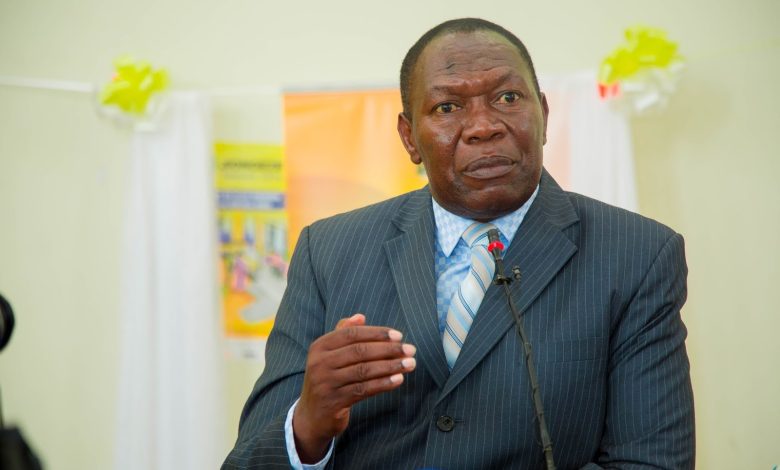
Former cabinet minister and ex-Regional Commissioner, Aggrey Mwanri said peace and unity are indispensable pillars underpinning economic progress, institutional strength and social wellbeing.
“Without stability, no country can meaningfully move forward, regardless of how strong its policies or resources may be,” he said.
Mwanri linked Tanzania’s present political environment to its historical roots, highlighting the role of founding leaders Julius Nyerere and Abeid Karume in fostering national unity after independence.
He noted that during the colonial period, when Tanganyika and Zanzibar were administered under international arrangements, unity emerged from a shared resistance to external rule. That “unity of struggle”, he said, later evolved into a broader nation-building effort.
The merger of the Tanganyika African National Union (TANU) and the Afro-Shirazi Party (ASP) to form Chama Cha Mapinduzi (CCM) marked a significant step in consolidating political stability and national cohesion.
Mwanri described the post-independence phase as a transition from “unity of opposition” to “unity of nationhood”, where citizens are bound by shared development goals rather than external pressures.
While differences of opinion are inevitable, he said, national unity depends on managing them constructively while keeping the broader national interest at the centre.
Tanzania’s governance framework, anchored in the Constitution of Tanzania 1977, provides institutional structures such as Parliament and the judiciary that support accountability and representation.
Mwanri also highlighted elections as a key democratic mechanism enabling citizens to influence leadership and policy direction, describing political competition as a healthy and necessary process.
He pointed to recent efforts to strengthen political dialogue under President Samia Suluhu Hassan, including engagement with opposition leaders following the October 2025 election period, as a sign of growing political maturity.
“When leaders come together after elections, it demonstrates maturity and a shared commitment to the country,” he said.
Mwanri added that Tanzania’s stability reflects sustained efforts by leaders, institutions and citizens, but cautioned that it must be continually nurtured through dialogue, participation and mutual respect.
Notes to Editors
– The story centres on commentary by former cabinet minister and Regional Commissioner Aggrey Mwanri on the role of political stability in Tanzania’s development trajectory.
– Tanzania’s founding leaders, Julius Nyerere and Abeid Karume, are widely credited with establishing a foundation of national unity following independence.
– The merger of TANU and ASP to form Chama Cha Mapinduzi (CCM) was a pivotal moment in consolidating political cohesion and long-term governance continuity.Media Contact:
Information Services Department and Office of The Chief Government Spokesman
E-mail: maelezotv@gmail.com
Phone: +255 754 750 765, +255 754 698 856, +255 759 714, +255 713 381 904
Availability: EAT, UTC +3