
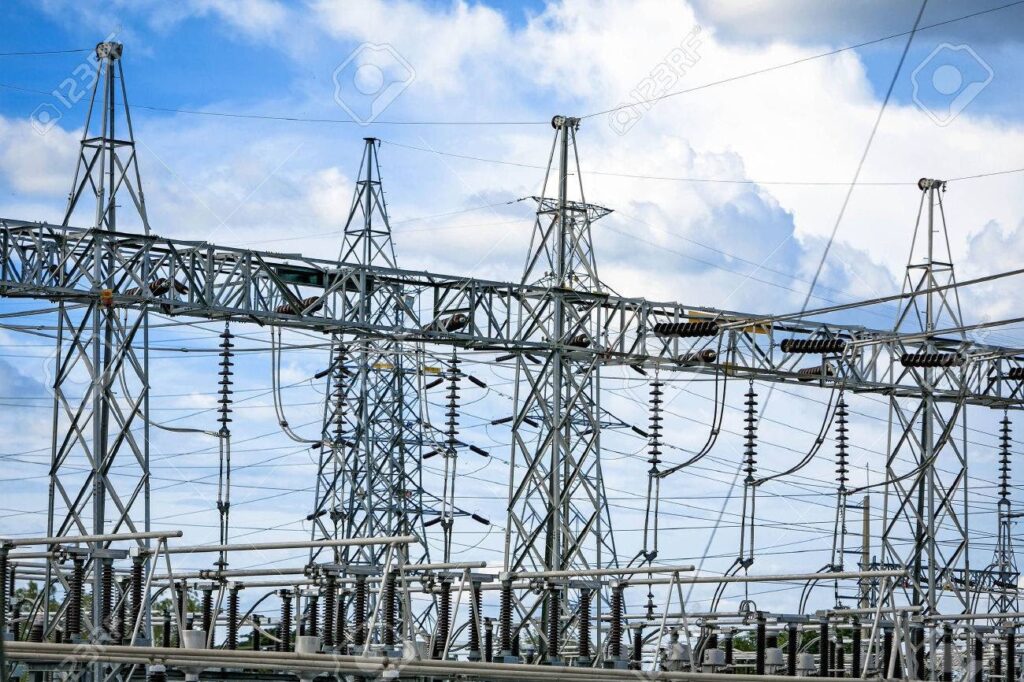
For Tanzania, power is no longer viewed simply as infrastructure. It has become a deliberate development strategy—one aimed at building an inclusive economy, reducing poverty and restoring dignity to households historically left behind. That national experience has now placed the country at the centre of Africa’s most ambitious energy push yet.
Under its National Development Vision 2050, Tanzania has identified universal access to affordable, reliable electricity as a cornerstone of long-term economic transformation. The government’s objective is explicit: without power reaching every household, rural and urban alike, aspirations of becoming an upper-middle-income country by mid-century will remain unattainable.
Progress has been rapid. According to official data from TANESCO and the Rural Energy Agency (REA), all 12,318 villages in Tanzania are now connected to electricity. Household connections have risen sharply, from 39.9% in 2020 to 78% by 2024/25. Of the country’s 64,359 sub-villages, 33,657 have already been electrified, leaving 31,532 still to be connected—a significant challenge, but one now clearly mapped.
President Samia Suluhu Hassan has consistently framed electricity as a social and economic equaliser.
“Access to affordable and reliable electricity is not a luxury,” she said during the Mission 300 Africa Energy Summit in Dar es Salaam. “It is the foundation for transforming lives, empowering communities and building resilient economies.”
Her government has aligned electrification with broader reforms—expanding generation capacity, strengthening transmission networks and accelerating off-grid and mini-grid solutions for remote areas. Crucially, energy expansion has been linked to social services: health centres, schools, water systems and digital connectivity.
The relationship between electricity access and poverty reduction is well documented in Tanzania’s planning frameworks. National policy recognises a direct link between power supply, household income growth and improvements in social welfare.
In rural areas, electrification has enabled small-scale industries—from grain milling and carpentry to welding and cold storage. These enterprises generate local employment, particularly for youth and women, and reduce reliance on subsistence farming alone. Small and medium-sized businesses operate more efficiently, while digital services, mobile money, online markets and information access have expanded rapidly.
Electricity has also reshaped public services. Health facilities can now refrigerate vaccines, conduct nighttime deliveries and provide emergency care. Schools use ICT tools, run evening classes and retain teachers in remote areas. Water supply schemes increasingly depend on electric pumps, reducing the burden on women and girls.
As Tanzania’s ruling party manifesto notes, electricity is no longer viewed as an amenity, but as a matter of social justice.
Tanzania’s domestic gains have taken on wider significance as Africa confronts its own energy deficit. Across sub-Saharan Africa, nearly 600 million people still lack access to electricity, with average household connection rates below 50% in many countries. Against this backdrop, Tanzania’s 78% household electrification rate places it well above the regional average.
It was this context that made Dar es Salaam a symbolic choice for hosting the Mission 300 Africa Energy Summit in January 2025. Convened by the African Development Bank (AfDB), the World Bank Group and partners, the summit brought together African heads of state, development financiers and private investors around a single goal: connecting 300 million Africans to electricity by 2030.
The summit concluded with the Dar es Salaam Energy Declaration, committing participating countries to policy reforms, private-sector mobilisation and accelerated investment in grids, renewables and clean cooking solutions.
AfDB President Akinwumi Adesina described electricity as “the backbone of Africa’s industrialisation and economic competitiveness,” noting that small and medium enterprises—the continent’s main employers—cannot scale without reliable power.
Tanzania’s experience was repeatedly cited as evidence that political commitment, institutional coordination and targeted financing can deliver results at scale.
Clean cooking and energy inclusion
Beyond grid connections, Mission 300 placed renewed emphasis on clean cooking, a critical but often neglected dimension of energy poverty. Each year, hundreds of thousands of Africans—mostly women and children—die from illnesses linked to indoor air pollution caused by cooking with wood and charcoal.
At the Dar es Salaam summit, 12 African countries signed energy compacts that included commitments to accelerate clean cooking adoption.
Tanzania’s own Clean Cooking Strategy (2024–2034) aims to significantly reduce reliance on biomass fuels through LPG, electricity and improved technologies.
“Why should anyone die simply for trying to cook a meal?” Adesina asked during the summit, highlighting the human cost of inaction.
President Samia has positioned clean cooking as both a health intervention and an environmental necessity, aligning it with climate resilience and forest conservation goals.
While Mission 300 is African-led, its implications are global. Energy access underpins progress on climate goals, food security, gender equality and economic stability. Without electricity, digital inclusion stalls and the benefits of globalisation remain unevenly distributed.
International institutions increasingly recognise that Africa’s energy transition will shape global development outcomes. Expanding access through renewables and clean technologies offers a chance to leapfrog carbon-intensive pathways while unlocking growth.
As Liberian President Joseph Boakai told the summit: “For millions of our people, energy access is the difference between stagnation and opportunity.”
Delivering Mission 300 will require unprecedented financial mobilisation. Estimates suggest around $90 billion will be needed over five years to expand generation, transmission and distribution networks across Africa.
During and around the summit, development partners announced major commitments. The Islamic Development Bank and the Asia Infrastructure Investment Bank pledged billions of dollars towards electrification projects, while France’s development agency AFD committed €1 billion to support energy access and related social infrastructure in sub-Saharan Africa.
The World Bank and AfDB have positioned themselves as anchors, blending public finance with private capital to de-risk investments and accelerate delivery.
For Tanzania, these partnerships reinforce domestic reforms already under way—improving utility performance, strengthening regulation and attracting independent power producers.
From villages to the world
In Tanzania’s rural communities, the impact of electrification is tangible and immediate. Yet the significance of those connections now extends far beyond national borders. Tanzania’s progress, and its leadership in Mission 300, illustrates how local action can inform continental ambition and global development thinking.
The task ahead remains formidable. Connecting the remaining 31,532 sub-villages will require innovation, sustained investment and careful planning. But the direction is set.
“This is not only about power lines and substations. It is about the future we want for our people,” President Samia said.
From Tanzanian households to African economies and global development goals, the switch being flipped today may well illuminate a more inclusive tomorrow.
Notes to Editors
• This story is a development and energy access analysis examining how expanded electricity access in Tanzania is reshaping livelihoods, public services and economic opportunity, while positioning the country as a continental reference point in Africa’s push for universal energy access.
• The article frames electricity not merely as physical infrastructure but as a social and economic equaliser, linking power supply directly to poverty reduction, job creation, gender inclusion, and improved health and education outcomes. Human-centred examples—from grain milling to vaccine storage—anchor the macro-level policy narrative in lived experience.
• A key editorial angle is Tanzania’s leadership role in Mission 300, the Africa-wide initiative to connect 300 million people to electricity by 2030. Hosting the Mission 300 Africa Energy Summit in Dar es Salaam underscores Tanzania’s credibility and progress, with household electrification reaching 78%, well above the regional average.
Media Contact
Information Services Department and Office of the Chief Government Spokesman
Email: maelezotv@gmail.com
Phone: +255 754 750 765, +255 754 698 856, +255 759 714, +255 713 381 904
Availability: EAT (UTC +3)
ENDS