
Through this programme, Tanzania is aligning its energy strategy with global climate commitments and development frameworks, while creating pathways for industrial growth and regional power integration.
Mission 300, backed by development banks, international climate finance institutions, and African governments, is part of a broader effort to tackle the 600 million-person electricity deficit in sub-Saharan Africa.
Tanzania, designated an “anchor country” under the programme, offers a combination of rising energy demand, abundant renewable resources, and ongoing sectoral reforms, making it a test case for replicable solutions across the continent.
Tanzania’s clean energy expansion under M300 is deeply embedded in its Vision 2025 and the Third Five-Year Development Plan (FYDP III). The programme aligns with global targets, including Sustainable Development Goal 7 (Affordable and Clean Energy) and the Paris Agreement.
For Tanzania, electricity access is not merely an infrastructure issue: it underpins industrialisation, agricultural value addition, and regional trade ambitions.
At the Mission 300 Africa Energy Summit in Dar es Salaam in January 2025, President Samia Suluhu Hassanunderscored this broader vision, noting that the initiative “goes beyond energy; it’s about empowering families, lifting millions out of poverty, and creating hope and opportunities for young people.”
She described the summit as a platform “to consolidate commitments, announce new partnerships and drive momentum towards the 2030 goal.”
President Samia also highlighted Tanzania’s National Energy Compact, which outlines priorities including generation expansion, rural electrification, clean cooking solutions, and regional power interconnections with neighbouring countries such as Kenya, Uganda, Rwanda, Burundi, and Zambia.
Samia estimated that the programme would require US$13 billion in investment over five years, with a substantial share expected from the private sector.
Progress in rural electrification
Rural electrification is a cornerstone of Tanzania’s national and international strategy. According to the Rural Energy Agency (REA), 99.1 percent of villages on the mainland, 12,240 out of 12,318, had access to electricity by late 2024.
While village-level coverage is near universal, household electrification in rural areas remains at approximately 69.6 percent, indicating ongoing challenges in last-mile connections and affordability.
Mission 300 aims to bridge this gap by supporting mini-grids and off-grid renewable systems, reflecting international best practice for delivering electricity to remote and sparsely populated areas. By focusing on solar, wind, and hybrid systems, Tanzania is leveraging modern technology to accelerate access while reducing dependency on fossil fuels.
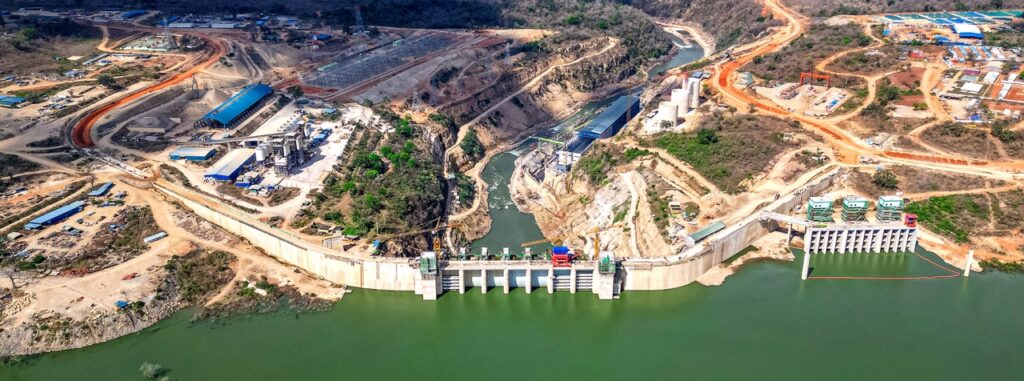
Tanzania’s installed electricity generation capacity reached 3,404 MW by early 2025, a substantial increase over the last decade. The 2,115-MW Julius Nyerere Hydropower Project represents the largest single expansion, enhancing grid stability and reducing reliance on imported energy.
Natural gas continues to serve as a transitional source, balancing grid reliability with the expansion of renewables. Solar and wind capacity is growing, particularly through decentralised systems that support rural electrification across Tanzania.
Transmission upgrades, including 400 kV and 132 kV lines, have strengthened connectivity across the country and enabled Tanzania to participate more actively in regional power trade.
President Samia insisted; “together, we can create a fair and sustainable energy future for all,” underlining the regional dimension of the programme.
A key pillar of Mission 300 is policy and regulatory reform. Tanzania has strengthened transparency, improved regulatory oversight, and facilitated private-sector participation through independent power producers (IPPs) and public-private partnerships (PPPs).
International development partners have identified these reforms as essential to reducing perceived investment risk and attracting long-term capital for clean energy projects.
Mission 300 also promotes blended financing, combining concessional loans, grants, and private capital with risk mitigation instruments. This approach is intended to make large-scale grid projects and smaller community-level initiatives financially viable.
The Tanzanian government has stressed the importance of mobilising private investment alongside international support, reinforcing Tanzania’s role as a model for scalable, sustainable electrification.
Economic and environmental implications
Tanzania’s electrification drive has broad economic and social consequences. Reliable electricity underpins industrial growth, improves competitiveness in domestic and export markets, and creates employment opportunities in construction, operations, and maintenance.
Energy access in health facilities, schools, and water systems enhances service delivery and educational outcomes, while modernising irrigation and agricultural processing.
Environmental benefits include; reduced reliance on biomass fuels, lower deforestation rates, and decreased greenhouse gas emissions, aligning the country with international climate commitments. These outcomes demonstrate how national energy strategies can intersect with global sustainability objectives.
Tanzania’s experience under Mission 300 is being closely watched by governments, development agencies,and investors worldwide. Its progress offers a model for how African countries can accelerate electrification, leverage renewable energy, and integrate into regional energy markets while meeting climate targets.
While the summit in Dar es Salaam positioned Tanzania as a beneficiary of international initiatives and a leader in Africa’s energy transition, it showcased a combination of national policy, infrastructure investment, and continental collaboration.
This echoes the call for collective action, underscoring shared responsibility of African nations and international partners in delivering a sustainable energy future.
Tanzania’s implementation of rural electrification, major renewable projects, and policy reform will serve as a benchmark for measuring the success of large-scale, continent-wide electrification programmes.
Notes to Editors
· Mission 300 (M300) is a continent-wide initiative aiming to provide electricity access to 300 million Africans by 2030, addressing sub-Saharan Africa’s electricity access gap of more than 600 million people.
· Tanzania is designated an anchor country under Mission 300, reflecting its expanding energy demand, renewable resource base, and ongoing sector reforms.
· The programme aligns with Tanzania’s Vision 2025, theThird Five-Year Development Plan (FYDP III), SDG 7, and the Paris Agreement.
Media Contact:
Information Services Department and Office of The Chief Government Spokesman
E-mail: maelezotv@gmail.com
Phone: +255 754 750 765
Availability: EAT, UTC +3
ENDS