
[PRESSWIRE] DUBAI, United Arab Emirates – 2026-02-06 — 4 February, 2026
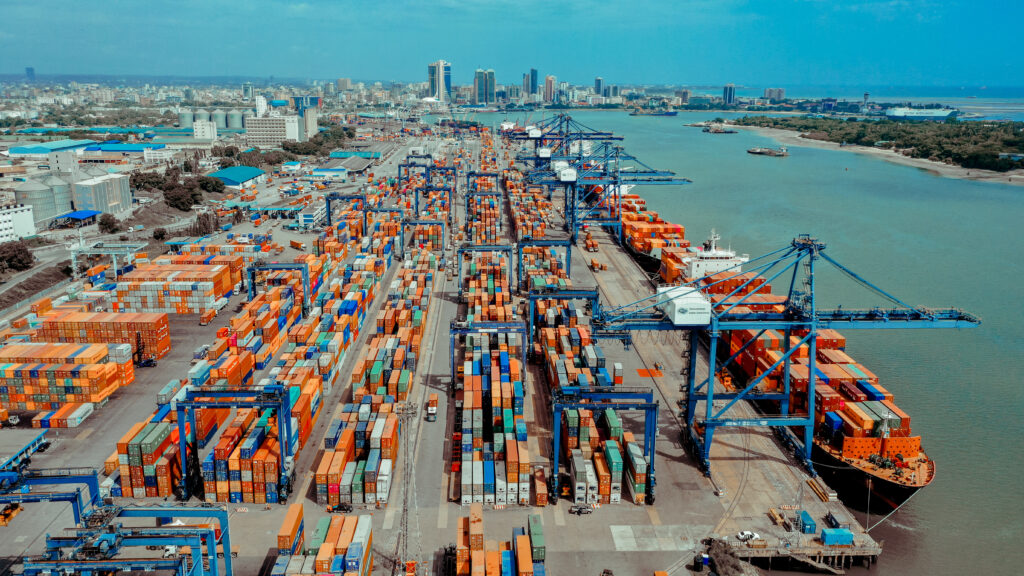
Ethiopian President Taye Selassie said Africa’s economic transformation is being driven by major cross-border infrastructure corridors, highlighting the role of Dar es Salaam port in boosting regional trade and integration.
Speaking at the World Governments Summit in Dubai, Selassie cited the North–South Corridor linking Tanzania’s Dar es Salaam port to the Copperbelt region of Central Africa as one of the continent’s emerging success stories.
He also pointed to the Central Corridor connecting the Great Lakes region to the Indian Ocean, and the Lamu Port–South Sudan–Ethiopia Transport (LAPSSET) Corridor linking Kenya, South Sudan and Ethiopia, as critical components of Africa’s connectivity strategy.
“These routes are not just asphalt and railways. They are the veins and arteries of regional cooperation that will boost Africa’s industrial upgrade,” Selassie said.
The World Governments Summit concludes on Tuesday and has brought together global leaders to discuss governance, economic resilience and policy innovation.
Selassie urged African countries to expand air connectivity across the continent, saying Ethiopia is constructing a $12.5 billion international airport with a planned capacity of 110 million passengers and more than 3 million tonnes of cargo annually.
He said stronger transport links were essential to stimulating trade, investment and people-to-people exchanges within Africa.
The Ethiopian leader also underscored the importance of intra-African trade as the continent seeks to navigate shifting global geopolitical dynamics.
He said African countries could withstand emerging global challenges through deeper economic cooperation, particularly by fully implementing the African Continental Free Trade Area (AfCFTA).
“Inter-Africa trade is ready for a transformative shift through the full implementation of the African Continental Free Trade Area,” Selassie said. “With its implementation, we will be consolidating a market of 1.3 billion people with a collective GDP exceeding $3.4 trillion.”
He described AfCFTA as one of the flagship initiatives under the African Union’s Agenda 2063, providing a framework for inclusive and sustainable socio-economic development.
Selassie said the trade pact is expected to support the creation of regional production networks by eliminating up to 90% of tariff barriers, adding that Africa’s future would be shaped by deeper integration and cross-border connectivity.
Held on the sidelines of the World Governments Summit is the Global Africa Investment Summit (GAIS), a high-level initiative led by Akinwumi Adesina, president emeritus of the African Development Bank Group, in partnership with global investors and development actors.
– Key regional corridors include the North–South Corridor linking Dar es Salaam to the Central African Copperbelt, the Central Corridor connecting the Great Lakes region to the Indian Ocean, and the LAPSSET Corridor linking Kenya, South Sudan and Ethiopia.
– The African Continental Free Trade Area (AfCFTA) aims to create a single market of about 1.3 billion people with a combined GDP of more than $3.4 trillion.
– AfCFTA is a flagship project under the African Union’s Agenda 2063 and seeks to eliminate up to 90% of tariff barriers among member states.
Media Contact:Information Services Department and Office of The Chief Government Spokesman E-mail: maelezotv@gmail.comPhone: +255 754 750 765, +255 754 698 856, +255 759 714, +255 713 381 904Availability: EAT, UTC +3 ENDS
ENDS