
[PRESSWIRE] Dodoma, Tanzania – 2026-02-06 — 4 February, 2026
Tanzanian lawmakers are pressing the government to sustain annual economic growth of up to 10% as the country pursues an ambitious Vision 2050 agenda aimed at transforming Africa’s fourth-largest economy into a $1 trillion powerhouse.
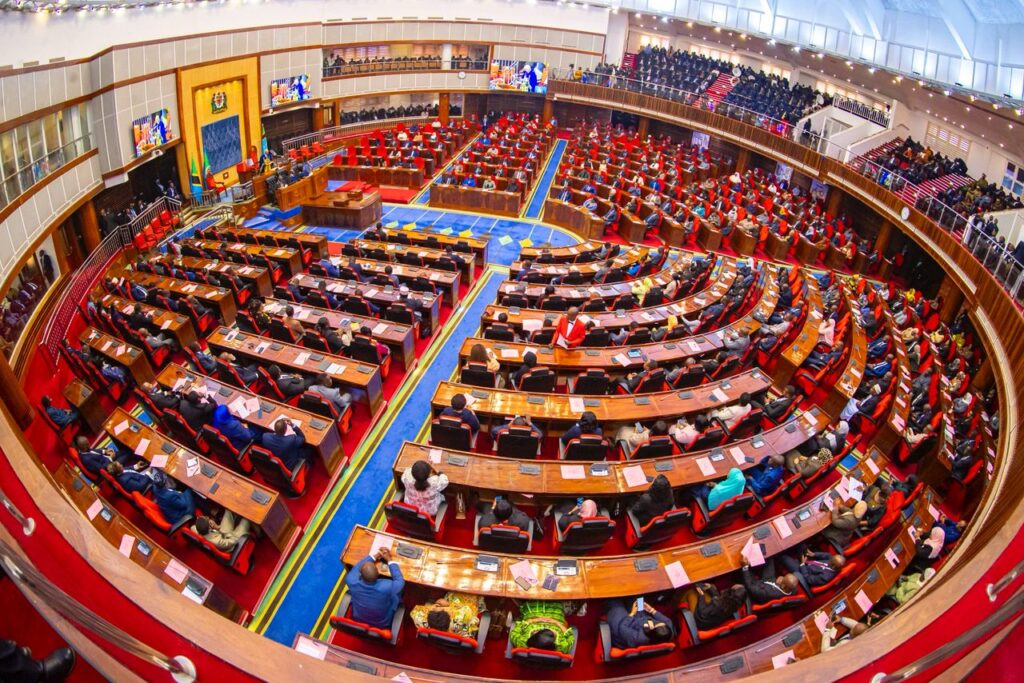
The calls came during parliamentary debates on Tanzania’s 25-year development strategy, which includes the Fourth Five-Year National Development Plan (2026/27–2030/31) and sets out a shift toward private-sector-led growth supported by large-scale investment in energy, minerals, transport and industrialisation.
Musoma Rural legislator Sospeter Muhongo said growth below 10% would jeopardise Tanzania’s long-term ambitions at a time when African economies are competing for global capital and export markets.
“If we don’t reach these targets, achieving a one-trillion-dollar economy will be impossible,” Muhongo told parliament.
He urged the government to anchor growth around six sectors — agriculture, oil and gas, minerals, tourism, livestock and fisheries, and sports, arts and culture — and proposed explicit GDP contribution targets ranging from 35% for agriculture to 2% for creative industries.
Muhongo also called for the creation of sovereign wealth funds to capture revenues from natural resources, including a natural gas fund linked to Tanzania’s estimated 57 trillion cubic feet of gas reserves and the planned liquefied natural gas (LNG) project in the southern Lindi region. He said exploration in the Ruvuma Basin could lift reserves beyond 100 trillion cubic feet.
He proposed a separate minerals wealth fund to capitalise on gold, tanzanite and technology minerals such as graphite and helium, citing helium reserves exceeding 170 billion cubic feet. Global gold prices are trading near $5,000 per ounce, he said.
Lawmakers also urged stronger engagement with Tanzania’s diaspora to boost remittance inflows and called for a more active state role in strategic sectors, drawing comparisons with China’s state-led investment model.
Energy emerged as a central theme, with Tarime Urban lawmaker Esther Matiko warning that delays in flagship power projects could undermine growth targets. Tanzania aims to reach installed capacity of 70,000 megawatts by 2050/51, but projects including Mchuchuma and Liganga, Ruhudji hydropower, Singida Wind Power and geothermal developments are progressing slowly, she said.
Matiko called for deeper private sector participation in electricity generation and distribution and for regional assessments to better align local resources with national growth priorities. She also said tourism — one of Tanzania’s main foreign exchange earners — remains underdeveloped relative to its potential.
FYDP IV is the opening phase of Vision 2050, which seeks to position Tanzania as a competitive middle-income economy and a regional hub for trade, energy and industrial production.
Under the plan, Tanzania targets a nominal GDP of $118 billion by 2031, real GDP growth of 10.5% and GDP per capita of $1,638. The government says this will be driven by productivity gains, value addition and export competitiveness.
Budget Committee chair Mashimba Ndaki said reforms to the investment climate, transport and logistics, digital infrastructure and workforce skills would be critical to attracting international investors.
The strategy also includes social targets, including cutting extreme poverty to 5% from 8% by 2030/31, lowering infant and maternal mortality, and expanding access to education.
Flagship projects identified as growth anchors include the Bagamoyo Eco-Marine City, the Mchuchuma and Liganga minerals project, the Lindi LNG project, a technology and critical minerals innovation hub in Dodoma, a national irrigation and agro-industrial programme, and a Great Lakes blue economy and urban growth initiative.
For global investors, the debate highlights Tanzania’s push to monetise its natural resource base, expand energy capacity and integrate more deeply into regional and global value chains — ambitions lawmakers say will hinge on sustaining double-digit growth and effective execution.
– Tanzania’s Vision 2050 is a long-term national development strategy aimed at transforming the country into an upper-middle-income, competitive and industrialised economy by mid-century.
– The strategy is being implemented through sequential five-year plans, with the Fourth Five-Year National Development Plan (FYDP IV) covering the period 2026/27–2030/31.
– FYDP IV prioritises private-sector-led growth, large-scale investment in energy, minerals, transport, agriculture and industrialisation, and deeper integration into regional and global value chains.
– Media Contact:Information Services Department and Office of The Chief Government Spokesman E-mail: maelezotv@gmail.comPhone: +255 754 750 765, +255 754 698 856, +255 759 714, +255 713 381 904Availability: EAT, UTC +3 ENDS
ENDS