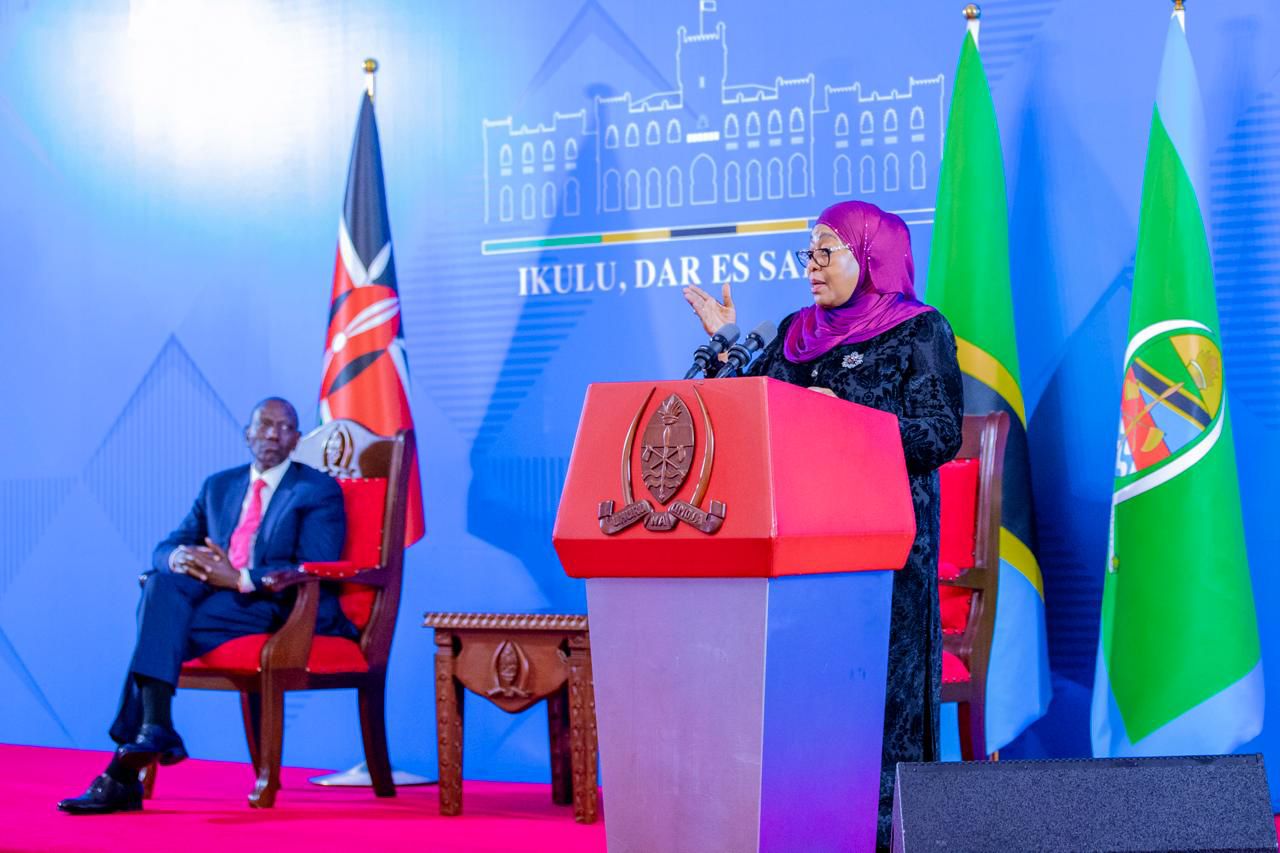
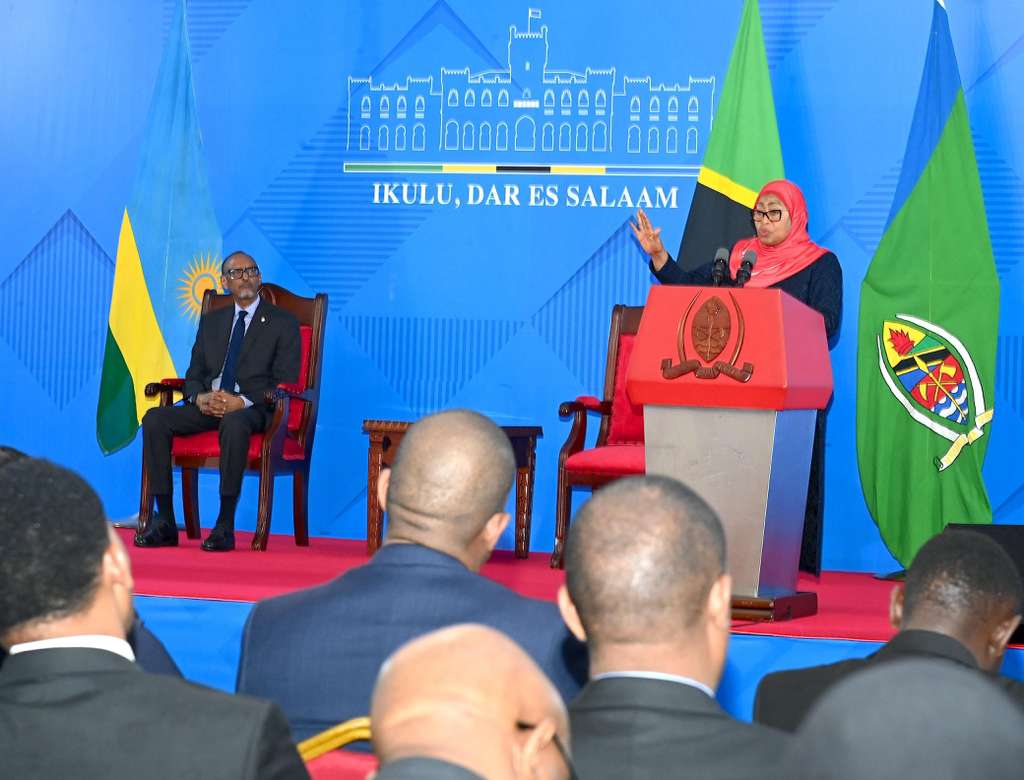
The back-to-back diplomatic engagements have underscored growing efforts by member states of the East African Community (EAC) to strengthen economic cooperation, improve connectivity and accelerate implementation of cross-border development projects.
Speaking on the significance of the visits, Tanzania’s Minister for Foreign Affairs and East African Cooperation, Mahmoud Thabit Kombo, described the renewed engagements as evidence of deepening regional partnerships rooted in shared history, economic interdependence and mutual strategic interests.
He said Kenya remains Tanzania’s largest trade and investment partner within the EAC, accounting for roughly 40 per cent of intra-EAC trade between 2020 and 2024.
Kombo highlighted the completion of the 400kV Singida–Arusha–Namanga power transmission line linking Tanzania and Kenya’s electricity grids as a major milestone in regional energy cooperation.
He also pointed to expanding road networks and the establishment of four One-Stop Border Posts designed to reduce delays and improve cross-border trade efficiency.
Regional aviation links have also strengthened economic connectivity, with Kenya Airways operating 47 weekly flights to Tanzania, while Air Tanzania maintains daily services between Dar es Salaam and Nairobi.
Diplomatic observers noted that Ruto’s visit carried both symbolic and practical significance, including his address to Tanzania’s Parliament and his journey to Dodoma aboard Tanzania’s Standard Gauge Railway (SGR), widely viewed as a demonstration of the role modern infrastructure can play in advancing regional integration.
Kombo added that Tanzania and Kenya are also strengthening collaboration in ICT, education, security and law enforcement to improve service delivery, combat transnational crime and support regional stability.
Tanzania-Rwanda ties deepen
President Samia’s engagement with Kagame similarly reflected a growing shift toward infrastructure-led integration and trade facilitation between Tanzania and Rwanda.
At the heart of the discussions was Tanzania’s decision to streamline cargo handling for Rwanda at the Port of Dar es Salaam, a strategic move that reinforces Tanzania’s role as a logistics gateway for landlocked countries in the region.
Rwanda relies on the port for approximately 70 per cent of its external trade, making efficient cargo handling critical to regional supply chains and economic competitiveness.
Trade between Tanzania and Rwanda reached about 644 billion Tanzanian shillings last year, while Tanzanian investment projects in Rwanda — valued at approximately 848 billion shillings — have created more than 2,200 jobs.
Analysts say the growing presence of Tanzanian companies in Rwanda reflects increasingly balanced investment flows and deeper regional commercial integration.
Rail, energy and digital connectivity
Discussions between the two leaders also focused on the proposed extension of the Standard Gauge Railway from Isaka in western Tanzania to Kigali, a project expected to significantly reduce transport costs and transform freight movement across the region.
Energy cooperation featured prominently as well, including plans for electricity exports from TANESCO to Rwanda and collaboration under the Rusumo Hydropower Project.
In addition, Tanzania plans to extend its National ICT Broadband Backbone into Rwanda, signalling broader ambitions to build an integrated digital economy across East Africa.
President Samia has repeatedly emphasised the need to eliminate non-tariff barriers and fully utilise opportunities under both the EAC Common Market and the African Continental Free Trade Area (AfCFTA).
Economic impact
Analysts say the renewed diplomatic engagements could deliver significant economic benefits across the region.
Business expert Sylvester Jotta of Saint Augustine University of Tanzania said Tanzania’s strategic location and port infrastructure position it as a critical trade corridor for neighbouring countries.
He noted that improved logistics, reduced trade barriers and better transport connectivity could lower commodity costs, expand market access and stimulate job creation.
Political analyst Yonah Mapury said the growing diplomatic coordination among East African leaders signals a broader shift from symbolic cooperation to practical economic integration centred on infrastructure, trade facilitation and regional competitiveness.
Notes to Editors
· Tanzanian President Samia Suluhu Hassan, Kenyan President William Ruto and Rwandan President Paul Kagame have intensified high-level diplomatic engagements aimed at strengthening trade, infrastructure development and regional integration across East Africa.
· The engagements reflect growing cooperation among member states of the East African Community (EAC) in areas including energy, transport, trade facilitation, ICT connectivity and regional security.
· Tanzania’s Minister for Foreign Affairs and East African Cooperation, Mahmoud Thabit Kombo, said Kenya accounts for approximately 40 per cent of intra-EAC trade involving Tanzania between 2020 and 2024.
Media Contact:
Information Services Department and Office of The Chief Government Spokesman
E-mail: maelezotv@gmail.com
Phone: +255 754 750 765; +255 754 698 856; +255 759 714; +255 713 381 904
Availability: EAT, UTC +3