
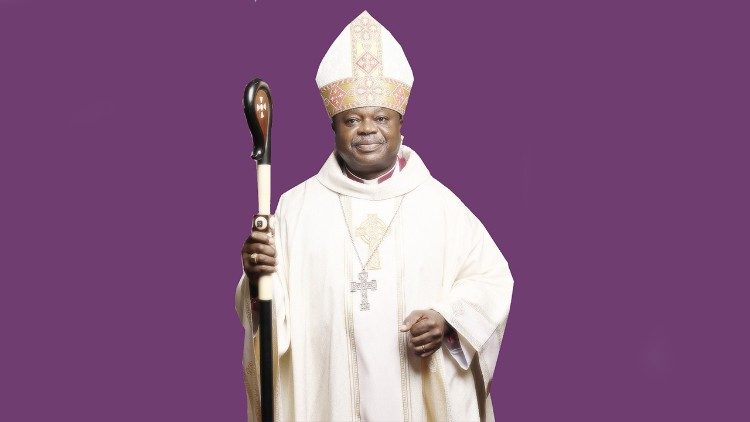
[PRESSWIRE] Dar es Salaam, Tanzania – 2026-04-09 — Alex Malasusa, head of the Evangelical Lutheran Church of Tanzania (ELCT), has called for forgiveness, love and peace to be embraced as central pillars of national cohesion, warning that rising social and economic pressures risk deepening divisions if left unaddressed.
In an Easter message, Malasusa framed forgiveness not only as a core Christian teaching but also as a practical response to the evolving challenges facing modern societies, including inequality, rapid urbanisation and shifting cultural dynamics.
“It is important to forgive others just as Christ forgave us. Forgiveness is not optional, it is essential in our lives,” he said.
His remarks reflect a broader effort by faith leaders in Tanzania to position values-driven approaches as complementary to formal governance structures in maintaining stability, particularly at a time when many countries are grappling with polarisation, economic strain and identity-based tensions.
Malasusa said forgiveness plays a critical role in breaking cycles of grievance and retaliation, patterns that can quietly erode trust within communities even in relatively peaceful nations. By encouraging individuals to let go of resentment and prioritise reconciliation, he suggested that social harmony can be strengthened from the ground up.
“Peace is a very important value that must be cherished and safeguarded in our daily lives,” he said, linking the Easter message of renewal to broader themes of reconciliation and coexistence.
Tanzania’s religious diversity where Christianity, Islam and indigenous beliefs coexist lends particular weight to such messaging. By promoting forgiveness as a shared ethical value rather than a purely doctrinal principle, religious leaders are able to reinforce interfaith harmony and provide a unifying narrative across different communities.
Analysts say such approaches are increasingly relevant in societies undergoing rapid transformation. Urbanisation, economic inequality and generational change can place strain on social relationships, creating conditions where grievances may intensify if not carefully managed. In this context, the promotion of empathy, dialogue and mutual respect is seen as a preventative mechanism against conflict.
Malasusa’s message also highlighted the role of religious institutions as neutral platforms for dialogue and mediation. In Tanzania, where religious organisations hold significant moral authority, this function is often viewed as critical in diffusing tensions and fostering reconciliation during periods of uncertainty.
By emphasising forgiveness as a “fundamental value”, he presented it not simply as a moral ideal but as a stabilising force capable of reducing the risk of escalation in both interpersonal and broader societal disputes.
He further called for unconditional love and the rejection of revenge, arguing that peace must be actively cultivated rather than passively assumed. His remarks suggest a shift from coexistence towards a more engaged form of social responsibility, in which individuals are encouraged to contribute positively to the wellbeing of others.
“Seeking peace can be costly, but we must pursue it at any cost, without hatred or revenge,” he said.
The emphasis on personal sacrifice adds a layer of realism to his message, acknowledging that reconciliation often requires individuals to relinquish anger, pride or the desire for retribution. This perspective aligns with broader peacebuilding frameworks, which link individual attitudes and behaviours to wider societal stability.
Malasusa also urged Tanzanians to sustain the spirit of reflection associated with the Easter period, arguing that values such as repentance, forgiveness and compassion should not be confined to religious observance but integrated into everyday life.
He placed particular emphasis on the role of moral education, especially among younger generations. Teaching children values such as empathy, generosity and respect, he said, represents a long-term investment in social cohesion and national stability.
Such an approach recognises that sustainable peace is not achieved through short-term interventions alone, but through gradual, generational change rooted in shared ethical foundations.
His call for unity was accompanied by an emphasis on dialogue as a key tool for navigating differences in an increasingly diverse and dynamic society. By encouraging open communication, he framed unity not as uniformity, but as a collective commitment to coexistence and mutual respect despite differing perspectives.
The message also reflects an awareness of the growing difficulty of practising forgiveness and empathy in modern contexts, where economic pressures and social change can heighten tensions. By identifying forgiveness as a starting point, Malasusa shifts the focus from visible conflicts to the underlying attitudes that often drive them.
In doing so, he positions faith-based values as part of a broader conversation about resilience and social stability, both within Tanzania and globally.
His remarks come as countries around the world seek ways to strengthen social cohesion in the face of increasing fragmentation. While policy and institutional reforms remain central to such efforts, there is growing recognition of the role that ethical leadership and community-based approaches can play in preventing conflict and sustaining peace.
By linking spiritual teachings with contemporary challenges, Malasusa’s Easter message highlights Tanzania’s contribution to wider discussions on peacebuilding, coexistence and ethical leadership. It underscores how locally grounded values can carry broader relevance, offering insight into how societies can navigate change while preserving unity.
ENDS….
Media Contact:
Information Services Department and Office of The Chief Government Spokesman
E-mail: maelezotv@gmail.com
Phone: +255 754 750 765; +255 754 698 856; +255 759 714; +255 713 381 904
Availability: EAT, UTC +3