
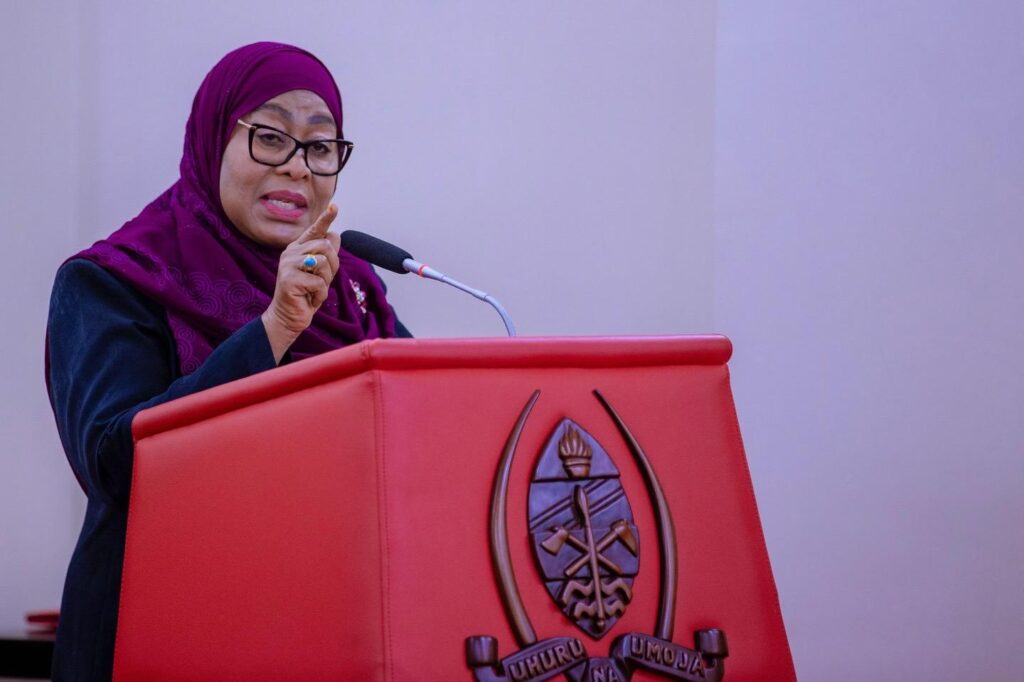
[PRESSWIRE] Dodoma, Tanzania – 2026-04-09 — Samia Suluhu Hassan has announced immediate fuel saving measures across government and urged public calm, as a widening global oil supply shock linked to Middle East tensions reverberates through emerging and advanced economies alike.
Speaking at State House in Chamwino on Wednesday, the President said escalating frictions involving the United States, Israel and Iran have disrupted critical energy supply chains, contributing to rising fuel prices across global markets.
While acknowledging the strain, she said Tanzania remains relatively insulated compared to some regional peers, with domestic fuel prices still lower than in several neighbouring countries. Nonetheless, she warned that no economy is immune from sustained global volatility.
Her remarks reflect a broader trend across developing economies, many of which are grappling with imported inflation driven by higher energy and transport costs. Governments from Africa to Asia have begun introducing austerity measures, subsidies or price controls to cushion households and stabilise markets.
In Tanzania, the government will scale back official fuel consumption by reducing vehicle convoys and introducing shared transport for public officials. The President also issued a caution to businesses, warning against opportunistic price increases on existing stock.
“Public institutions must lead by example in reducing fuel use,” she said. “At the same time, fairness in the marketplace is essential. Goods already in storage should not be used to justify price hikes.”
Energy analysts say disruptions around key maritime chokepoints, particularly the Strait of Hormuz—through which a significant share of the world’s oil passes—have heightened market uncertainty, with even temporary instability capable of pushing up global prices.
Although President Samia pointed to tentative signs of easing pressure along some routes, she cautioned that the situation remains fragile and heavily dependent on geopolitical developments.
The knock-on effects are already being felt globally, with higher fuel costs feeding into food prices, logistics and industrial production. For lower- and middle-income countries, the risk is particularly acute, as energy price spikes can quickly translate into broader cost-of-living pressures.
Addressing citizens, the President framed the crisis as part of a wider global economic challenge rather than a domestic policy issue.
“These are international developments affecting many countries,” she said. “We continue to call for peace and stability so that global trade, including the movement of oil and essential goods, can return to normal.”
During the same ceremony, she swore in new senior officials, including Palamagamba Kabudi as Minister of State in the Prime Minister’s Office. His appointment follows the death of William Lukuvi, with the President emphasising the need for experienced leadership as Tanzania navigates both domestic priorities and global economic headwinds.
Also appointed were Reuben Kwagilwa and Festo Dugange as deputy ministers, part of a broader effort to strengthen government efficiency at a time of heightened international uncertainty.
As global energy markets remain volatile, Tanzania’s response underscores a growing consensus among governments: fiscal restraint, market discipline and diplomatic stability will be key to weathering the ongoing fuel crisis.
ENDS….
Media Contact:
Information Services Department and Office of The Chief Government Spokesman
E-mail: maelezotv@gmail.com
Phone: +255 754 750 765; +255 754 698 856; +255 759 714; +255 713 381 904
Availability: EAT, UTC +3