
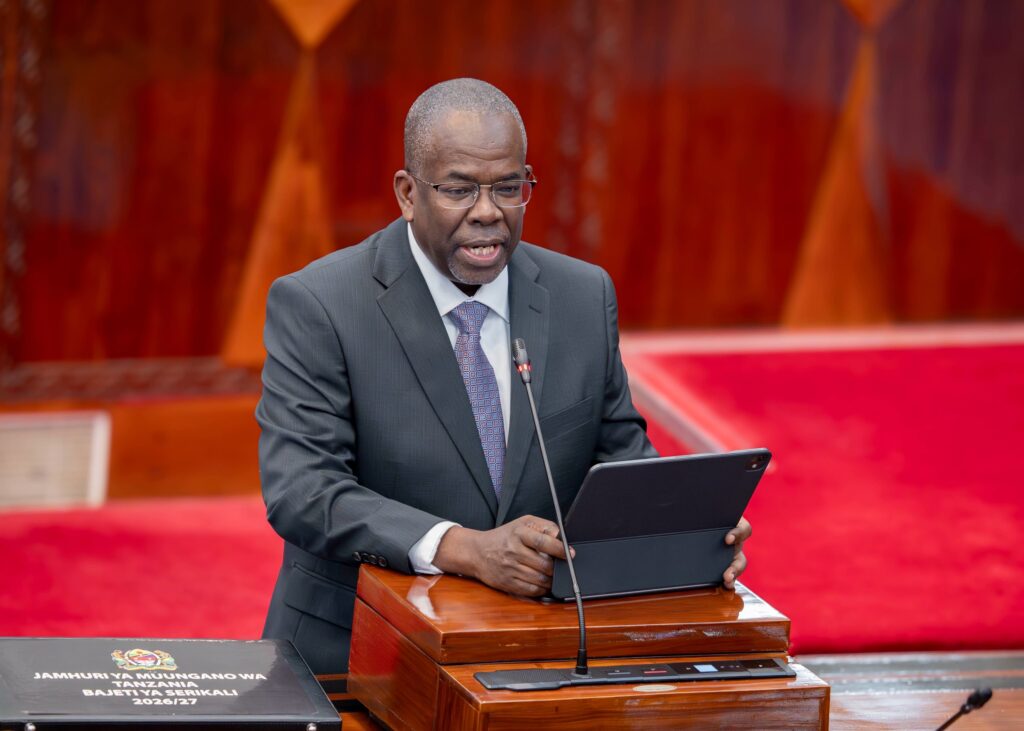
The 62.33 trillion Tanzanian shilling (approximately US$24 billion) budget, presented to Parliament on Thursday by Finance Minister Ambassador Khamis Mussa Omar, aims to improve living standards while accelerating the country’s transition to a more resilient and self-sustaining economy.
Economic observers say the spending plan signals a stronger emphasis on domestic revenue mobilisation, private-sector participation and productivity growth as Tanzania seeks to fund its development agenda through internally generated resources.
Economist and investment banker Dr Hildebrand Shayo said the budget demonstrates a clear commitment to strengthening domestic resource mobilisation, promoting private-sector expansion, advancing digital transformation and supporting industrial development.
According to Dr Shayo, the government’s increasing focus on self-financing development projects reflects growing confidence in Tanzania’s economic fundamentals and its capacity to sustain long-term growth through domestic resources.
“For many years, Tanzania, like many African countries, relied heavily on external financing, including development aid and concessional loans,” he said. “While such support has played an important role, it is often vulnerable to global economic shocks, shifting donor priorities and international crises.”
Dr Shayo noted that the budget proposes measures aimed at broadening the tax base, improving compliance and generating an additional 1.72 trillion shillings in revenue. He added that the reforms are intended not only to increase government income but also to strengthen the connection between economic activity and public financing.
However, he cautioned that reducing dependence on external support cannot be achieved within a single fiscal year and will require sustained reforms, stronger institutions and efficient use of public resources.
The President of the Tanzania Association of Accountants (TAA), CPA Dr Godvictor Lyimo, said the budget is designed to build a resilient economy capable of withstanding future economic shocks.
He pointed to measures aimed at strengthening domestic production, research and technological innovation, including initiatives in the mining sector intended to improve productivity and encourage value addition.
“A closer examination of the budget shows an effort to balance production and consumption,” Dr Lyimo said. “While taxes have increased in some areas, the government has also introduced incentives to support producers, stimulate economic growth and create jobs.”
Dr Lyimo added that the budget includes interventions aimed at strengthening the domestic economy, increasing government revenue, protecting the environment, improving public health and supporting implementation of Tanzania’s Development Vision 2050.
Financial analyst Kelvin Msangi described the spending plan as a budget centred on resilience, digital transformation, strategic investment and fiscal sustainability.
He said government priorities include increasing domestic revenue, completing ongoing infrastructure and development projects, strengthening productive sectors, improving social services and enhancing the investment climate.
Mr Msangi noted that the proposed tax measures should be viewed against the backdrop of declining grants, concerns over debt sustainability and rising borrowing costs. He added that tax collections had reached 28.10 trillion shillings by April 2026, exceeding targets by 5.1 per cent and highlighting improvements in revenue collection.
At the same time, he cautioned that economic self-reliance should not be measured solely by tax performance, noting that poverty remains at 25.1 per cent. He said the budget’s success would ultimately depend on fair taxation, prudent public spending, protection of vulnerable groups and sustained growth in productive sectors.
University of Dar es Salaam economist Prof Humphrey Moshi also welcomed the budget’s direction but stressed that effective implementation would be critical.
He argued that genuine economic self-reliance requires greater national sufficiency in key sectors, particularly food production, through increased agricultural productivity and inclusive economic growth.
“We must ensure that everyone who is eligible contributes tax according to their income while strengthening efforts to curb tax evasion and improve domestic revenue mobilisation,” Prof Moshi said.
Business and entrepreneurship expert Dr Sylvester Jotta of St Augustine University of Tanzania said the budget adopts innovative approaches to generating new revenue streams while reducing dependence on external financing.
According to Dr Jotta, the spending plan addresses a broad range of economic and social priorities and provides a foundation for Tanzania’s long-term pursuit of greater economic independence.
Notes to Editors
– Tanzania's 2026/27 national budget amounts to 62.33 trillion Tanzanian shillings (approximately US$24 billion).
– The budget has been presented as part of the government's broader strategy to strengthen economic self-reliance and reduce dependence on external financing.
– Analysts highlight domestic resource mobilisation, private-sector participation, industrial development and digital transformation as central themes of the spending plan.
Media Contact:
Information Services Department and Office of The Chief Government Spokesman
E-mail: maelezotv@gmail.com
Phone: +255 754 750 765, +255 754 698 856, +255 759 714, +255 713 381 904
Availability: EAT, UTC +3