
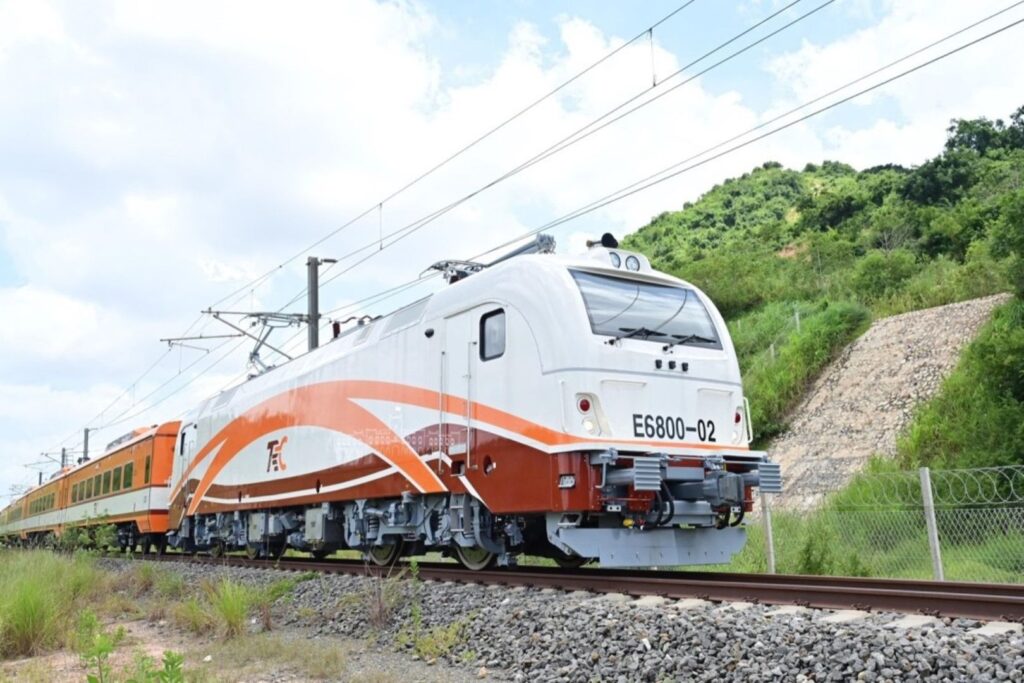
The Standard Gauge Railway (SGR), now operational on its eastern spine and steadily extending westwards, is emerging as one of the most consequential transport investments in the Great Lakes region.
For international investors tracking Africa’s logistics corridors, the project is not simply a domestic transport upgrade. It is a calculated bid to redraw supply chains, lower trade costs and reinforce Tanzania’s role as the preferred maritime gateway for landlocked economies with a combined population exceeding 150 million.
Passenger operations on the Dar es Salaam–Morogoro and Dar es Salaam–Dodoma sections commenced on June 14, 2024, and July 25, 2024, respectively. The service was officially inaugurated by President Samia Suluhu Hassan on August 1, 2024, marking a milestone in Tanzania’s transport modernisation drive. Freight services, the economic backbone of the project, were formally inaugurated on July 31, 2025.
Since operations began, the SGR has scaled up steadily. There are currently eight passenger trips per day between Dar es Salaam and Dodoma via Morogoro, and two daily trips between Dar es Salaam and Morogoro. By November 2025, the railway had transported about 4.34 million passengers and shipped more than 40,000 tonnes of cargo, early indicators of demand that policymakers and investors are scrutinising closely.
Redrawing regional logistics
Dar es Salaam has long served as a vital port for East and Central Africa. Yet for decades, inefficiencies in road transport and ageing metre-gauge rail lines weakened its competitiveness against rival corridors, notably Kenya’s Northern Corridor via Mombasa and southern routes through Beira and Durban.
The SGR aims to change that equation. Running from Dar es Salaam to Morogoro and Dodoma and extending westwards to Tabora, Isaka, Mwanza and Kigoma, the network is designed to integrate with cross-border links to Burundi and eastern Democratic Republic of Congo, while complementing routes serving Rwanda and Uganda.
According to Tanzania Railways Corporation (TRC), the operational sections have already transformed passenger mobility. Travel time between Dar es Salaam and Dodoma has fallen from up to nine or ten hours by road to around three hours by train.
For freight, the implications are potentially more far-reaching. A single SGR freight train can haul up to 3,000 tonnes at once, reducing reliance on long-haul trucking and easing pressure on roads and ports.
The strategic logic is clear: by anchoring regional trade flows to Dar es Salaam, Tanzania strengthens its position as a transit economy while opening downstream opportunities in warehousing, inland ports, logistics services and light manufacturing.
Cutting costs and emissions
Transport costs across the Great Lakes region remain among the highest globally. World Bank studies consistently show that landlocked economies such as Burundi, Rwanda and eastern DRC pay a heavy premium to access global markets, eroding export competitiveness and raising consumer prices.
Rail offers a structural response. Compared with road transport, modern electrified railways move bulk cargo at lower unit cost, with fewer delays and reduced losses. Tanzanian authorities argue that the SGR will significantly lower freight costs for fuel, fertiliser, agricultural produce and minerals, including copper and cobalt from the DRC.
The environmental dividend is also substantial. Transporting 4.34 million passengers by SGR instead of buses has eliminated an estimated 72,289 long-distance bus trips. Similarly, moving more than 40,000 tonnes of cargo by rail has displaced at least 2,009 heavy trucks, which would otherwise have consumed roughly 10.84 million litres of diesel.
By comparison, actual electricity consumption for SGR operations to date stands at about 59.14 million kilowatt-hours. This translates into emissions of around 17.4 million tonnes of COâ‚‚ equivalent, compared with an estimated 29.57 million tonnes of COâ‚‚ equivalent had the same traffic been handled by road. TRC estimates this represents a carbon emission reduction of about 58.9%, positioning the SGR as a flagship project in Tanzania’s push for sustainable mobility.
Regional competition and political calculus
Tanzania’s rail strategy is unfolding in a competitive regional landscape. Kenya’s SGR, linking Mombasa to Nairobi and Naivasha, has struggled to meet freight volume targets, partly due to pricing disputes and limited cross-border integration.
Uganda’s SGR plans remain largely on paper, constrained by financing challenges. Rwanda continues to rely heavily on road transport, while eastern DRC lacks reliable corridors to the coast despite vast mineral wealth.
By contrast, Tanzania’s approach places stronger emphasis on cross-border connectivity and regional buy-in. Agreements are in place with Burundi to extend the line from Uvinza to Musongati, providing a direct link to the Indian Ocean.
Plans to connect western Tanzania with eastern DRC are also advancing, potentially offering Congolese exporters an alternative to longer and less stable southern routes.
Officials in Dar es Salaam have framed the SGR as a shared regional platform rather than a purely national asset. For investors, this political alignment matters. Infrastructure that serves multiple countries’ trade interests is more likely to sustain traffic volumes and policy support over time.
Private capital and corridor economics
While the SGR is state-led, its economic spillovers are explicitly designed to be private-sector driven. The government has identified logistics services, dry ports, container depots, freight forwarding, customs brokerage and industrial parks as priority investment areas along the corridor.
Isaka, Tabora and Dodoma are emerging as inland logistics hubs, with plans for modern warehousing and cargo consolidation facilities. For global logistics firms, the appeal lies in first-mover advantage in markets that have historically lacked rail-connected infrastructure.
The experience of Ethiopia’s Addis Ababa–Djibouti railway offers a useful parallel. After early operational hurdles, the line catalysed industrial park development and export-oriented manufacturing once complementary logistics investments followed. Tanzanian policymakers have cited similar sequencing in long-term planning documents.
Government figures show the SGR has already generated substantial domestic economic activity. More than 30,000 direct jobs and over 150,000 indirect jobs were created during construction, with local firms securing contracts worth trillions of shillings. Passenger services alone have generated tens of billions of shillings in revenue since mid-2024 — providing proof of operational capacity and public acceptance as freight services scale up.
Risks, realism and long horizons
Despite its promise, the SGR is not without risks. Financing pressures, foreign exchange exposure and long-term maintenance costs could strain public finances if freight volumes underperform. International lenders, including the IMF, have repeatedly urged Tanzania to balance infrastructure ambition with debt sustainability.
Operational efficiency will also be critical. Customs procedures, port turnaround times and digital trade systems must align with rail operations to prevent bottlenecks that could erode cost advantages. The government has acknowledged this, committing to streamline border processes and expand digital trade facilitation under its long-term development framework.
Viewed through an investor lens, Tanzania’s SGR is a long-duration strategic asset rather than a quick-return project. Its success hinges on regional trade growth, policy coordination and sustained private-sector participation along the corridor.
Yet the upside is significant. If Tanzania succeeds in anchoring Great Lakes trade to Dar es Salaam, it will not only boost its own economy but also reshape how central and eastern Africa connect to global markets. As global supply chains diversify and investors seek frontier opportunities backed by tangible infrastructure, Tanzania’s rail-led logistics strategy is emerging as one of the region’s most closely watched bets.
Notes to Editors
· Tanzania’s Standard Gauge Railway (SGR) began passenger operations in June–July 2024 and freight services in July 2025.
· The line currently links Dar es Salaam–Morogoro–Dodoma, with westward extensions under development.
· By November 2025, the SGR had carried 4.34 million passengers and over 40,000 tonnes of cargo.
Media Contact:
Information Services Department and Office of The Chief Government Spokesman
E-mail: maelezotv@gmail.com
Phone: +255 754 750 765
Availability: EAT, UTC +3
ENDS