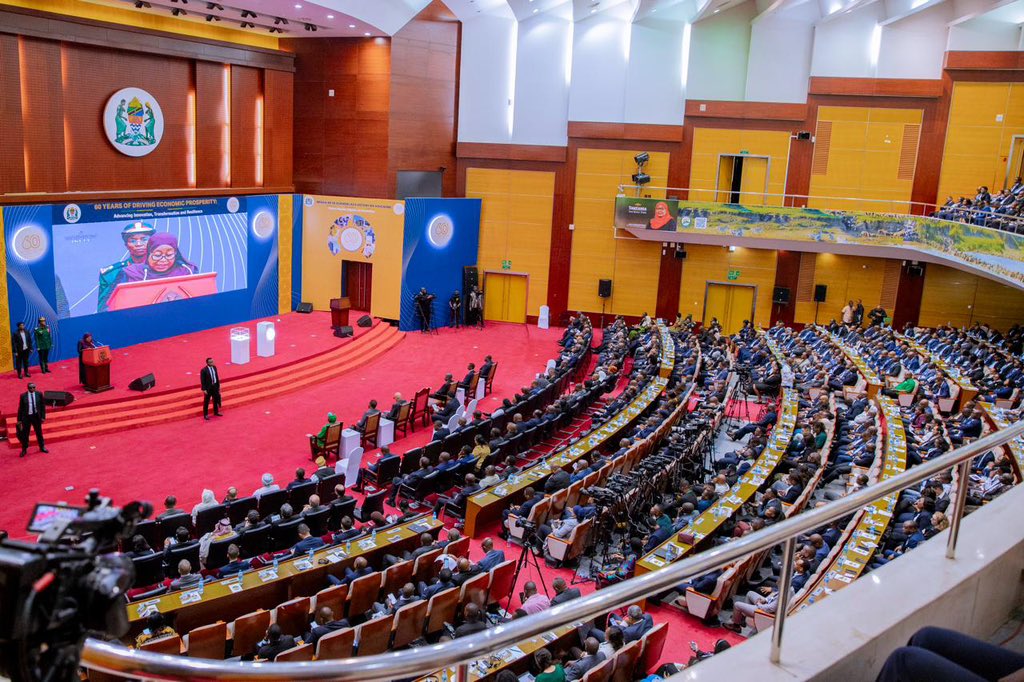

Speaking at celebrations marking the 60th anniversary of the Bank of Tanzania (BoT) in Dar es Salaam on Thursday, President Hassan said financial sector reforms and economic growth would have limited value if ordinary citizens were unable to benefit from them through expanded business opportunities and improved living standards.
“The success of the financial system must go hand in hand with the well-being of individual citizens,” she said. “Our measure of success should not be limited to the number of people who have access to financial services, but also to the extent to which these services help small businesses build capital and contribute meaningfully to the national economy.”
The president said policymakers and financial institutions should assess the real impact of financial services by examining whether they help people increase incomes, expand businesses, access financing and create jobs.
According to her, indicators such as the number of farmers receiving timely loans or young entrepreneurs turning innovative ideas into successful businesses provide a more accurate measure of whether financial inclusion is delivering tangible economic benefits.
President Hassan also urged lenders to address barriers that continue to restrict access to credit, including high interest rates, strict collateral requirements and lengthy approval procedures.
“When citizens raise concerns about high lending rates, they should be listened to rather than being presented with economic growth statistics,” she said.
She encouraged financial institutions to adopt innovative lending models capable of reaching underserved groups, particularly women and young entrepreneurs who often lack traditional collateral despite operating viable businesses.
“Many women and young people do not own land or property, yet they have thriving businesses, credible sales records and the ability to repay loans,” she said. “Financial institutions should find innovative ways to recognise and support such borrowers.”
The president called on lenders to consider alternative measures of creditworthiness, including business performance records and transaction histories, to broaden access to financing and stimulate entrepreneurship.
She said affordable credit would enable more Tanzanians to invest, create jobs and contribute more effectively to national development.
Speaking at the same event, Bank of Tanzania Governor Emmanuel Tutuba said Tanzania’s economic progress over the years has been supported by prudent monetary policy, financial sector reforms and institutional transformation.
Since its establishment in 1966, he said, the central bank has adapted to changing domestic and global economic conditions while maintaining macroeconomic stability and supporting sustainable growth.
“The reforms undertaken over the years enabled Tanzania to successfully navigate economic transitions and laid a foundation for sustainable growth and financial sector development,” Mr Tutuba said.
He added that the country’s external position remains stable, with foreign exchange reserves sufficient to cover more than four months of imports, above internationally recommended levels.
Looking ahead, Mr Tutuba said the central bank would continue promoting innovation, strengthening payment systems and expanding financial inclusion as part of efforts to support Tanzania’s Vision 2050 development agenda.
Finance Minister Ambassador Khamis Mussa Omar described the establishment of the Bank of Tanzania in 1966 as a milestone in the country’s economic history and a key pillar of monetary sovereignty.
He said the institution has played a central role in maintaining monetary stability, safeguarding the financial system and supporting economic development over the past six decades.
Zanzibar’s Deputy Minister for Finance and Planning, Dr Hamad Omar Bakar, also praised the central bank’s contribution to national development, describing its 60-year history as a testament to its resilience, credibility and enduring role in supporting economic progress.
He reaffirmed Zanzibar’s commitment to continued cooperation with the Bank of Tanzania to advance economic development and improve the welfare of future generations.
Notes to Editors
– The remarks were delivered during celebrations marking the 60th anniversary of the Bank of Tanzania, established in 1966.
– President Samia called for a shift in how financial sector success is measured, arguing that the ultimate benchmark should be improvements in livelihoods, business growth and job creation.
– The president urged banks to reduce barriers to credit, including high interest rates, stringent collateral requirements and lengthy loan approval processes.
Media Contact:
Information Services Department and Office of The Chief Government Spokesman
E-mail: maelezotv@gmail.com
Phone: +255 754 750 765, +255 754 698 856, +255 759 714, +255 713 381 904
Availability: EAT, UTC +3