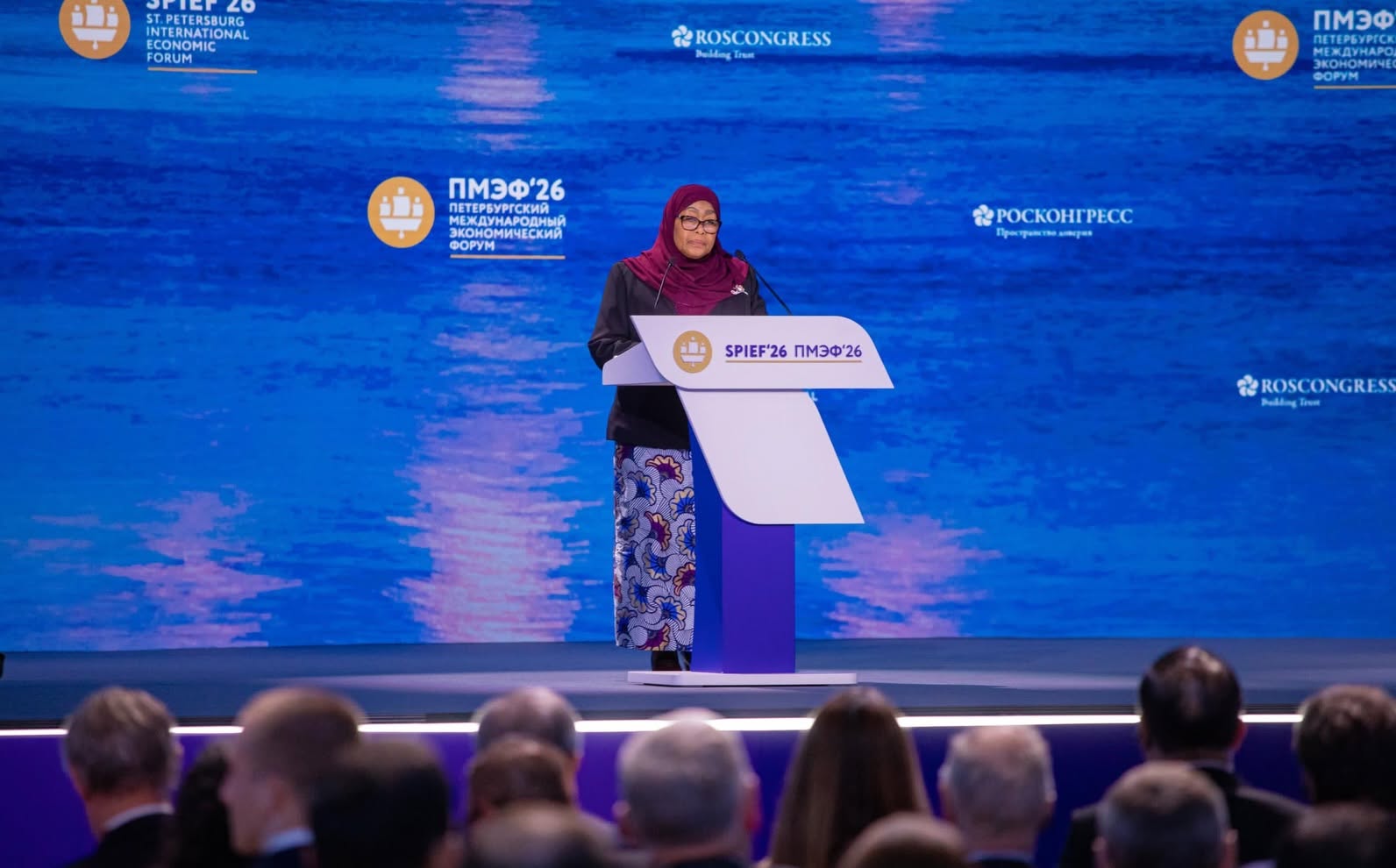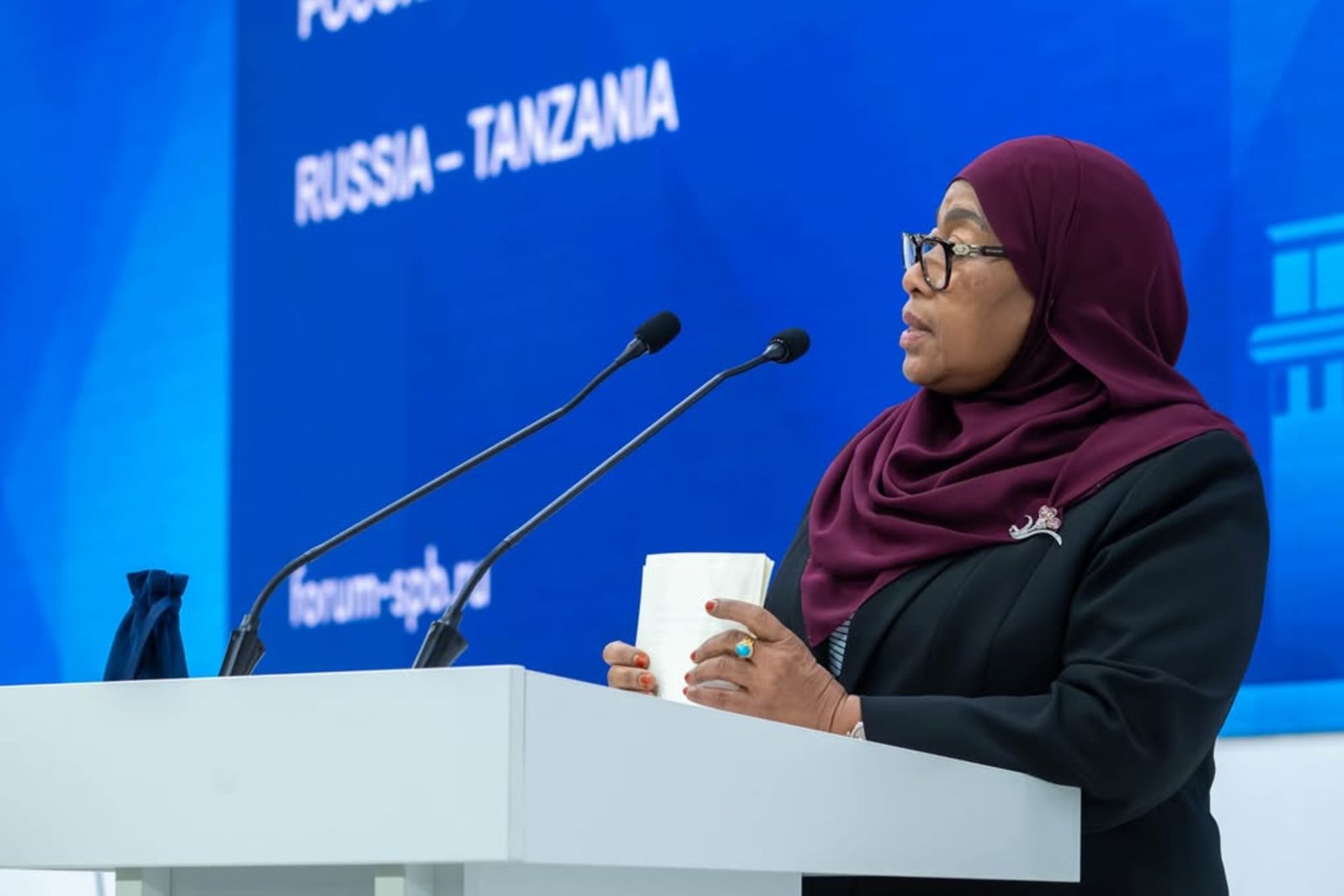
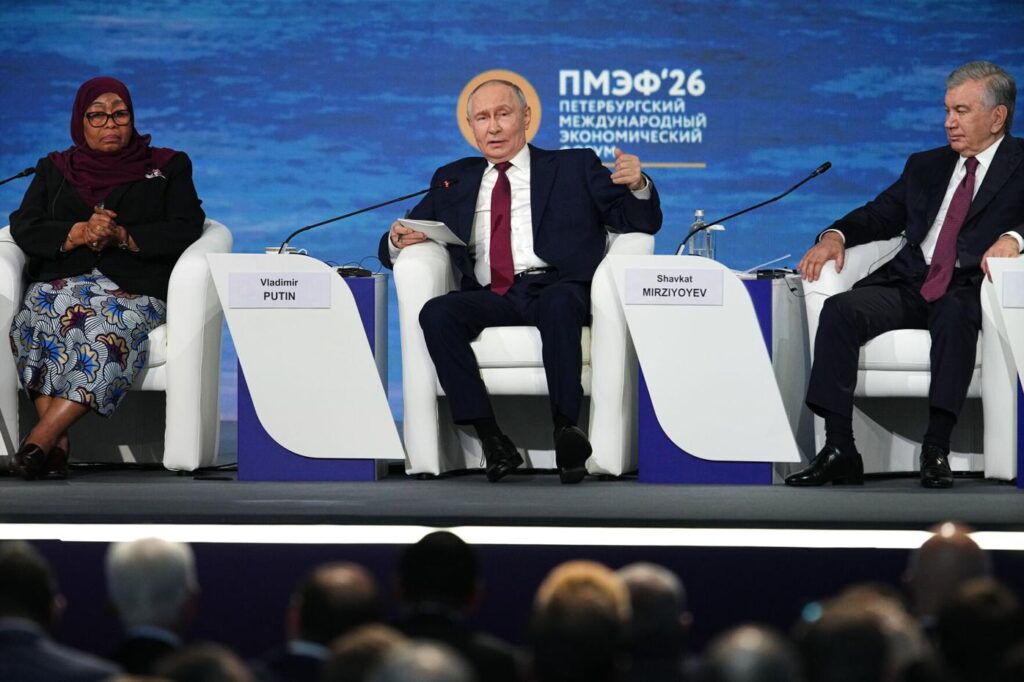
The visit, which includes bilateral talks with Russian President Vladimir Putin and participation in the St Petersburg International Economic Forum (SPIEF), marks Tanzania’s most significant diplomatic engagement with Moscow in decades and reflects a broader African shift toward diversifying international economic alliances.
Analysts view the trip as part of Tanzania’s wider strategy to secure new sources of capital, industrial technology, energy cooperation and infrastructure financing as the East African nation advances its long-term industrialisation agenda under Vision 2050.
The visit is the first by a Tanzanian head of state to Russia since founding President Julius Nyerere travelled to Moscow in 1969, highlighting renewed momentum in relations between the two countries.
Russia, ranked among the world’s largest economies by purchasing power parity, has increasingly expanded its economic footprint across Africa in recent years through investments in energy, mining, agriculture, education and security cooperation.
For Tanzania, the partnership offers opportunities to accelerate industrial growth, improve energy infrastructure and expand value-added production in key sectors of the economy.
Although diplomatic relations between Tanzania and Russia date back to the Soviet era, economic cooperation has remained relatively limited. Bilateral trade currently stands at approximately 307.5 million US dollars annually, a figure both countries are seeking to expand significantly.
Officials expect several agreements to be signed during the visit covering higher education, science and technology, ICT, transport and investment promotion. However, observers note that the long-term success of the visit will depend on implementation and whether agreements translate into measurable economic activity.
Energy cooperation in focus
Energy is expected to dominate discussions between the two sides.
Tanzania is seeking strategic partnerships to develop its estimated 57 trillion cubic feet of natural gas reserves while expanding electricity generation capacity to support industrialisation and economic growth.
Russia, which remains a major global player in oil, gas, nuclear energy and industrial engineering, could play a role in supporting Tanzania’s ambitions in gas processing, fertiliser manufacturing, petrochemical industries and large-scale power infrastructure.
Reliable and affordable energy remains one of Tanzania’s most critical development priorities, particularly as the government seeks to expand manufacturing and attract industrial investment.
Mining and industrial processing
Mining is also expected to feature prominently in negotiations.
Tanzania possesses substantial deposits of gold, graphite, coal, nickel, uranium and rare earth minerals, many of which are increasingly important to global technology and energy supply chains.
The government has been pushing to increase local value addition and reduce dependence on raw mineral exports.
Russia’s expertise in mineral processing, metallurgy and geological exploration could help Tanzania develop refining facilities, industrial processing plants and technical training programmes aimed at strengthening domestic industrial capacity.
Economists say such partnerships could allow Tanzania to capture greater value from its natural resources while supporting employment creation and technology transfer.
Agriculture and food security
Agriculture, which employs the majority of Tanzanians, is another sector with significant cooperation potential.
Russia is among the world’s leading grain exporters and a major supplier of fertilisers and agricultural machinery, while Tanzania continues to rely heavily on imported agricultural inputs.
Expanded cooperation could support fertiliser production, irrigation systems, mechanisation and agro-processing industries, all of which are considered essential for improving productivity and food security.
The two countries have already discussed joint investment opportunities following recent Tanzania-Russia business forums, particularly in value-added agricultural processing.
Tanzania also hopes to expand exports to the Russian market beyond traditional products such as coffee, tea and tobacco to include horticultural produce, leather products and minerals.
Transport and connectivity
Improved connectivity is another major area of focus.
One of the most concrete outcomes already announced ahead of the visit is the planned launch of direct Air Tanzania flights between Tanzania and Moscow later this year.
The move is expected to strengthen tourism, business travel and trade logistics between the two countries while reducing transportation barriers.
Beyond aviation, both governments have previously discussed broader cooperation in transport and logistics infrastructure, areas considered central to Tanzania’s ambition of becoming a regional trade and logistics hub for East and Central Africa.
Tourism opportunities ahead of AFCON 2027
Tourism could also benefit from closer ties between the two nations, particularly as Tanzania prepares to co-host the Africa Cup of Nations (AFCON 2027).
Industry stakeholders believe direct air links could increase the number of Russian tourists visiting Tanzania’s major attractions, including Zanzibar, Serengeti National Park, Ngorongoro Conservation Area and Mount Kilimanjaro.
Russian travellers are increasingly seeking long-haul tourism destinations, including wildlife and beach tourism experiences.
Diversifying tourist markets is viewed as important for Tanzania’s tourism sector, which remains a major source of foreign exchange earnings.
Agreements in higher education, science and technology are also expected to feature prominently during the visit.
Russia has historically maintained strong academic and technical training programmes in engineering, medicine, mathematics and industrial sciences.
Tanzania is expected to pursue expanded scholarship programmes, research cooperation and technical training partnerships to strengthen local human capital development.
Experts argue that sustainable industrialisation depends not only on physical infrastructure but also on investment in scientific skills, innovation and technical expertise.
Balancing Opportunity and Strategy
While the visit presents significant economic opportunities, analysts caution that Tanzania will need to approach new partnerships strategically to maximise long-term benefits.
Past bilateral agreements involving developing economies have often struggled to produce meaningful economic transformation due to weak implementation, insufficient project preparation and limited institutional coordination.
Observers say Tanzania’s focus should remain on securing investments that promote technology transfer, local participation, skills development and industrial value addition.
President Samia’s visit to Russia is being viewed as more than a symbolic diplomatic engagement. It signals Tanzania’s intention to broaden its international economic partnerships and position itself as an increasingly attractive destination for trade, investment and industrial cooperation.
If effectively implemented, agreements emerging from the visit could support Tanzania’s industrialisation ambitions, strengthen energy security, increase exports, create jobs and stimulate long-term economic growth.
Notes to Editors
– The visit reflects Tanzania's broader strategy of engaging multiple global partners while maintaining a non-aligned foreign policy posture.
– The energy dimension is particularly important given Tanzania's 57 trillion cubic feet of natural gas reserves and industrialisation ambitions.
– Mining cooperation aligns with Tanzania's growing focus on critical minerals needed for global energy-transition supply chains.
Media Contact:
Information Services Department and Office of The Chief Government Spokesman
E-mail: maelezotv@gmail.com
Phone: +255 754 750 765, +255 754 698 856, +255 759 714, +255 713 381 904
Availability: EAT, UTC +3