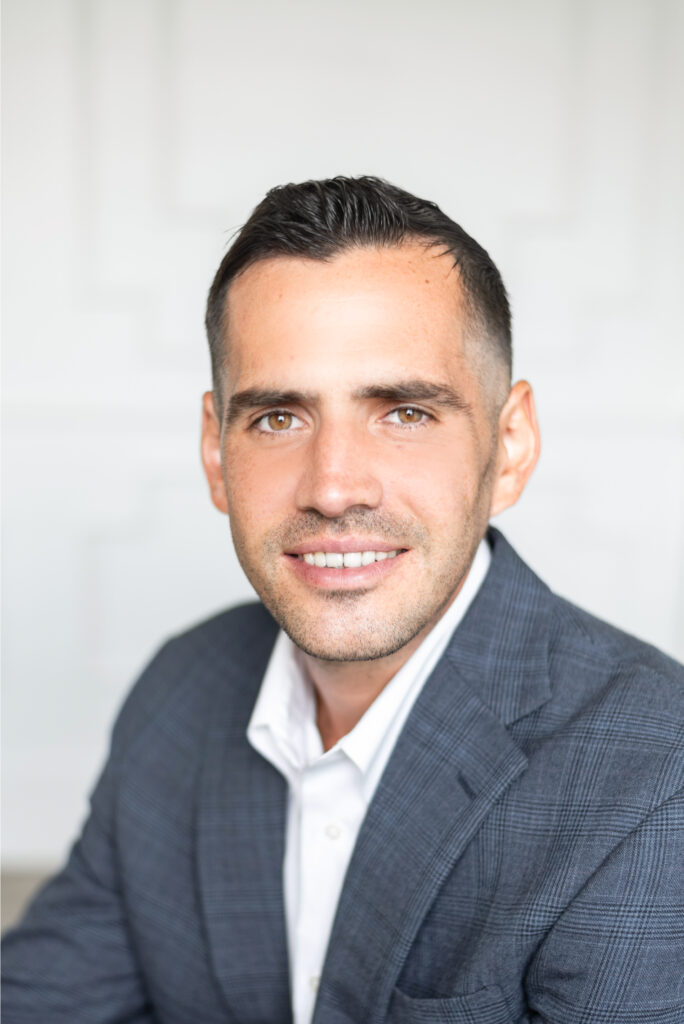
For nearly twenty years, Craig Considine was one of America’s most visible Catholic defenders of Islam. A sociologist at Rice University, he wrote books that praised the Prophet Muhammad and championed Muslim-Christian dialogue. In short, he devoted much of his career to building bridges between and across faiths.
Then he became an outspoken supporter of the Abraham Accords and spoke out in favor of Israel’s right to defend itself following Hamas’s October 7, 2023 attack.
The backlash, he says, was swift. Former friends and allies turned against him. His integrity and motivations were questioned. His social media accounts were flooded with hostile messages. And the scholar who had spent much of his career defending Muslims against prejudice and working with Muslim organizations on meaningful paths for interfaith cooperation found himself confronting a different kind of intolerance—one that he believes reveals a far larger political and ideological struggle.
“They tried to silence me for defending peace,” says Considine. “And for defending a liberal democratic order and the very values on which Western civilization rests.”
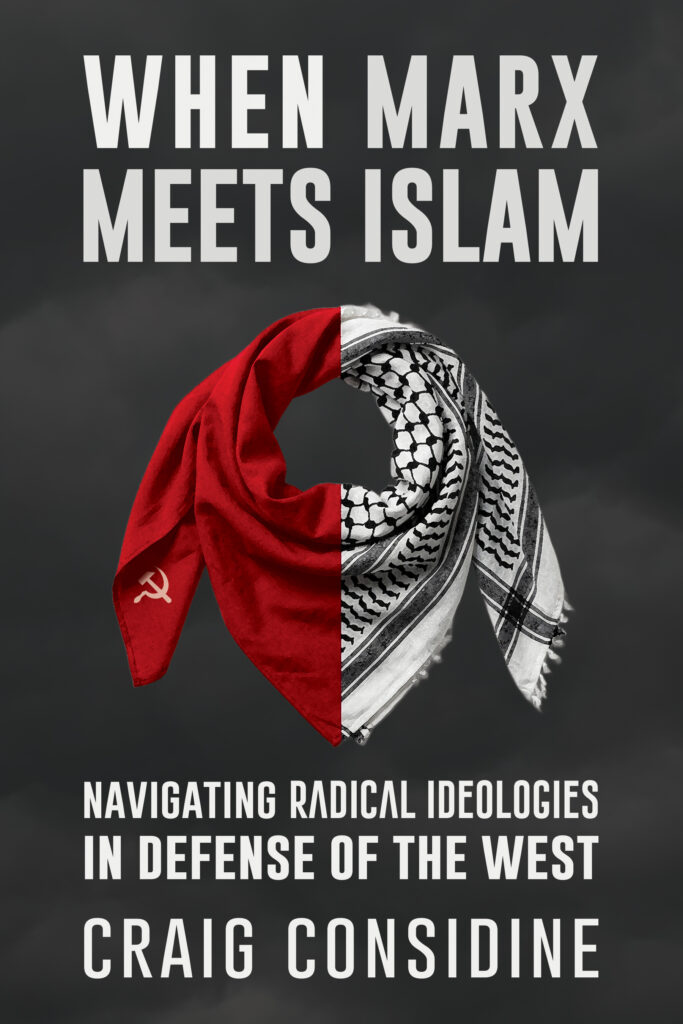
In When Marx Meets Islam: Navigating Radical Ideologies in Defense of the West (Pitchstone Publishing, October 2026), Considine delivers a hard-hitting examination of what he calls the most dangerous ideological alliance of the twenty-first century: the convergence of revolutionary Leftism and political Islam.
At first glance, Marxism and Islamism seem like unlikely partners. One is rooted in secular revolutionary politics, the other in religious fundamentalism. Yet, Considine argues that the two increasingly find common cause in opposition to Western liberalism, Israel, and the institutions and values of the Enlightenment.
The result, he warns, is a “soft war” against the West—one being fought not primarily with conventional weapons, but through universities, political movements, cultural institutions, activist networks, and the battle for public opinion.
From Interfaith Advocate to Ideological Dissident
Considine’s transformation began with the Abraham Accords in 2020. Having witnessed efforts to foster Jewish-Muslim cooperation in the United Arab Emirates, he embraced the agreements as an extraordinary opportunity for peace. But his increasingly vocal support for Israel and a broader Jewish-Christian-Muslim partnership came with a personal and professional cost.
Critics accused him of betraying the Palestinian cause in particular and the Muslim world more broadly. Others attacked his theological views or portrayed his interfaith work as part of a supposed shadowy plot to create a new religion called “Abrahamism.” Considine says he also faced online campaigns that aimed to discredit and silence him.
The experience forced him to reassess intellectual and political movements he had once defended. He could no longer dismiss growing criticisms of them as nothing more than anti-Muslim prejudice. He knew, firsthand, the charges had substance.
In an unexpected turn, Considine became a writing fellow at the Middle East Forum—an organization that had previously criticized his own work. Today, he credits that intellectual reckoning with liberating him to follow the evidence wherever it leads.
His central conclusion: the alliance between revolutionary Leftism and Islamism is neither accidental nor confined to the fringes of politics—and it is increasingly and uniquely dangerous.
The Ideas, Networks, and Institutions Behind the “Red-Green Alliance”
In When Marx Meets Islam, Considine traces the intellectual foundations of this convergence through four influential thinkers: Karl Marx, Antonio Gramsci, Frantz Fanon, and Edward Said.
He argues that their ideas—concerning oppression, cultural hegemony, revolutionary resistance, and Western power—have helped create a common ideological language for movements that otherwise appear to have little in common.
Moving from theory to practice, Considine examines the alliance’s alleged influence across American universities, progressive political organizations, civil society, and international institutions. He also considers the role of foreign funding, the rise of anti-Israel activism, and the increasingly hostile environment for Jewish students and dissenting voices on college campuses.
His work raises provocative questions:
- Why do some secular progressives find common cause with religious fundamentalists whose social values they otherwise reject?
- How have American universities become battlegrounds in international ideological conflicts?
- And how should an open society respond to movements that exploit its very freedoms while working to undermine them?
Most importantly, Considine does not stop at identifying the threat. Drawing on the philosophical “paradox of tolerance,” he offers a strategy for defending liberal democracy without surrendering the freedoms that make it worth defending.
A Warning from Someone Who Knows Both Sides
What distinguishes When Marx Meets Islam from other critiques of the radical Left and political Islam is the author himself.
A faculty member in the Department of Sociology at Rice University since 2015 and the author of ten books, Considine has spent much of his professional life studying Islam, religious pluralism, and relations between Muslims and Christians. He is neither a lifelong critic of Islam nor a newcomer to the ideological debates he now confronts.
Indeed, he remains committed to interfaith dialogue. What has changed is his understanding of the sociopolitical forces that, he argues, seek to manipulate it.
His message is not that Christians, Muslims, and Jews cannot coexist. It is that genuine coexistence requires confronting ideological movements that stand in its way.
At a time of mounting antisemitism, deepening political polarization, and renewed debate over the direction of American universities, his book promises to challenge readers across political and ideological spectrums. Ultimately, however, it is about the very future of the West—and that discussion must begin with an open and honest airing of today’s realities, no matter how frank or uncomfortable they might be to some.
“When Marx Meets Islam is my refusal to stay silent,” says Considine.
“Applied Scholarship at Its Best”
Early endorsements underscore both the book’s unapologetic arguments and its practical ambitions.
Gregg Roman, Executive Director of the Middle East Forum, calls When Marx Meets Islam “applied scholarship at its best,” praising Considine’s ability to identify the threat, map networks connecting academia, political activists, organizations, and foreign patrons, and offer a strategy for confronting them.
Lauri B. Regan of Scholars for Peace in the Middle East describes the book as “a must-read” for understanding the coalition’s use of academia to advance its agenda.
Jim Hanson, a Fox News contributor and former U.S. Army Special Forces member, warns simply: “Europe chose submission; America cannot do the same.”
About the Author
Craig Considine is an award-winning Senior Lecturer in Sociology at Rice University, where he has served since 2015. He is known for his contributions to interfaith dialogue and his acclaimed scholarly works, including People of the Book: Prophet Muhammad’s Encounters with Christians and Beyond Dialogue: Building Bonds Between Christians and Muslims. He lives in Houston, Texas.
When Marx Meets Islam
(919) 695-3029
October 2026 / ISBN 9781634312929 / 216 pages / $19.95 / paperback
For review copies, interview requests, excerpts, or additional information, please contact publicity@pitchstonebooks.com