
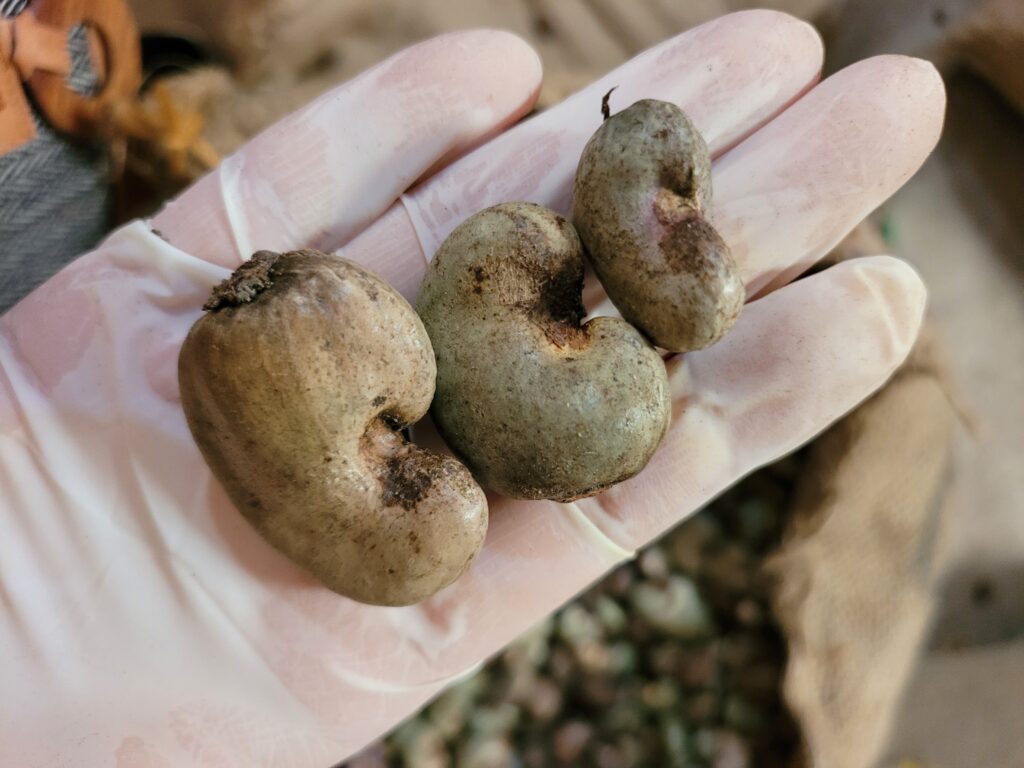
The sales, conducted under the Warehouse Receipt System managed by the Board of Warehouse Receipts, involved 60 warehouses and 46 licensed companies across eight regions, including Lindi, Mtwara, Ruvuma, Pwani, Morogoro, Singida, Mbeya, and Tanga.
The auctions, averaging TZS 5,220 per kilogram, also allowed local authorities to collect approximately TZS 25 billion in crop taxes, providing additional resources for community services.
“This demonstrate the value of modernising our agricultural marketing systems, by ensuring farmers receive fair prices, we are improving household incomes, supporting rural economies, and strengthening social services,” ” Industries and Trade Minister Judith Kapinga said.
Cashew is a critical export crop for Tanzania, contributing significantly to foreign exchange earnings and rural livelihoods. Southern regions such as Lindi and Mtwara produce the bulk of the nation’s cashews, which are processed both domestically and abroad. Historically, the sector faced challenges including limited storage, low processing capacity, post-harvest losses, and restricted access to organised markets.
To address these challenges, the government has invested in warehouse infrastructure, digital auction platforms, and regulatory oversight. The reforms not only increase efficiency and transparency but also encourage private-sector investment in local processing facilities.
Around 300 formal jobs and 6,730 informal jobs were created across warehouses, transport networks, and processing units during this season, providing critical employment in rural areas.
Tanzania’s Warehouse Receipt System allows farmers to deposit their harvests in certified warehouses, receive a receipt representing the stored quantity, and sell through secure digital auctions. This approach guarantees competitive pricing and reduces delays in payments, ensuring that revenue reaches farmers directly.
The system has transformed cashew marketing in Tanzania, professionalising the value chain, while reducing post-harvest losses, and improving price transparency, which makes Tanzanian cashews more competitive in regional and global markets.
Regionally, Tanzania faces competition from Mozambique, which has modernised its cashew marketing and processing systems, and from Kenya and Uganda, which are also developing mechanisms to link farmers to structured markets.
Tanzania’s emphasis on warehouses, digitisation, and local processing could give it a competitive advantage in East African and international markets.
The government has also focused on increasing domestic processing capacity to capture more value within the country.
Several cashew-shelling factories are now operational in southern Tanzania, creating employment while improving product quality for export.
These initiatives complement broader efforts to formalise agriculture, increase rural incomes, and reduce dependency on raw exports.
Minister Kapinga stressed that the benefits extend beyond financial gains. “Farmers are now able to invest in better housing, education for their children, and food security, while local governments can enhance public services,” she said, insisting, “This integrated approach strengthens both livelihoods and regional economic competitiveness.”
The 2025/2026 season highlights Tanzania’s commitment to modernising strategic agricultural sectors and demonstrates the country’s ability to attract private investment, ensure transparency, and empower rural communities.
By combining warehouse infrastructure, digital auctions, and policy reforms, Tanzania aims to solidify its position as a leading cashew producer in East Africa and enhance its share in global markets.
Key statistics for international readers:
- Cashew sold: 438,272 tonnes
- Payments to farmers: TZS 1.1 trillion ($460 million)
- Average price per kg: TZS 5,220
- Warehouses used: 60
- Licensed companies: 46
- Regions covered: 8 (Lindi, Mtwara, Ruvuma, Pwani, Morogoro, Singida, Mbeya, Tanga)
- Taxes collected: TZS 25 billion
- Jobs created: 300 formal, 6,730 informal
Notes to Editors
· Tanzania sold 438,272 tonnes of cashew nuts through digital auctions in the 2025/2026 season, paying farmers TZS 1.1 trillion (≈$460 million).
· Sales were conducted under the Warehouse Receipt System (WRS), overseen by the Board of Warehouse Receipts, covering 60 warehouses and 46 licensed companies.
· Cashews were traded across eight regions: Lindi, Mtwara, Ruvuma, Pwani, Morogoro, Singida, Mbeya, and Tanga.
Media Contact:
Information Services Department and Office of The Chief Government Spokesman
E-mail: maelezotv@gmail.com
Phone: +255 754 750 765; +255 754 698 856; +255 759 714; +255 713 381 904
Availability: EAT, UTC +3
ENDS