
[PRESSWIRE] DODOMA, Tanzania – 2026-02-05 — 5th February, 2026
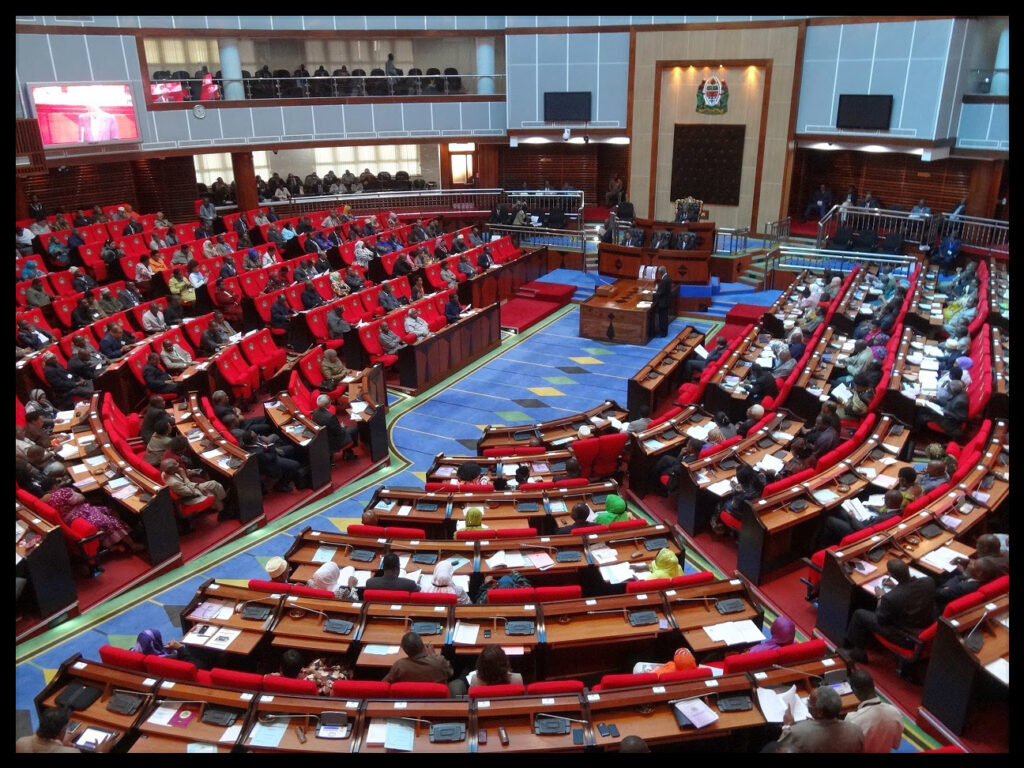
Tanzanian lawmakers are urging the government to scale up investment in agriculture, livestock and fisheries, warning that the country risks missing ambitious long-term income and growth targets without a sustained shift of capital into its most employment-intensive sectors.
The calls came during parliamentary debates on Tanzania’s Long-Term Development Master Plan for 2026/27–2050/51, the proposed Fourth Five-Year Development Plan (FYDP IV) and the draft National Development Plan for the 2026/27 fiscal year, the first operational phase of President Samia Suluhu Hassan’s Vision 2050 strategy.
Vision 2050 aims to transform Tanzania into an upper middle-income economy, raising per capita income to $1,638 by 2030 and $7,000 by 2050 through faster growth, industrialisation and deeper private-sector participation.
Several lawmakers said those targets would be difficult to achieve without repositioning agriculture, which employs the majority of Tanzanians, as a commercially viable, investment-driven sector rather than a subsistence activity.
Busega MP Saimon Songe said irrigation-led agriculture would be central to lifting productivity and rural incomes, calling for farmers to be treated as investors with access to capital, infrastructure and markets.
“With irrigation, production can be increased to as many as three cycles a year, significantly boosting output and incomes,” Songe told parliament.
Agriculture accounts for a relatively modest share of Tanzania’s gross domestic product despite its dominant role in employment, a structural imbalance lawmakers said continues to constrain growth, exports and poverty reduction.
Patrick Mwalunenge, an MP from Mbeya Urban, said meeting national development targets would require prioritising irrigation-based agriculture and lifting the sector’s contribution to GDP to at least 10%.
Lawmakers also called for renewed investment in strategic export and cash crops, including cotton, cashew nuts, coffee, tea, cocoa and sesame, citing their importance for foreign exchange earnings, agro-processing and rural job creation.
Several MPs said underfunding of commodity boards had undermined production and value chains, with cotton highlighted as a sector struggling to recover due to budget constraints and weak institutional support.
“Without adequate financing for commodity boards, it is difficult to raise output, improve quality or attract private investment,” lawmakers said during the debate.
Concerns were also raised about the execution and oversight of public investment projects. Mpanda Rural MP Moshi Kakoso said a number of irrigation schemes launched last year had since stalled or collapsed, raising questions about project management and accountability.
“To achieve the income levels set out in Vision 2050, oversight across productive sectors; agriculture, fisheries and livestock, must be strengthened,” Kakoso said, noting that their combined contribution to the economy remains limited relative to their potential.
Katavi MP Thomas Maganga said institutional performance would be critical to long-term delivery, calling for reforms within the public sector to ensure accountability and results.
“Reaching a per capita income of $7,000 by 2050 will require a change in mindset. Those who do not perform must be replaced,” Maganga said.
On livestock, lawmakers urged the government to support pastoralists to adopt modern production methods, establish designated grazing areas and invest in water infrastructure to improve productivity and reduce conflicts over land and resources.
Ilemela MP Musa Mbuga said progress in expanding irrigation agriculture had been slower than planned and called for increased investment to strengthen food security and support economic growth.
The debate comes as Tanzania seeks to position itself as an increasingly attractive destination for private capital, with the government signalling that up to 70% of financing for FYDP IV is expected to come from the private sector through investment and public-private partnerships.
While agriculture, agro-processing, logistics and climate-resilient infrastructure present crucial opportunities, challenges such as productivity gaps, project execution risks and access to finance as persistent constraints persist.
Lawmakers are arguing that addressing those bottlenecks would be critical if Tanzania is to translate long-term plans into bankable projects capable of attracting domestic and foreign investment while delivering inclusive growth.
· Agriculture, livestock and fisheries collectively employ the majority of Tanzanians but contribute a relatively modest share to gross domestic product, a structural imbalance lawmakers say constrains growth and poverty reduction.
· Lawmakers are calling for a shift from subsistence agriculture to commercially oriented, irrigation-led production, with farmers treated as investors supported by capital, infrastructure and market access.
· Irrigation is viewed as a key productivity driver, with the potential to allow multiple production cycles per year, raising output and rural incomes.
Media Contact:
Information Services Department and Office of The Chief Government Spokesman
E-mail: maelezotv@gmail.com
Phone: +255 754 750 765; +255 754 698 856; +255 759 714; +255 713 381 904
Availability: EAT, UTC +3
ENDS