
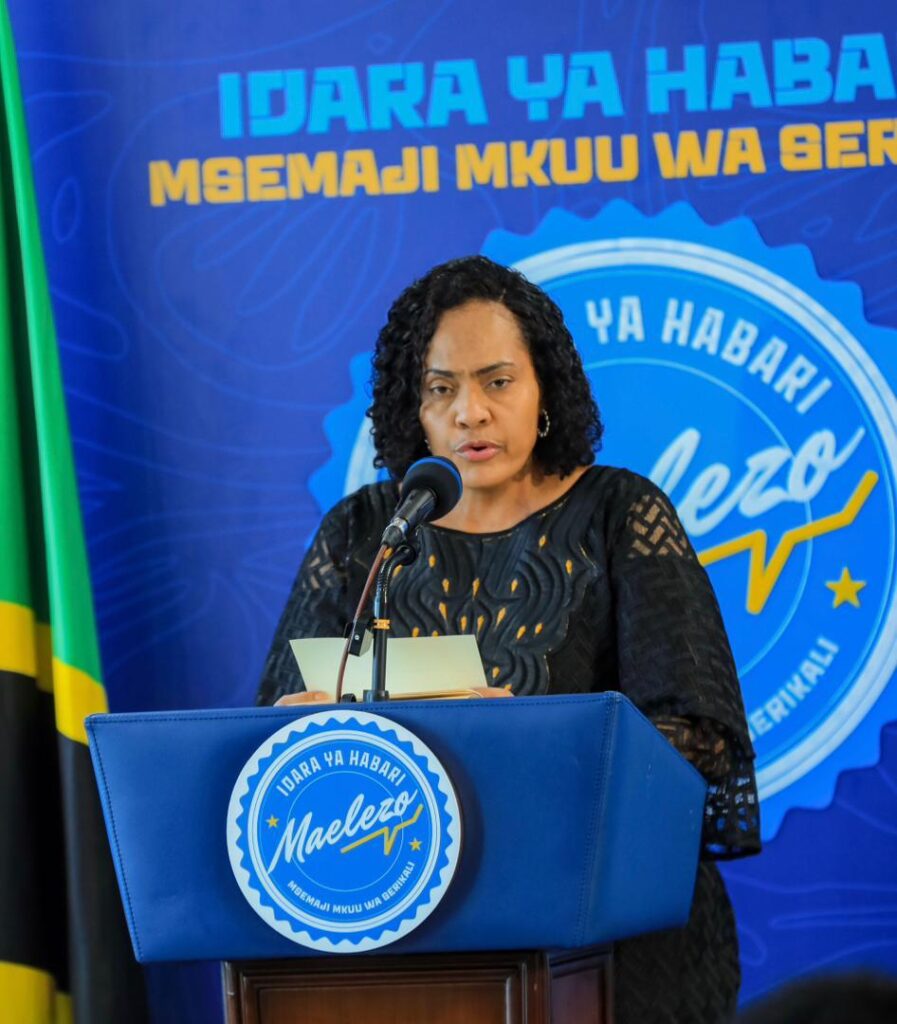
[PRESSWIRE] Dodoma, Tanzania – 9 February, 2026 — Tanzania is taking bold steps to cement its role in the global space sector with the unveiling of a Five-Year Strategic Plan for Space Programmes (2025–2030), a key milestone in the country's journey toward advancing satellite technology and harnessing space for socio-economic development.
The new space strategy, which was announced during the Ministry of Communication and Information Technology's 100-day performance report in Dodoma, is titled "From Mount Kilimanjaro, the Peak of Africa, to Space."
The initiative lays out a comprehensive framework with five key strategic pillars aimed at driving the governance, coordination, and execution of space projects.
The five pillars include establishing governance frameworks, policies, and institutional structures; strengthening Tanzania’s involvement in international space collaborations; developing human capital, research, and innovation; enhancing public awareness about space; and fostering the adoption of space technologies in sectors like agriculture, mining, maritime, and the environment.
Angellah Kairuki, Minister for Communication and Information Technology, revealed that the Tanzanian government has already begun drafting the 2026 National Space Policy and the 2026 Space Act. The documents are expected to create a supportive environment for satellite development, space exploration, and the use of space technologies across a range of critical sectors.
“These efforts will enable coordinated research and practical applications of satellite technology, boosting sectors such as agriculture, environmental monitoring, mining, maritime operations, and other key economic and social activities,” Kairuki stated.
The plans highlight Tanzania’s ambition to become a regional leader in space science and technology, with tangible benefits for national development.
In a significant step forward, the Ministry has partnered with St Joseph University of Tanzania (SJUIT) and Tumaini University (TURDACO) in Dar es Salaam to develop training and research satellites. This collaboration is part of the broader push to develop local capacity in satellite technology and space science, aiming to create a skilled workforce capable of supporting the country's growing space ambitions.
On infrastructure development, Kairuki noted that the government had completed the design and procurement phases with a satellite equipment manufacturer. This marks the beginning of satellite production in the country, setting the stage for Tanzania’s entry into the satellite manufacturing industry.
The government has also forged partnerships with several higher learning institutions, including the University of Dar es Salaam (UDSM), the University of Dodoma (UDOM), the State University of Zanzibar (SUZA), and Mbeya University of Science and Technology (MUST). The collaborations, valued at 2.94 billion Tanzanian shillings (approximately $1.2 million), are designed to support preliminary programmes under the National Digital Technology Institute (NDTI), which is central to the country’s digital and technological transformation.
“These partnerships are crucial for accelerating our space and digital capabilities,” said Kairuki. “They will support the training of professionals in emerging technologies such as Artificial Intelligence (AI), the Internet of Things (IoT), Robotics, Data Analytics, and Cybersecurity.”
In addition to space and satellite programmes, the government has also prioritised the development of the National Digital Technology Institute (NDTI) at Nala in Dodoma. The 167.37 million USD project is set to produce a new generation of skilled professionals in advanced technology fields, further advancing Tanzania’s position as a regional leader in digital innovation.
The Ministry also made strides in expanding the training ecosystem for emerging technologies. It has launched a joint programme involving employers, Technical and Vocational Education and Training (TVET) colleges, and universities to align educational curricula with industry demands in critical sectors like energy, ICT, and value-added industries.
As part of this effort, students from the Vocational Education and Training Authority (VETA) will have opportunities for industrial attachments, gaining hands-on experience to better prepare them for the workforce.
Furthermore, the Ministry has collaborated with Hanyang University of South Korea to offer training for NDTI instructors and exchange expertise in institutional management. This international cooperation reflects Tanzania's desire to leverage global expertise as it builds its space and technology programmes.
Kairuki’s announcement has made it clear that Tanzania's space ambitions are no longer a distant dream but a strategic priority. As the country develops its infrastructure, human capital, and technological capabilities, the government is setting its sights on not only advancing space science but also leveraging space-based technologies to address national development challenges.
In just 100 days, these initiatives signal the beginning of a new era for Tanzania, one that could see the country not only benefit from space exploration but also play an active role in shaping the future of space technology across the African continent and beyond.
· The Five-Year Strategic Plan for Space Programmes (2025–2030) was unveiled during the Ministry of Communication and Information Technology’s 100-day performance report in Dodoma.
· The strategy is titled “From Mount Kilimanjaro, the Peak of Africa, to Space.”
· Tanzania is drafting a 2026 National Space Policy and a 2026 Space Act to establish a regulatory and institutional framework for satellite development and space technology applications.
Media Contact:
Information Services Department and Office of The Chief Government Spokesman
E-mail: maelezotv@gmail.com
Phone: +255 754 750 765; +255 754 698 856; +255 759 714; +255 713 381 904
Availability: EAT, UTC +3
ENDS