
[PRESSWIRE] DODOMA, Tanzania – 2026-02-06 — 6th February, 2026
Tanzania has made measurable progress in expanding digital connectivity, financing innovation and modernising ICT-enabled services, government data show, positioning the country ahead of many peers in East Africa and key parts of sub-Saharan Africa.
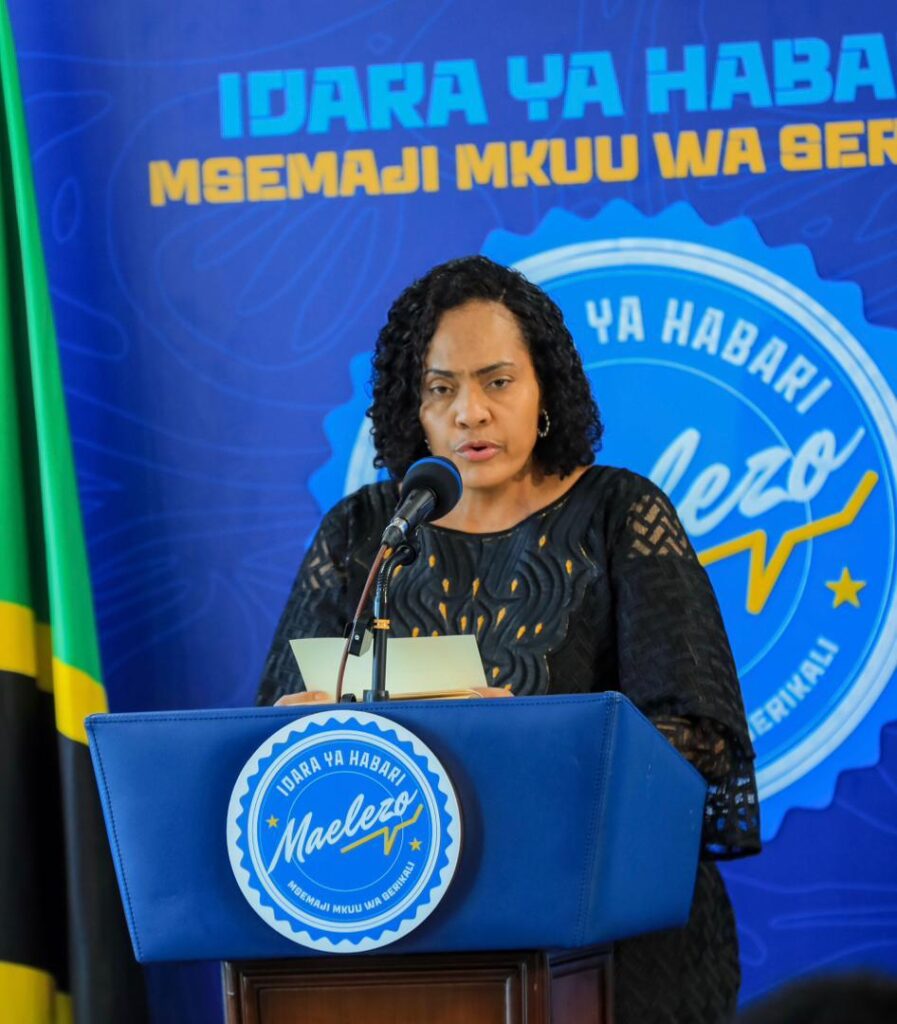
Presenting the Ministry of Information, Communication and Information Technology’s performance report in the first 100 days of President Samia Suluhu Hassan’s renewed mandate, Minister Angellah Kairuki said expanding reliable digital access for citizens and businesses remains a priority for economic growth, innovation and public service efficiency.
To support start-ups and small and medium-sized enterprises (SMEs), the government has allocated 5 billion Tanzanian shillings to improve access to capital, with 50 companies expected to benefit via commercial banks once eligibility criteria are met.
Applications open on official digital platforms from February 11, 2026. Preparations are also underway to establish an ICT Start-ups Development Fund to provide sustained financing for young innovators facing barriers to conventional funding.
The ministry has completed guidelines that allow registered start-ups to participate in government procurement through an integrated link between the SAFARI HUNT System and the National Electronic Public Procurement System (NeST).
Meanwhile, the Digital Tanzania Project has connected 800 public institutions to the Government Communication Network (GovNet), strengthening digital service delivery and responsiveness.
Tanzania’s telecommunications sector continues to grow. Registered mobile lines increased from 99.3 million in October 2025 to 106.9 million in January 2026, while internet users rose from 56.3 million to 58.1 million in the same period.
Mobile money users jumped from 71.7 million to 76.5 million, reflecting high uptake of mobile financial services. Communication costs have remained stable, with voice calls averaging 29 shillings per minute and out-of-bundle data about 9.35 shillings per megabyte.
Revenue performance also improved: the ministry collected 132.29 billion shillings, exceeding its target by nearly 10%, attributed to enhanced efficiency and ICT-driven revenue systems.
Through the Universal Communications Service Access Fund (UCSAF), Tanzania has completed 758 communication towers in 713 wards at a cost of 126 billion shillings, benefiting around 8.5 million citizens.
A further 304 towers have been upgraded to 3G and 4G standards. Of 636 new towers under construction, 398 are complete and 371 operational. Contracts for 201 additional towers covering 263 villages have been signed, with completion expected by March 2027, bringing services to an estimated 2.8 million more people.
Ten additional districts, including Kilwa, Maswa and Bariadi, have been linked to the National ICT Broadband Backbone, bringing total coverage to 119 of 139 districts, with full nationwide backbone coverage expected by June 2026. Public Wi-Fi is available at 61 locations — including markets, bus terminals, universities and Dar es Salaam Rapid Transit stations — out of a planned 120.
State-owned Tanzania Telecommunications Company Limited (TTCL) expanded its fibre-to-home customer base from 46,512 to 54,418, a 17% increase, indicating rising demand for broadband connectivity.
Tanzania’s digital gains come at a time of uneven connectivity across Africa. While mobile internet access remains the primary mode of connectivity on the continent, overall penetration and usage lag global averages.
As of early 2025, internet penetration across sub-Saharan Africa stood around 27–28%, well below the global rate of about 66%.
Many countries see large gaps between coverage, the share of the population that can technically access a network, and usage, reflecting affordability and digital skills barriers.
Tanzania’s reported rise in internet users (over 58 million by early 2026) also sits alongside strong mobile adoption: mobile penetration in the region has surged, though internet usage rates vary widely.
For example, Nigeria and Egypt, two of Africa’s largest digital markets, reported more than 107 million and 96 million internet users respectively by early 2025.
In the East African Community, mobile money penetration averages roughly 64%, with Tanzania among the higher adopters alongside Kenya and Uganda. While smartphone adoption and 4G coverage are more advanced in Kenya, with high population coverage and higher usage rates — Tanzania’s expanding infrastructure and policy reforms reflect deliberate progress on connectivity and inclusion.
Such expansions are crucial for economic transformation, enabling e-government, fintech, e-commerce and digital entrepreneurship — sectors that contribute to broader employment and financial inclusion.
· The government has allocated 5 billion Tanzanian shillings to improve access to capital for start-ups and SMEs. Fifty companies are expected to benefit through commercial banks once eligibility criteria are met. Applications open on official digital platforms from February 11, 2026.
· Preparations are underway to establish an ICT Start-ups Development Fund aimed at providing sustained financing for innovators who face barriers to conventional lending.
· Guidelines now enable registered start-ups to participate in public procurement through integration between the SAFARI HUNT System and the National Electronic Public Procurement System (NeST).
Media Contact:
Information Services Department and Office of The Chief Government Spokesman
E-mail: maelezotv@gmail.com
Phone: +255 754 750 765; +255 754 698 856; +255 759 714; +255 713 381 904
Availability: EAT, UTC +3
ENDS