
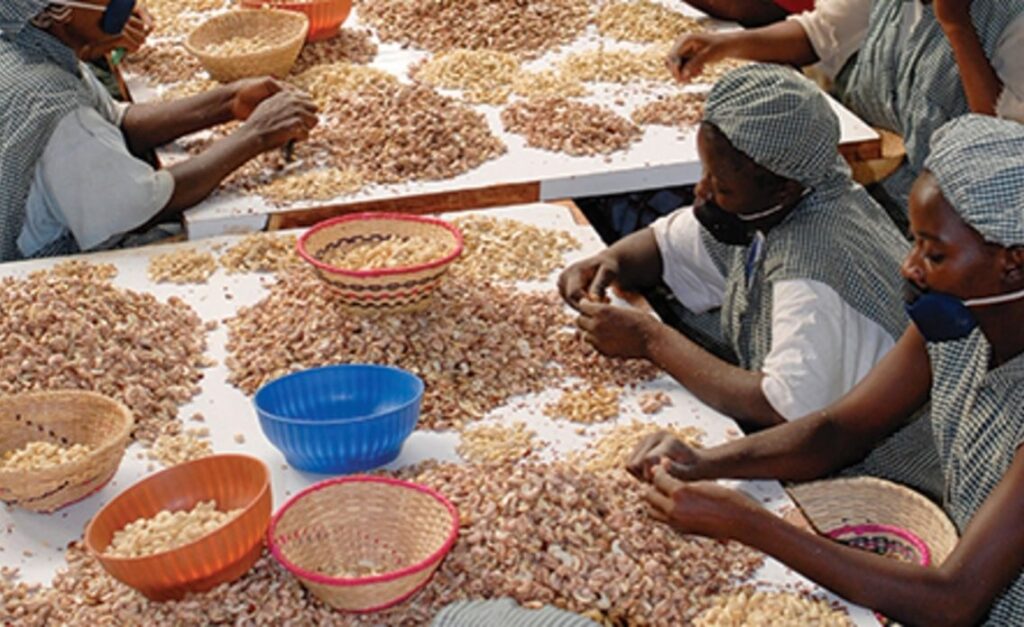
Instead, it is taking shape closer to home, around small factories that mill grain, press cooking oil, process milk or package fish within reach of farms and fishing communities. These enterprises are modest in scale, but their impact is increasingly visible in household incomes and local employment.
As the government places renewed emphasis on inclusive growth, small and micro industries in rural areas have moved to the centre of national development planning. With more than 70% of Tanzanians living outside major towns and the majority dependent on agriculture, livestock, fisheries and forestry, the expansion of rural-based manufacturing is being promoted as a practical way to spread economic opportunity beyond urban centres.
Backed by rising industrial output, targeted budget allocations and expanding vocational training, Tanzania’s rural industries are being positioned not as a substitute for large-scale manufacturing, but as a complementary force that links production, skills and markets at community level. In doing so, they offer a grounded vision of growth – one built on local resources, local labour and the everyday realities of rural life.
Rather than relying solely on large-scale industrialisation concentrated in urban centres, Tanzania is expanding opportunities for production and value addition closer to where raw materials are produced. Government data and policy statements point to a clear direction: small and micro industries in rural areas are being positioned as a key driver of inclusive and sustainable growth.
The industrial sector’s contribution to Tanzania’s economy has been steadily increasing. In 2024, industry accounted for about 7.3% of gross domestic product, up from 7.0% the previous year, with sectoral growth reaching 4.8%. While the figures may appear modest, they mask the structure of industrial activity across the country.
According to the 2023 Industrial Census, Tanzania has approximately 69,106 factories. Of these, more than 53,000 are micro industries and over 13,000 are small industries. Large factories number fewer than 700 nationwide. This means that the vast majority of industrial activity takes place at a small scale, often outside major cities.
Regions such as Mwanza and Shinyanga illustrate this pattern clearly. By early 2025, Mwanza alone hosted more than 1,100 small industries and nearly 1,800 micro industries, while Shinyanga recorded more than 1,700 small and micro enterprises combined. These figures reflect not only existing activity, but also untapped potential for expansion, particularly in rural districts.
Small and medium-sized enterprises more broadly contribute around 35% of GDP and provide employment to nearly half of Tanzania’s workforce. Their importance lies not just in output, but in who they employ: millions of Tanzanians, particularly young people and women, earn livelihoods through these businesses.
From raw produce to value addition
For decades, rural Tanzania has been characterised by the sale of unprocessed raw materials. Crops such as maize, rice, sunflower, coffee and cashew nuts have often left villages in their raw form, fetching low prices and exposing farmers to volatile markets. Post-harvest losses, estimated at 30–40% for some crops, have further eroded incomes.
Small rural industries are designed to address this challenge directly. By processing agricultural produce locally, they reduce waste, stabilise prices and increase the share of value retained by producers. Milling grain, pressing cooking oil, processing coffee or packaging cashew nuts allows rural households to earn more from the same harvest.
Similar opportunities exist in livestock and fisheries. Tanzania’s livestock sector has grown significantly, with meat production rising by 9.4% between 2023/24 and 2024/25, reaching over 1 million tonnes and a value of more than TSh 10.38 trillion (about USD 4.0 billion).
Livestock numbers, including cattle and poultry, have also increased substantially. These trends create demand for small-scale processing of milk, meat and hides, particularly in rural areas where animals are raised.
The fisheries sector, employing more than four million people, is another key area. With annual fish production exceeding 599,200 tonnes and valued at TSh 3.44 trillion (around USD 1.3 billion), small processing facilities for drying, packaging and cold storage can significantly reduce losses and expand market access.
The growth of rural industries depends not only on raw materials, but also on skills. Here, vocational education has become a crucial pillar. Between 2021 and 2024, the government invested TSh 94.5 billion (approximately USD 36 million) in vocational training infrastructure through the Vocational Education and Training Authority (VETA). By 2024, more than 295,175 students were enrolled in long- and short-term training programmes.
By 2025, VETA operated more than 80 training institutions nationwide, with around 90,000 students enrolled annually. These centres provide practical skills in areas such as metalwork, machine fabrication, electrical installation and food processing – all essential for sustaining small industries.
Graduates are increasingly able to manufacture, repair and adapt small machines used in rural production, from grain mills to tailoring equipment. This reduces reliance on imported machinery and ensures that breakdowns do not bring production to a halt.
A network of institutions supports the development of small rural industries. The Small Industries Development Organisation (SIDO) plays a central role by offering entrepreneurship training, supporting business formalisation and promoting simple production technologies. Other bodies, including TCCIA, TANTRADE, TBS and OSHA, provide support on markets, standards and workplace safety.
Access to finance remains a challenge, but commercial banks and development finance institutions have expanded lending to small and medium enterprises. Data show that private sector businesses, including SMEs, account for about 38.2% of total bank credit, highlighting their growing role in the economy.
The private sector is also the main driver of small machine production. Surveys from regions such as Katavi show that privately owned workshops dominate the manufacture of equipment for grain processing, tailoring and small-scale industry, collectively employing thousands of people.
Linking rural industries to national policy
The government has reinforced these trends through budgetary priorities. In the 2025/26 fiscal year, the Ministry of Agriculture allocated TSh 1.243 trillion (about USD 478 million) to strengthen agricultural value chains, including small-scale processing of crops such as rice, wheat and sunflower.
Fertiliser availability has increased from 342,798 tonnes in 2014/15 to 1.21 million tonnes in 2024/25, supported by subsidies worth TSh 300 billion (around USD 115 million), boosting productivity and supply for processors.
Similarly, the Ministry of Livestock and Fisheries allocated TSh 476.7 billion (approximately USD 183 million) to expand production, markets and value addition. These investments are explicitly linked to job creation and inclusive growth in rural areas.
Investment incentives further support this approach. Through investment and special economic zone frameworks, rural investors can access tax exemptions on machinery, reduced corporate tax rates in designated zones and streamlined licensing through one-stop centres.
In the first quarter of 2025/26 alone, investment projects worth more than TSh 6.18 trillion (about USD 2.4 billion) were registered, with over 20,000 jobs projected.
The impact of rural industries is most visible in employment and income stability. Industrial census data indicate that small and micro industries employ between three and four million Tanzanians.
Agriculture, forestry and fisheries still account for about 61.9% of total employment, but processing industries are increasingly adding value and jobs within these sectors.
By reducing post-harvest losses from 30–40% to around 10–15% in processed crops, small industries help households retain more of what they produce. This not only raises incomes but also improves food availability and market reliability.
Crucially, many of these jobs are close to home. For women and young people in rural areas, this proximity matters. Employment that does not require migration to cities allows families to remain intact and communities to retain their labour force.
Tanzania’s approach to rural industrialisation is incremental rather than dramatic. Pilot projects are used to test feasibility before expansion, reducing risk and allowing lessons to be learned. This cautious approach reflects an understanding that sustainable change takes time and must be adapted to local conditions.
Challenges remain. Infrastructure gaps, access to affordable finance and environmental sustainability all require continued attention. But the direction of travel is clear: rural Tanzania is no longer seen only as a supplier of raw materials, but as a space for production, innovation and growth.
What sets this strategy apart is its grounding in everyday realities. Small rural industries do not promise overnight transformation. Instead, they offer steady gains: less waste, more income, practical skills and greater participation in the economy.
By linking agriculture, skills training, finance and light manufacturing, Tanzania is building an economic model that reflects where most of its people live and work. Growth, in this vision, is not confined to urban centres or large investors. It is distributed, tangible and rooted in local resources.
As small machines continue to hum in villages across the country, they signal a broader shift in how development is imagined – not as something delivered from afar, but as something built gradually, close to home, by ordinary Tanzanians shaping their own economic future.
Notes to Editors
· Tanzania is accelerating rural industrialisation as part of its inclusive growth agenda, focusing on small and micro industries located close to farms, fishing communities and livestock areas.
· More than 70% of Tanzanians live in rural areas, making decentralised manufacturing critical for job creation and income stability.
· According to the 2023 Industrial Census, Tanzania has over 69,000 factories, with more than 95% classified as micro or small industries.
Media Contact:
Information Services Department and Office of The Chief Government Spokesman
E-mail: maelezotv@gmail.com
Phone: +255 754 750 765
Availability: EAT, UTC +3
ENDS