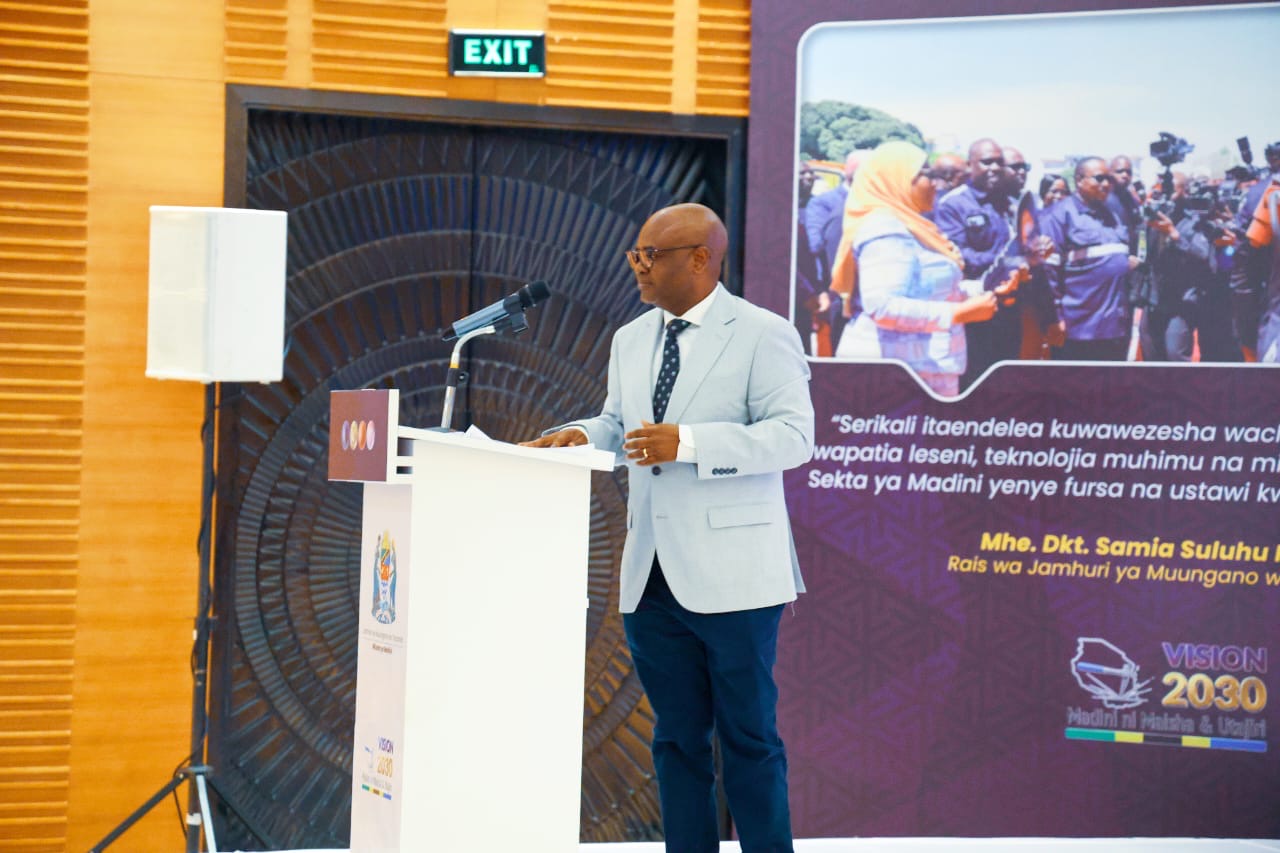
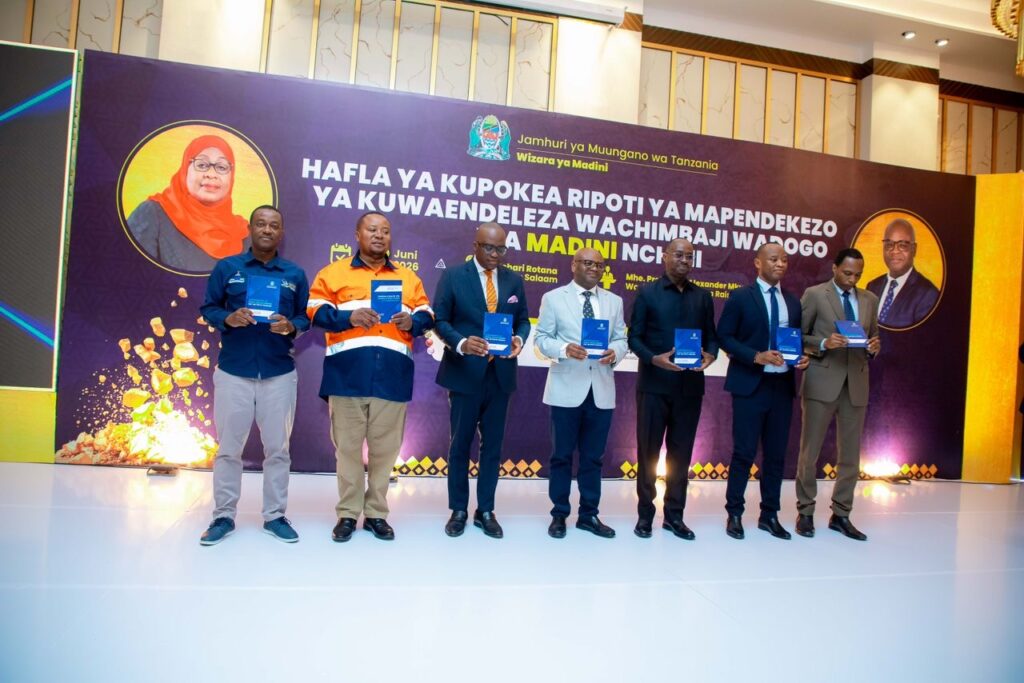
The measures were unveiled in Dar es Salaam during the presentation of a report on the development of small-scale mining, a segment that accounts for an estimated 40 percent of the country's mining revenues and supports thousands of livelihoods.
Minister of State in the President's Office for Planning and Investment, Professor Kitila Mkumbo, said the government has earmarked 10 percent of mining sector revenues this year for geological exploration and research activities, reflecting a strategic shift toward data-driven mining development.
He said improved geological information is expected to reduce investment risks, enhance mineral discovery and support informed decision-making by miners, investors and financial institutions.
"Reliable geological data is essential for unlocking the full potential of the mining sector and attracting greater investment," Mkumbo said.
The initiative forms part of broader efforts to modernize Tanzania's mining industry and increase the contribution of the sector to long-term economic growth.
Separately, Minerals Minister Anthony Mavunde announced the establishment of a loan guarantee scheme designed to improve access to finance for small-scale miners, many of whom struggle to obtain bank credit due to insufficient collateral and limited formal business records.
The scheme will be implemented through the newly established Credit Guarantee Corporation, which is expected to begin operations in July.
Under the arrangement, the government will guarantee up to 50 percent of loans issued to eligible miners, helping them secure financing for equipment purchases, production expansion, technology upgrades and value-addition activities.
Mavunde said the programme would help increase productivity, strengthen domestic ownership in the sector and reduce dependence on informal financing.
"This is a major step towards enabling Tanzanians to participate fully in the mining sector and benefit directly from the country's mineral resources," he said.
Additional recommendations were presented by a committee tasked with examining strategies for developing small-scale mining.
The committee's chairperson, Victor Tesha, proposed the creation of a Tanzania Mining Development Fund (TMDF) with an initial capital base of US$100 million to support access to financing, technology and geological information.
The report also recommended specialized financial products for miners, including equipment financing, machinery leasing arrangements and funding mechanisms for mineral processing and value addition.
Other proposals include expanding geological surveys, strengthening miner registration systems and increasing the number of mineral service centres to improve access to technical support and training across the country.
The committee further recommended establishing a dedicated Miners' Bank in the future to provide tailored financial services to the industry once the proposed development fund reaches sufficient scale.
According to the report, more than 72 percent of Tanzania's small-scale miners continue to rely on traditional mining and mineral-processing techniques, limiting productivity and reducing opportunities for value creation.
Tanzania is one of Africa's leading gold producers and is also endowed with significant reserves of diamonds, tanzanite, graphite, nickel, coal, rare earth elements and other critical minerals increasingly needed for clean energy technologies and global industrial supply chains.
The government has identified mining as one of nine priority sectors expected to drive the country's economic transformation toward 2050 through increased exports, industrialization and investment.
Mkumbo said small-scale mining plays a particularly important role in broadening economic participation by creating opportunities for Tanzanians to directly engage in wealth creation and entrepreneurship.
While large-scale mining operations remain major contributors to export earnings and government revenue, he noted that strengthening small-scale mining is critical to ensuring that the benefits of mineral wealth are more widely distributed across society.
The minister also urged miners to formalize their operations, register businesses and adopt modern practices to improve productivity and create additional employment opportunities.
He credited President Samia Suluhu Hassan's administration with implementing reforms that have strengthened the operating environment for small-scale miners, reduced disputes with large mining companies and created new opportunities for Tanzanian-owned mining enterprises.
The latest measures underscore Tanzania's efforts to build a more inclusive mining industry by improving access to finance, technology and geological information while supporting the growth of locally owned mining businesses.
Notes to Editors
– Small-scale mining contributes an estimated 40% of Tanzania's mining revenues and provides livelihoods for thousands of Tanzanians.
– The government has allocated 10% of mining sector revenues toward geological exploration and research to improve mineral data availability and reduce investment risks.
– A new government-backed loan guarantee scheme will guarantee up to 50% of loans extended to eligible small-scale miners through the Credit Guarantee Corporation.
Media Contact:
Information Services Department and Office of The Chief Government Spokesman
E-mail: maelezotv@gmail.com
Phone: +255 754 750 765, +255 754 698 856, +255 759 714, +255 713 381 904
Availability: EAT, UTC +3