
The decision was approved during the 38th Executive Committee meeting of the Tanzania National Business Council (TNBC), held at the State House in Dar es Salaam and chaired by Chief Secretary Ambassador Dr Moses Kusiluka.
Officials said the initiative forms part of broader efforts to improve the country’s business environment, strengthen financial services and support Tanzania’s long-term economic transformation agenda under Vision 2050.
Speaking after the meeting, Ambassador Kusiluka said the government had taken into account concerns raised by the private sector regarding investment barriers and access to financing.
“Based on the challenges identified by the private sector, we have agreed to establish an International Financial Centre that will help address some of the obstacles facing investors and enhance Tanzania’s competitiveness in attracting international capital,” he said.
He added that the government remains committed to creating a more conducive investment climate capable of generating employment, increasing national revenue and supporting sustainable economic growth.
The proposed financial centre is expected to serve as a platform for international banking, investment services, capital mobilisation and large-scale project financing.
Bank of Tanzania Governor Emmanuel Tutuba told the meeting that Tanzania has reached a stage of economic development that makes the establishment of an international financial centre both viable and strategically important.
According to Mr Tutuba, six African countries, including Kenya and Rwanda, already host similar financial centres, and Tanzania would become the seventh on the continent.
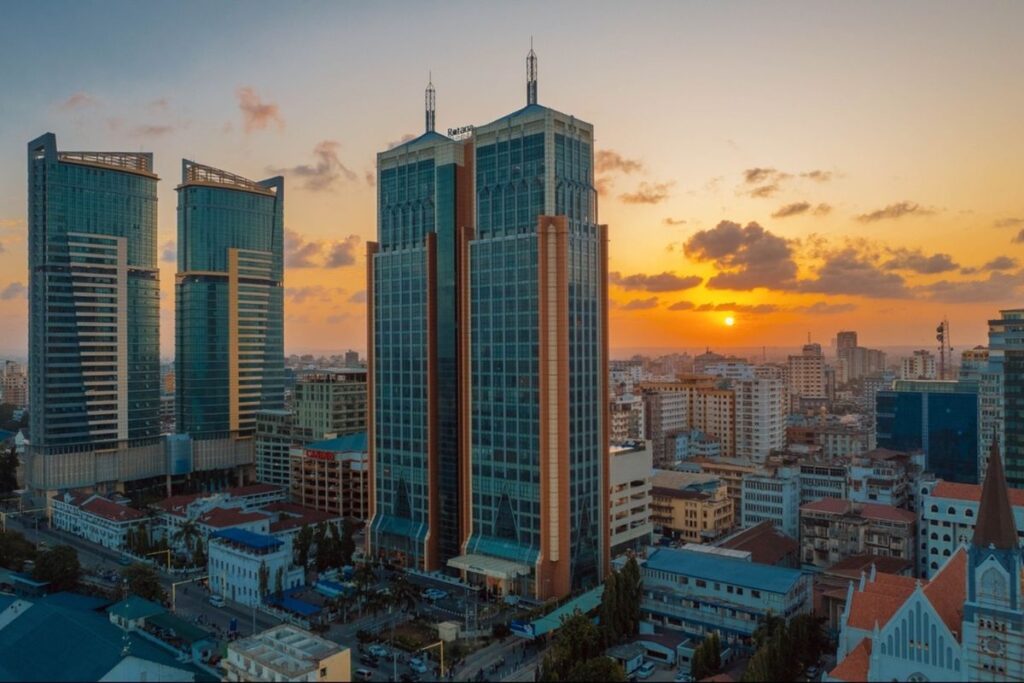
Dar es Salaam has been identified as the preferred location for the centre due to its existing infrastructure, strategic geographic position and expanding business environment.
“The establishment of an IFC will enhance the country’s ability to attract capital from within and outside Africa, facilitate financing for large-scale development projects and strengthen international financial activities,” Mr Tutuba said.
He added that the centre would provide investors, financial institutions and corporations with easier access to financing while improving Tanzania’s competitiveness in international financial markets.
The Bank of Tanzania governor also highlighted the potential for knowledge and technology transfer through increased engagement with international financial experts and institutions.
“This presents an important opportunity for Tanzanians to learn from international experts and strengthen their professional capabilities in various financial fields,” he said.
Officials say the project could contribute to the development of highly skilled professionals in banking, investment management, insurance, fintech and other financial services industries.
Mr Tutuba further encouraged international investors and major businesses to prepare to utilise the facility once operational, noting that Tanzania’s expanding Information and Communication Technology (ICT) infrastructure would support efficient digital financial services and cross-border transactions.
He said Tanzania already meets several key conditions required for establishing an international financial centre, including political stability, national security and a banking sector operating under internationally recognised standards.
According to the central bank governor, investors operating through the centre would gain access to a regional market of more than 1.4 billion people through Tanzania’s membership in the East African Community (EAC), the Southern African Development Community (SADC) and the African Continental Free Trade Area (AfCFTA).
“We believe that once the government formally approves the establishment of this centre, an appropriate legal framework will be enacted to promote investment and safeguard investors’ capital,” Mr Tutuba said.
Tanzania National Business Council Executive Secretary Dr Godwill Wanga described the proposal as a major milestone that has long been anticipated by both local and international investors.
He said the centre is expected to increase capital inflows, strengthen investment activity and support job creation across multiple sectors of the economy.
“One of our responsibilities is to build the capacity of the private sector and create an environment that accelerates economic growth in line with the objectives of Tanzania Development Vision 2050,” Dr Wanga said.
The TNBC meeting also agreed to establish a national awards system to recognise public and private sector institutions that make outstanding contributions to economic growth and national development.
The proposal to establish the International Financial Centre follows recommendations presented by the TNBC Finance Working Group during its March 2026 meeting, which called for the creation of a specialised financial framework capable of attracting larger volumes of international investment capital and addressing persistent financing challenges facing investors.
Economic analysts say the success of the initiative will depend on the development of a strong legal and regulatory framework, investor protections, competitive tax policies and the ability to position Tanzania as a trusted regional financial gateway.
Notes to Editors
– This is a major financial sector development story with potentially significant long-term implications for investment and capital markets.
– The proposed IFC should be viewed as part of Tanzania's broader ambition to transition from a resource- and agriculture-led economy toward a more diversified services economy.
– The story connects directly to:
investment promotion
financial sector deepening
regional integration
economic competitiveness.
Media Contact:
Information Services Department and Office of The Chief Government Spokesman
E-mail: maelezotv@gmail.com
Phone: +255 754 750 765, +255 754 698 856, +255 759 714, +255 713 381 904
Availability: EAT, UTC +3