
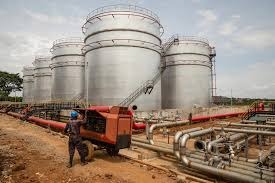
With proven natural gas reserves of about 57.5 trillion cubic feet (TCF), Tanzania ranks among Africa’s more significant gas holders, placing it alongside producers such as Mozambique, Senegal and Egypt.
Major discoveries at Songo Songo and Mnazi Bay, alongside onshore finds in the Ruvu Basin, have shaped the country’s gas economy since the mid-2000s.
Unlike earlier decades, when state dominance and regulatory uncertainty slowed development, recent policy changes signal a deliberate shift toward deeper engagement with domestic and international private investors.
Government officials and industry data show that this recalibration is already reshaping the sector, increasing local participation, widening access to exploration blocks and strengthening Tanzania’s profile as a long-term energy investment destination.
Tanzania’s new strategy is anchored in the Petroleum Act of 2015, which established clearer institutional roles and introduced modern production-sharing frameworks.
The law separated commercial and regulatory functions, assigning policy oversight to the Ministry of Energy, licensing and upstream regulation to the Petroleum Upstream Regulatory Authority (PURA), and national commercial participation to the Tanzania Petroleum Development Corporation (TPDC).
Since 2021, authorities have accelerated reforms to make the framework more investor-friendly without diluting state oversight.
Officials say the emphasis has moved from state control alone toward structured public–private partnership, particularly in exploration, development and gas utilisation projects.
PURA has revised licensing procedures, improved transparency in block allocation and modernised Production Sharing Agreements (PSAs), aiming to align Tanzania’s fiscal terms more closely with regional peers.
A key signal to investors came in 2025, when Tanzania announced its fifth oil and gas licensing round, offering 26 exploration blocks to private companies—one of the country’s most ambitious upstream openings in more than a decade.
Energy Minister Deogratius Ndejembi has underlined the importance of preparing the ground for investor confidence ahead of the bidding round.
“Before we go for the fifth licensing round, I expect PURA to advise the Ministry on the steps needed to create an investor-friendly environment while safeguarding our national interests,” Ndejembi said.
Improved data access and exploration momentum
To support this push, PURA launched a National Petroleum Data Repository, allowing investors access to seismic, well and geophysical data, including 2D and 3D surveys.
The system, developed with international data firms, is designed to reduce exploration risk and shorten investment decision timelines.
Industry analysts say improved data access places Tanzania closer to best practice in frontier gas markets, where limited geological information has often deterred early-stage investment.
Exploration activity is already gaining traction. In the Tanga Block, operator Octant Energy Tanga Limited has identified multiple drilling targets following reprocessed 3D seismic interpretation.
“The completion of the data interpretation has enabled Octant to begin preliminary preparations for drilling, and we have already identified eight drillable locations,” said Jeremy Martin, Regional Manager at Octant Energy Tanga Ltd.
PURA officials have welcomed the company’s early engagement with domestic suppliers.
“This is precisely what the 2015 Petroleum Act mandates—to prioritise local service providers in oil and gas projects,” said Charles Nyangi, PURA’s Head of Local Content and Stakeholder Engagement.
Local participation strengthened
Alongside foreign investment, Tanzania has placed strong emphasis on domestic participation.
According to PURA, about 85% of jobs in the oil and gas sector are now held by Tanzanians, up from below 55% a decade ago, while around 60% of goods and services used in the sector are sourced locally.
“These achievements reflect robust oversight and enforcement,” said PURA Director General Eng. Charles Sangweni, noting that employment participation previously stood below 50%.
Between March 2021 and March 2025, Tanzania produced 301.33 billion standard cubic feet of natural gas, with 142.35 billion cubic feet from the Mnazi Bay block and 158.98 billion cubic feet from the Songo Songo block.
Sangweni also revealed that strengthened audits of PSAs saved the government more than TZS 340 billion(about 134.64 million US dollars) that would otherwise have been claimed for cost recovery.
Local content gains are underpinned by the Petroleum (Local Content) Regulations of 2017, which require companies to prioritise Tanzanian labour, suppliers and service providers, alongside structured training and skills-transfer programmes.
By April 2025, more than 2,400 local companies and 430 Tanzanian professionals had registered in official supplier databases, with around 300 firms actively delivering services to upstream and midstream projects.
Deputy Minister of Energy Salome Makamba has stressed that enforcement remains a priority.
“Let us ensure strict compliance with the local content requirements under the Petroleum Act so that Tanzanians fully benefit from these resources,” she said.
The opening of the sector has not been limited to upstream exploration. The Energy and Water Utilities Regulatory Authority (EWURA) has issued hundreds of licences to private operators in fuel distribution, storage and retail, expanding competition in the downstream market.
By March 2025, EWURA had approved 580 petroleum trading licences, including more than 200 new market entrants, reflecting growing private activity in fuel logistics and retail networks.
In natural gas, private operators such as Songas, Pan African Energy and Maurel & Prom continue to play a central role in production and processing, supplying gas to power generation, industry and public institutions.
At the same time, TPDC has expanded its commercial footprint, increasing its stake in the Mnazi Bay gas block from 20% to 40% in 2024, while retaining strategic equity positions across key projects.
Project execution is advancing, particularly at the Ntorya Gas Project, led by ARA Petroleum Tanzania and Aminex. Pipeline manufacturing has been completed, with installation and commissioning scheduled for Q3 2026, keeping the project on track for first gas in 2026.
The project’s $50 million 2026 work programme has been approved by Tanzanian authorities, underscoring regulatory alignment as the country moves to increase domestic gas supply.
“Clearly, 2026 will mark the start of an exciting new chapter for Tanzania’s energy security and energy transition,” said Charles Santos, Executive Chairman of Aminex.
Regional competition and energy transition
Tanzania’s reforms come as African gas producers compete for capital amid global energy-transition pressures. While Nigeria and Algeria remain the continent’s largest gas holders and Mozambique has attracted billions of dollars in LNG investment, analysts say Tanzania’s political stability, regulatory consistency and strategic location offer competitive advantages.
Natural gas remains central to Tanzania’s development plans as a transition fuel supporting industrialisation and electricity expansion. Power consumption per capita stands at about 170 kWh, but government projections see this rising to 3,000 kWh by 2050.
Major investments, including the 2,115-MW Julius Nyerere hydropower project, alongside gas-fired generation and renewables such as solar, wind and geothermal, are expected to underpin this growth.
International investor sentiment remains cautious, shaped by past regulatory shifts and global market uncertainty, but engagement is rising through platforms such as the East African Petroleum Conference and Exhibition (EAPCE) and targeted outreach to major international oil companies.
“With about 30% of sedimentary basins explored, opportunities are abundant,” Sangweni told executives at Africa Oil Week 2025, where PURA invited companies such as Chevron to consider Tanzania’s upstream sector.
With sizeable gas reserves, expanding infrastructure and a clearer regulatory framework, Tanzania is certainly positioning itself not as a rapid hydrocarbon boom story, but as a measured, long-term energy investment destination.
Notes to Editors
· Tanzania holds approximately 57.5 trillion cubic feet (TCF)of proven natural gas reserves, ranking it among Africa’s leading gas resource holders.
· The sector is governed by the Petroleum Act of 2015, which separates policy, regulation and commercial roles among the Ministry of Energy, PURA and TPDC.
· In 2025, Tanzania announced its fifth oil and gas licensing round, offering 26 exploration blocks to private investors.
Media Contact:
Information Services Department and Office of The Chief Government Spokesman
E-mail: maelezotv@gmail.com
Phone: +255 754 750 765; +255 754 698 856; +255 759 714; +255 713 381 904
Availability: EAT, UTC +3
ENDS