
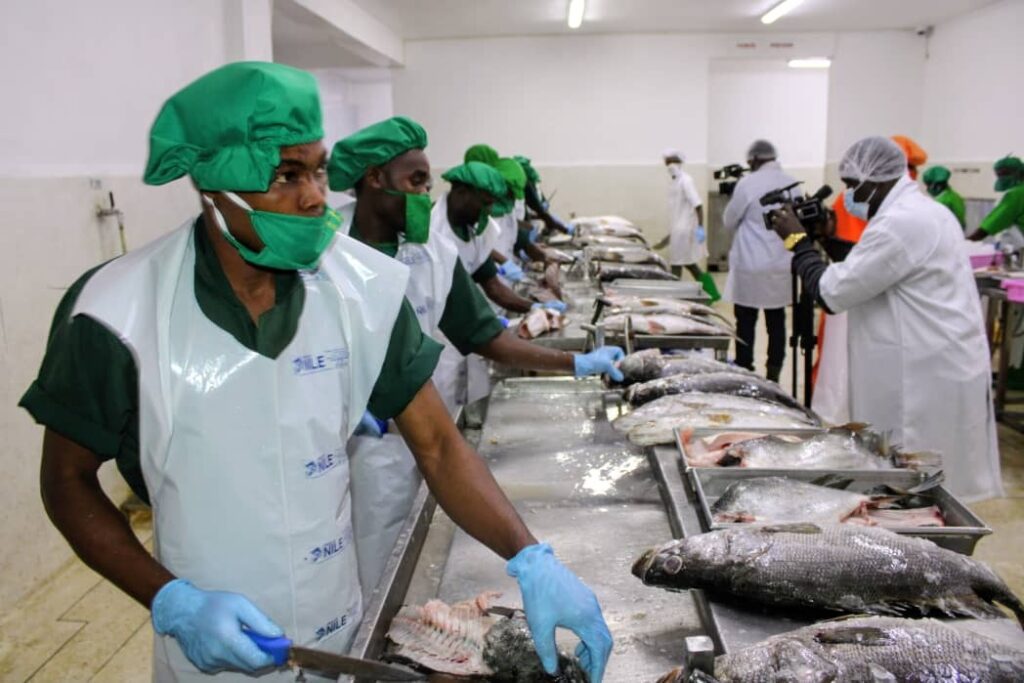
The Minister for Livestock and Fisheries, Bashiru Ally Kakurwa, said on Monday that industries would no longer be allowed to engage directly in fishing activities on the lake, warning that commercial practices were accelerating resource depletion and undermining small-scale fishermen.
Speaking during a working visit to the Kagera Region, where he toured a Nile perch processing plant in Muleba District, Kakurwa stressed the need for urgent, coordinated action to protect the lake’s ecosystem.
“Encroachment on the 200-metre buffer zone by industries and farmers, together with the use of illegal fishing nets that capture juvenile fish, continues to degrade Lake Victoria’s resources,” he said.
Lake Victoria, the world’s second-largest freshwater lake, supports the livelihoods of more than 47 million people across Burundi, Kenya, Tanzania, Rwanda and Uganda. It serves as a critical source of food, water, transport and energy, while also playing a key role in climate regulation and biodiversity conservation in the region.
The lake hosts one of the world’s most productive freshwater fisheries, producing more than 1.5 million tonnes of fish annually, with an estimated market value of $1.1bn, according to regional data. It is also a major source of water for domestic use, irrigation and industry across East Africa.
However, environmental experts warn that the lake is under increasing strain. Wetland degradation, deforestation in the catchment basin, pollution from untreated industrial and urban wastewater, agricultural runoff and overfishing have steadily eroded ecological resilience.
Rapid urbanisation, population growth and expanding economic activity have intensified pressure on the lake, increasing demand for water and fisheries resources while weakening natural recovery systems.
Kakurwa said Tanzania would strengthen enforcement of existing regulations, including protection of shoreline buffer zones and restrictions on destructive fishing gear, while working with neighbouring states to safeguard the shared resource.
In 2025, member states of the East African Community (EAC) reaffirmed their commitment to the Protocol for Sustainable Development, pledging closer coordination on climate action and increased funding for conservation initiatives across the Lake Victoria basin.
Regional cooperation, officials say, will be critical to ensuring the long-term sustainability of the lake amid rising environmental and economic pressures.
Notes to Editors
- Lake Victoria is Africa’s largest freshwater fishery, supporting the livelihoods of more than 47 million people across five East African countries and contributing over $1 billion annually to the regional economy.
- Tanzania has announced new restrictions on industrial involvement in fishing activities, aimed at curbing overfishing, protecting juvenile fish stocks and safeguarding small-scale fishermen.
- The move aligns with regional conservation efforts under the East African Community (EAC), including commitments to sustainable development, climate action and coordinated management of shared natural resources.
Media Contact:
Information Services Department and Office of The Chief Government Spokesman
E-mail: maelezotv@gmail.com
Phone: +255 754 750 765
Availability: EAT, UTC +3
ENDS