
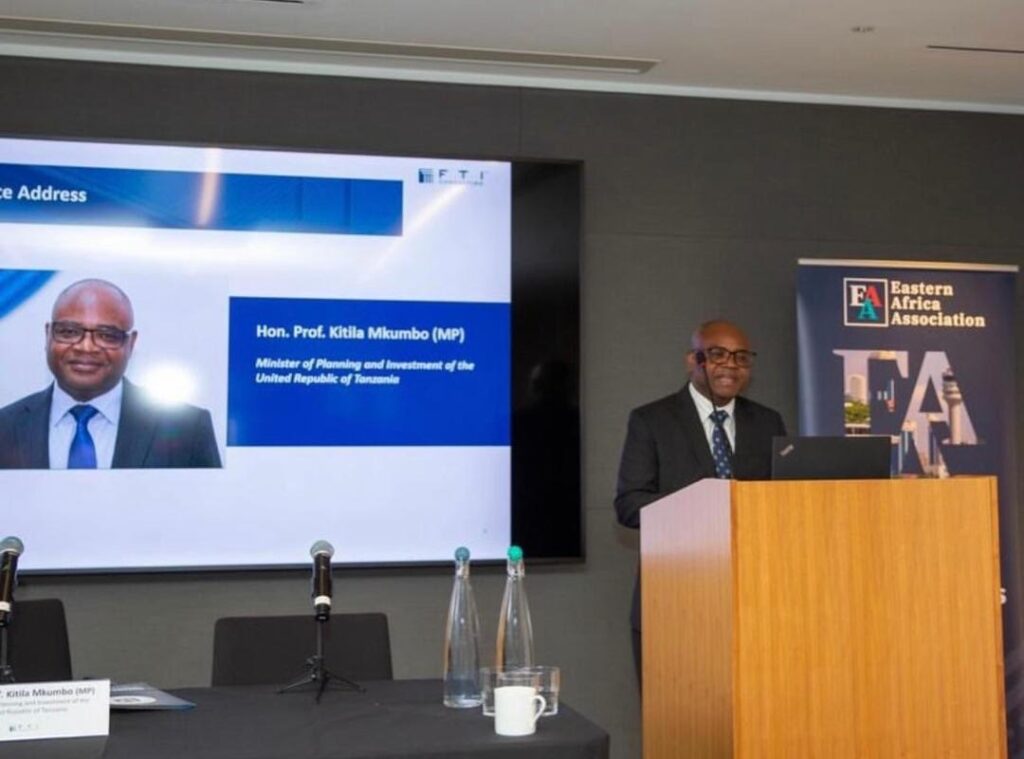
Professor Kitila Mkumbo, Minister of State in the President’s Office for Planning and Investment, told a meeting of UK and Tanzanian investors that the East African nation was “open for business” as it prepares to implement its long-term National Development Vision 2050.
“We are undertaking reforms, we are growing and we are ready for collaboration,” Mkumbo said, according to a statement from his office.
Tanzania’s economy has rebounded from the impact of the COVID-19 pandemic, with gross domestic product growth rising from 4.7% in 2022 to 5.9% in 2025, and projected to reach 6.3% in 2026, he said.
Inflation has remained below 5% for the past decade, providing what the government describes as a stable macroeconomic environment for investors.
Mkumbo said reforms were underway to improve transparency, policy predictability and efficiency, including changes to the tax and regulatory framework.
He pointed to the recent merger of the Tanzania Investment Centre and the Export Processing Zones Authority into the Tanzania Investment and Special Economic Zones Authority (TISEZA) as a key institutional reform aimed at streamlining investment services.
Tanzania is promoting opportunities across agriculture, mining, energy and infrastructure, citing more than 44 million hectares of arable land, extensive mineral and energy resources and a strategic location on the Indian Ocean that serves as a trade gateway to East Africa.
The country holds 22 critical minerals that are increasingly in demand for the global clean energy transition, Mkumbo said.
Britain and Tanzania have maintained economic ties for more than six decades. Bilateral trade between the two countries stands at about £650 million, while UK foreign direct investment in Tanzania totals £4.89 billion and supports more than 131,000 jobs, according to government figures.
Michael Clayton, chair of international law firm Clyde & Co, said Tanzania’s reform efforts and direct engagement with investors were helping to rebuild confidence.
Mkumbo’s London visit had helped clarify key policy issues and strengthen cooperation between the government and international investors, Clayton said.
Notes to Editors
– Tanzania is intensifying economic diplomacy to attract foreign direct investment (FDI), particularly from the United Kingdom, as part of its broader National Development Vision 2050.
– The government is emphasising political stability, macroeconomic discipline and regulatory reforms as core pillars of its investment narrative.
– Recent institutional reforms include the merger of the Tanzania Investment Centre and the Export Processing Zones Authority into the Tanzania Investment and Special Economic Zones Authority (TISEZA), aimed at streamlining investor services and approvals.
Media Contact:
Information Services Department and Office of The Chief Government Spokesman
E-mail: maelezotv@gmail.com
Phone: +255 754 750 765
Availability: EAT, UTC +3
ENDS