
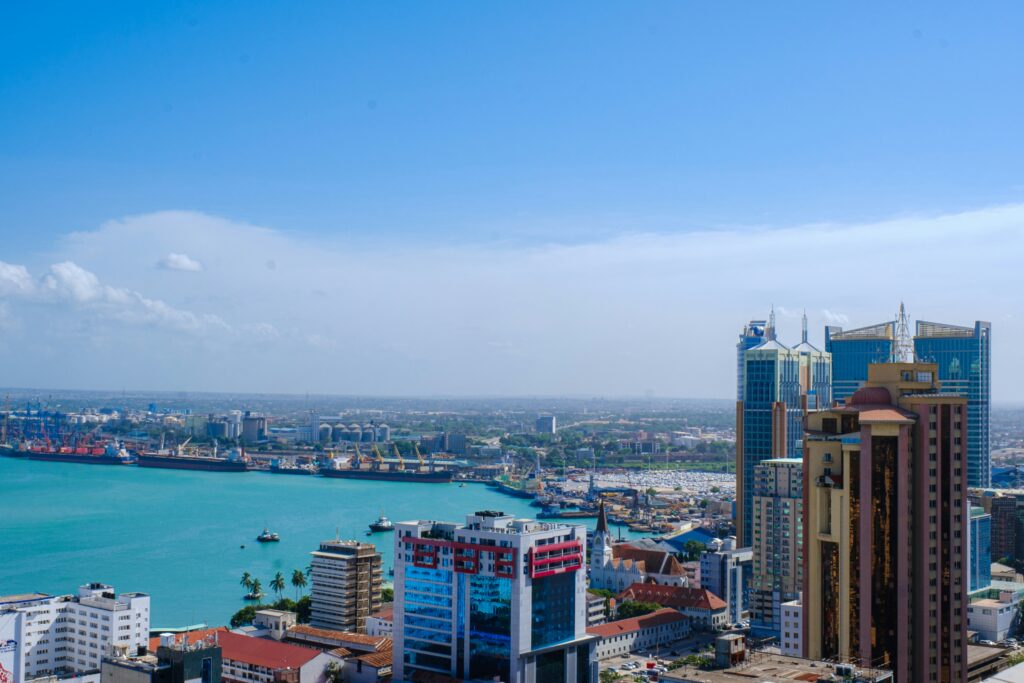
Presenting the State of the National Economy Report for 2025 to Parliament on Thursday, Minister of State in the President’s Office (Planning and Investment), Professor Kitila Mkumbo, said the country remained on a resilient growth path despite persistent global economic uncertainties.
The growth rate marks an improvement from the revised 5.6 per cent recorded in 2024 following a rebasing exercise by the National Bureau of Statistics (NBS), which adopted 2019 as the new base year for calculating gross domestic product (GDP).
According to the report, agriculture remained the largest contributor to the economy, accounting for 24.3 per cent of GDP, followed by construction at 11.9 per cent, mining and quarrying at 10.3 per cent, trade and repair services at 8.6 per cent and transport and storage at 8.3 per cent.
Several sectors recorded double-digit or near double-digit growth, led by finance and insurance, which expanded by 15.7 per cent. Other strong performers included electricity and gas at 11.8 per cent, mining and quarrying at 9.4 per cent, information and communication at 8.8 per cent, arts and entertainment at 8.5 per cent and transport and storage at 8.0 per cent.
The size of Tanzania’s economy also increased significantly during the year. At constant 2019 prices, GDP rose to 234.1 trillion Tanzanian shillings (about US$91.8 billion) in 2025 from 212 trillion shillings (US$81.2 billion) in 2024.
The government said economic growth was increasingly translating into higher incomes, with GDP per capita rising by 7.4 per cent to 3.5 million shillings (approximately US$1,390) from 3.3 million shillings (US$1,264) a year earlier.
Inflation remained under control despite global market volatility and supply chain disruptions. Average inflation stood at 3.3 per cent in 2025, slightly above the 3.1 per cent recorded in 2024, largely due to higher food prices.
Prof Mkumbo said the inflation rate remained within Tanzania’s medium-term target range of 3 to 5 per cent and complied with convergence criteria established by both the East African Community (EAC) and the Southern African Development Community (SADC).
The report also highlighted progress in poverty reduction. Findings from the 2025 Household Budget Survey showed that the proportion of people living below the basic needs poverty line in Mainland Tanzania declined to 25.1 per cent, compared with 26.4 per cent in 2018, 28.2 per cent in 2012 and 34.4 per cent in 2007.
The survey was the first to be conducted simultaneously in Mainland Tanzania and Zanzibar through collaboration between the National Bureau of Statistics and the Office of the Chief Government Statistician in Zanzibar.
Looking ahead, the government has set several macroeconomic targets for 2026, including increasing economic growth to 6.3 per cent, maintaining inflation within the 3–5 per cent range and raising domestic revenue collection to 17.1 per cent of GDP.
Authorities also aim to increase tax revenue to 13.7 per cent of GDP, maintain the budget deficit below 3 per cent of GDP and preserve foreign exchange reserves sufficient to cover at least four months of imports.
The government expects job creation to rise sharply, targeting 1.7 million new jobs in 2026 compared with approximately 981,000 jobs generated in 2024.
Addressing concerns over potential disruptions to global energy markets arising from tensions involving Iran, Israel and the United States, Prof Mkumbo said the government was strengthening monetary and fiscal measures to contain inflationary pressures, promoting renewable energy and expanding strategic fuel reserves.
He added that authorities were seeking alternative export markets and encouraging domestic production of critical goods, including fertilisers and industrial raw materials, to reduce reliance on imports.
“The government is continuing to promote domestic production of essential goods in order to reduce dependence on imports,” he said.
Prof Mkumbo said additional efforts are under way to strengthen transport, trade and investment systems to improve the economy’s resilience against external shocks and support sustained long-term growth.
Notes to Editors
– Tanzania's economy expanded by 5.9% in 2025, up from a revised 5.6% growth rate in 2024 following GDP rebasing by the National Bureau of Statistics.
– The government projects economic growth will accelerate to 6.3% in 2026.
– Agriculture remained the largest contributor to GDP, accounting for 24.3% of economic output, followed by construction, mining, trade and transport.
Media Contact:
Information Services Department and Office of The Chief Government Spokesman
E-mail: maelezotv@gmail.com
Phone: +255 754 750 765, +255 754 698 856, +255 759 714, +255 713 381 904
Availability: EAT, UTC +3