
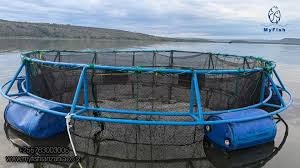
Farmers operating cage farms on the lake say the structures function as de facto sanctuaries, attracting wild fish species that shelter beneath the cages. Because traditional fishing is prohibited around the installations, the surrounding areas become safe zones where fish can spawn and young fingerlings can grow with minimal disturbance.
“The cages automatically create natural hatchery grounds,” said Mselikale Mkiju, secretary of the Chembaya Fish Farm Group in Nyakaliro ward, Buchosa district. “Wild fish come to hide under the cages because they are protected, and they benefit from the feed that sinks from above.”
Mkiju said feed particles beneath the cages provide both nutrition and security, encouraging natural reproduction. He added that fingerlings are often released by parent fish into the cages themselves, where they are shielded from predators.
“They are very small, about 0.1 grams, compared with around 0.3 grams for the farmed fish, so they easily penetrate the cages,” he said.
The Chembaya group is among the beneficiaries of a government-sponsored fish cage farming programme launched by President Samia Suluhu Hassan in January last year. The initiative is implemented by the Tanzania Agricultural Development Bank (TADB) in collaboration with the Ministry of Livestock and Fisheries, with the aim of modernising the fisheries sector and formalising employment, particularly for young people and women.
Under the programme, TADB provides interest-free loans to organised fishing groups. Chembaya received 117 million Tanzanian shillings last year, Mkiju said.
Beyond conservation benefits, the group says naturally occurring fingerlings have become an unexpected source of income. Mkiju said the wild fish grow faster and larger than stocked fish due to the abundance of feed, increasing harvest volumes.
“They increase our earnings, which we did not anticipate at the beginning,” he said, adding that the shimmering colours of the fingerlings could even become a tourist attraction.
Farmers are calling on the government to strengthen security around cage-farming sites to keep traditional fishers away, arguing that tighter protection would encourage more wild fish to use the cages as breeding grounds and accelerate natural stock recovery.
They are also urging further research into whether breeding could occur between wild species and farmed fish, potentially creating hybrids with distinctive qualities for domestic and export markets.
“That would expand the value chain even further while helping to address unemployment,” Mkiju said. He noted that his group has already created jobs for guards, cooks, feeding staff and transport workers involved in moving fish to markets.
Chembaya has completed its first harvest and repaid about 80% of its loan to TADB. A second harvest is expected to clear the remaining balance and generate profits for group members.
Mkiju, who also chairs the Buchosa Cooperative Union, said demand for farmed fish remains strong both locally and regionally. He cited standing monthly orders of 40 tonnes from Kenya and 23 tonnes from Rwanda, which farmers are currently unable to meet.
Production constraints include delays in the supply of fingerlings and fish feed, he said, despite the government making timely payments to suppliers.
“There are many private fingerling producers selling at 120 shillings each, compared with the 180 shillings paid through official suppliers,” Mkiju said. “The government is losing money unnecessarily. Farmers should be allowed to source inputs competitively.”
Similar concerns were raised by Albert Rusasim, chairperson of the Kasarazi Fish Farm Group, also in Buchosa. He said his group installed cages in January but did not receive fingerlings until June, incurring security costs without production.
“We are paying guards using group funds that are supposed to be repaid to the bank,” Rusasim said. “What do we repay if there is no production?”
Rusasim also cited inadequate insurance services, saying the group lost about 50,000 fingerlings earlier this year without compensation, despite the bank notifying the insurer. He added that limited involvement of local government extension officers had contributed to delays and communication gaps.
Responding to the concerns, TADB business officer Gracia Marugujo said 12 billion Tanzanian shillings had been allocated to support 1,904 beneficiaries across the Lake Zone, with about 401 tonnes of fish harvested so far.
She said 507 cages worth 1.1 billion shillings had been procured, with 452 already distributed. In Buchosa alone, 705 million shillings had been disbursed, of which 329 million had been repaid.
“Some funds have been retained to accommodate additional beneficiaries, as expanding access is one of the project’s key objectives,” Marugujo said.
As cage farming expands on Lake Victoria, farmers say the challenge will be balancing rapid growth with efficient supply chains and stronger local support — while safeguarding what they view as an emerging and unexpected boost to the lake’s natural ecology.
Notes to Editors
- Cage fish farming is part of Tanzania’s strategy to modernise fisheries and create jobs.
- The programme is implemented by TADB in collaboration with the Ministry of Livestock and Fisheries.
- Farmers report both economic and ecological benefits from the initiative.
Media Contact:
Information Services Department and Office of The Chief Government Spokesman
E-mail: maelezotv@gmail.com
Phone: +255 754 750 765
Availability: EAT, UTC +3
ENDS