
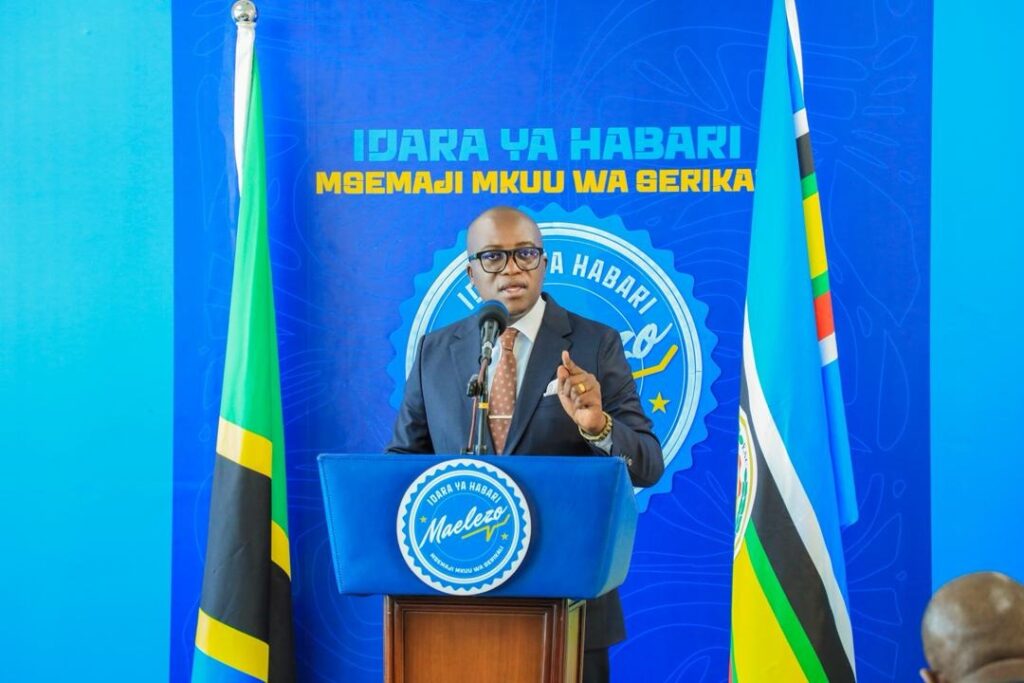
The Ministry of Minerals collected 311.8 billion Tanzanian shillings (about $122 million) in revenue between November 2025 and Jan. 25, 2026, exceeding its target by about 11% and keeping it on track to meet the 2025/26 annual goal of 1.2 trillion shillings (roughly $468 million), Minerals Minister Anthony Mavunde said on Monday.
The performance reflects tighter oversight of mineral licensing, enhanced production monitoring and tougher action against smuggling, measures that have reduced revenue leakages and strengthened compliance across the mining value chain, he told reporters in Dodoma.
For investors, the government says the reforms are translating into a more predictable operating environment. Mining’s contribution to gross domestic product has risen from 10.1% in 2024 to around 12%, highlighting the sector’s growing weight in the economy under President Samia Suluhu Hassan’s pro-investment agenda.
The government is finalising a Five-Year Mineral Value Addition Strategy (2026/27–2030/31) aimed at deepening downstream processing and expanding domestic beneficiation. Six gold refineries are already operational nationwide, alongside four processing facilities for tin, nickel and graphite, while Dodoma has emerged as a new minerals processing hub with nine value-addition plants.
A key near-term catalyst is the expected commissioning of Tanzania’s first nickel and copper processing plant in Bahi District, Dodoma, which officials say will support industrial expansion and create opportunities across battery minerals and base metals supply chains.
Other projects under development include the 33 billion-shilling (about $13 million) Tanzania Gemological Centre in Arusha, now 10% complete, and a 4 billion-shilling (around $1.6 million) salt processing plant in Lindi Region being installed by state miner STAMICO, scheduled to begin operations next month.
Local participation remains a policy priority, with 12,130 mining licences issued during the period, above the annual target, and non-compliant licences reallocated to small-scale miners, women and youth.
Amended local content regulations now reserve 20 categories of goods and services for Tanzanian-owned firms, a move the government says will strengthen local supply chains while providing clarity for foreign investors on procurement requirements.
Between July and December 2025, mineral trading valued at 3.1 trillion shillings (about $1.2 billion) was conducted through 44 mineral markets and 117 buying centres, while gemstone auctions in Mirerani and Arusha generated 2.7 billion shillings (roughly $1 million), improving price discovery and market transparency.
The ministry has also expanded geological surveying to cover 98% of the country and installed 32 seismic monitoring stations, steps aimed at reducing exploration risk and improving operational safety.
“These developments point to a more mature, better-regulated mining sector with growing downstream capacity,” Mavunde said, adding that the government’s focus is on stable rules, value addition and long-term partnerships with investors.
Notes to Editors
· Tanzania’s mining sector collected 311.8 billion TZS ($122M) from Nov. 2025 to Jan. 25, 2026, exceeding its target by 11%.
· The sector is on track to meet the 2025/26 annual revenue target of 1.2 trillion TZS ($468M).
· GDP contribution from mining increased from 10.1% in 2024 to ~12%.
Media Contact:
Information Services Department and Office of The Chief Government Spokesman
E-mail: maelezotv@gmail.com
Phone: +255 754 750 765; +255 754 698 856; +255 759 714; +255 713 381 904
Availability: EAT, UTC +3
ENDS