
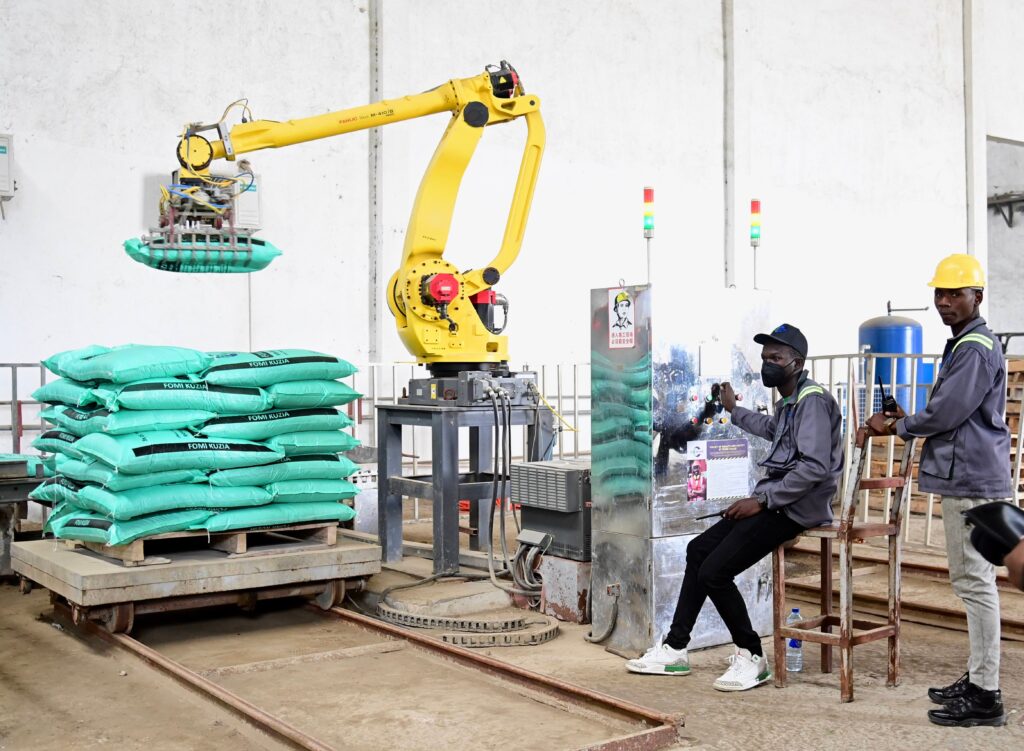
Under the framework of Tanzania Development Vision 2050 and related sectoral strategies, the government is seeking to attract both domestic and foreign capital into agro-processing, mineral beneficiation, manufacturing, and energy-linked industries.
For international investors, the message is increasingly clear: Tanzania aims to capture more value at home while offering scale, stability, and access to regional and global markets.
For decades, Tanzania’s economy has been anchored in primary production, particularly agriculture and mining. While these sectors remain central, policymakers now argue that long-term growth and job creation will depend on processing raw materials locally.
Agriculture alone contributes around 26.5 per cent of GDP and employs approximately 65 per cent of the workforce, making it both an economic and social pillar. Vision 2050 identifies the modernisation of agriculture as a foundation for industrialisation, with a focus on irrigation, mechanisation, improved inputs, and agro-processing.
The logic is straightforward: processing crops such as maize, rice, oilseeds, sugar, coffee, and cashew nuts domestically would increase export earnings, stabilise farmer incomes, and reduce post-harvest losses. It would also provide reliable feedstock for downstream industries, including food manufacturing, animal feed, and bio-based products.
A similar approach is being applied to livestock, fisheries, and forestry, where Tanzania’s extensive resource base has historically generated limited domestic value. Plans to expand modern abattoirs, leather processing, dairy plants, and fish-processing facilities are intended to integrate these sectors more closely into industrial supply chains.
Priority sectors for processing industries
The government has identified several processing sectors as priorities, reflecting both Tanzania’s resource endowment and market demand.
Agro-processing remains the most immediate opportunity, supported by abundant raw materials and rising domestic consumption. Fertiliser production—using natural gas as feedstock—is another strategic focus, aimed at reducing import dependence while boosting agricultural productivity.
In manufacturing, policymakers are prioritising pharmaceuticals, steel, edible oils, textiles and garments, sugar, wheat products, and construction materials. These industries are viewed as critical for import substitution, job creation, and export diversification.
Mining represents another major avenue for processing investment. Minerals such as gold, nickel, graphite, rare earths, and industrial minerals underpin a drive towards domestic beneficiation. By encouraging in-country processing, Tanzania aims to capture greater value from mineral exports, which already account for roughly 30 per cent of foreign exchange earnings.
Market size and regional reach
Tanzania’s investment proposition is reinforced by market size. With a population exceeding 60 million, it has one of the largest domestic markets in East Africa. Rising urbanisation and incomes are expanding demand for processed foods, consumer goods, construction materials, and energy.
Beyond its borders, Tanzania positions itself as a gateway to East, Central, and Southern Africa. Membership in the East African Community (EAC), the Southern African Development Community (SADC), and the African Continental Free Trade Area (AfCFTA) provides preferential access to a combined market of more than 1.3 billion people.
This regional reach is underpinned by substantial infrastructure investment. Over the past decade, Tanzania has upgraded ports in Dar es Salaam and Tanga, expanded trunk roads, developed a modern standard gauge railway, and improved regional airports to support trade flows.
The government has also strengthened the national airline, expanding domestic and international routes to improve connectivity for business and logistics. One-stop border posts, digital customs systems, and technology-driven reforms have reduced transit times and improved cargo tracking, tax administration, and licensing.
Together, these measures are reshaping Tanzania into a logistics and distribution hub, particularly for landlocked neighbours such as Uganda, Rwanda, Burundi, the Democratic Republic of Congo, and Zambia.
Investment incentives and business reforms
To support industrial investment, Tanzania has pursued legal and regulatory reforms aimed at improving the business climate. Since 2018, a strategic programme has focused on streamlining licensing, revising laws and regulations, and reducing administrative bottlenecks.
Authorities emphasise that the objective is not only to attract foreign capital but also to enable domestic entrepreneurs to scale up. Incentives include access to industrial land, tax and duty relief for strategic investments, improved energy availability, and support through special economic zones and industrial parks.
The long-term ambition is to rank among Africa’s top three countries for ease of doing business and investment attractiveness. Policymakers highlight a shift towards a facilitative public sector, where regulators support growth rather than focus solely on revenue collection.
Digitalisation is central to this agenda. E-government platforms are being expanded to support business registration, permits, taxation, and trade documentation, reducing transaction costs and increasing transparency—particularly for small and medium-sized enterprises.
Energy as an enabler of industrialisation
Reliable and affordable energy is critical for processing industries, and Tanzania has made energy expansion a national priority. Electricity consumption per capita has risen to approximately 170 kilowatt-hours and is expected to increase sharply by 2050 as industrialisation accelerates.
The government aims to raise generation capacity to around 8,000 megawatts by 2030, from roughly 3,100 megawatts currently. Investments span hydropower, solar, wind, geothermal, natural gas, and longer-term nuclear options.
A flagship project is the Julius Nyerere Hydropower Plant, with an installed capacity of 2,115 megawatts, designed to stabilise supply and lower generation costs. Efforts are also under way to reduce transmission and distribution losses from about 16 per cent to below 10 per cent through network upgrades.
For investors in processing industries, these developments are decisive. Energy reliability and cost competitiveness are often critical factors in location decisions, particularly for energy-intensive activities such as fertiliser, metals, cement, and food processing.
Tanzania is also promoting renewable energy and green technologies, aligning with global decarbonisation trends. This creates opportunities in solar, wind, battery storage, and clean-energy innovation, while enhancing the sustainability credentials of Tanzanian manufacturing.
Strategic diplomacy and investor confidence
Tanzania’s external engagement reinforces its investment narrative. Since the early 2000s, economic diplomacy has been a core pillar of foreign policy, with trade, investment, and technology transfer increasingly central to bilateral and multilateral relations.
The country’s long-standing reputation for political stability and peacebuilding—from its role in southern African liberation movements to recent mediation efforts in the Great Lakes region—underpins its credibility as a reliable long-term partner.
By engaging actively within the EAC, SADC, the Indian Ocean Rim Association, and the African Union, Tanzania seeks to shape regional policies that support trade and industrialisation. It is also expanding ties with emerging markets in Asia and Latin America while deepening cooperation with traditional partners.
The government has highlighted the Tanzanian diaspora as a source of capital, skills, and global networks, alongside cultural assets such as Kiswahili, creative industries, and sport as soft-power tools that enhance the country’s international profile.
Vision 2050 places strong emphasis on technology adoption and innovation across production and services. Plans include the development of research and innovation hubs of international standing, particularly in agriculture, industry, and health.
The objective is to ensure that processing industries are supported by skilled labour, modern technology, and inclusive systems that enable participation by women, youth, and people with disabilities. Improving proficiency in English and other foreign languages is also identified as a priority to enhance global competitiveness and facilitate knowledge exchange.
Tanzania’s push into processing industries reflects a broader continental shift towards value addition and industrial resilience. What distinguishes Tanzania is the combination of scale, stability, resource availability, and steadily improving infrastructure.
Notes to Editors
- This article is a business and economic policy feature examining Tanzania’s strategic shift from raw-material exports to processing, value addition, and industrialisation under Tanzania Development Vision 2050.
- It is not a breaking news piece and is best positioned as an investment outlook, industrial policy analysis, or Africa growth feature aimed at investors, policymakers, development institutions, and corporate strategists.
- The article highlights structural transformation by linking agriculture, mining, energy, and manufacturing to regional integration and logistics competitiveness.
Media Contact:
Information Services Department and Office of the Chief Government Spokesman
Email: maelezotv@gmail.com
Phone: +255 754 750 765, +255 754 698 856, +255 759 714, +255 713 381 904
Availability: EAT (UTC +3)
ENDS