
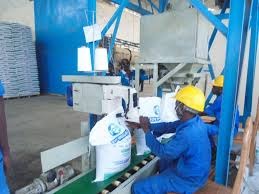
Under Vision 2050 and the country’s industrialisation agenda, the Sixth Phase government, under President Samia Suluhu Hassan, is shifting the economy’s centre of gravity, from dependence on imported essentials to a production-driven model anchored in strategic industries.
For investors, policymakers and regional partners, this transition signals that Tanzania is no longer content to be a downstream market; it is positioning itself as a manufacturing and processing hub for East and Southern Africa.
This shift is rooted in hard lessons from recent years. Disruptions triggered by pandemics, conflicts, climate-related shocks and currency volatility have exposed how vulnerable import-dependent economies can be. When fertiliser prices spiked globally, Tanzanian farmers felt it immediately.
When pharmaceutical supply chains tightened, public health systems came under strain. When construction inputs became scarce, infrastructure costs escalated. For Tanzania, industrialisation has moved from a development aspiration to an economic necessity.
From imports to industrial priorities
The Tanzanian government’s response has been to identify a focused group of strategic industries—fertiliser and agricultural inputs, edible oil, pharmaceuticals and medical supplies, iron and steel, sugar and food processing, cement, textiles and leather. These sectors were not chosen arbitrarily. They sit at the intersection of food security, health security, infrastructure development, employment creation and foreign exchange management.
At present, Tanzania continues to import a large share of these essential goods. Fertiliser demand stands at between 1.2 and 1.4 million tonnes per year, yet close to 60 percent is still sourced from abroad. Edible oil consumption is estimated at around 650,000 tonnes annually, while domestic production supplies less than half, forcing imports of up to 350,000 tonnes each year. In pharmaceuticals, more than 70 percent of medicines used in the country are imported, exposing the health sector to external supply and pricing risks.
Steel and construction materials highlight another structural challenge. Despite growing local recycling-based production, Tanzania spends more than USD 700 million annually importing iron and steel products, driven by rapid expansion in roads, railways, ports, housing and industrial facilities. Sugar production has improved significantly, but annual shortfalls of up to 210,000 tonnes still require imports to stabilise domestic supply.
Cement remains the standout success story. Sustained investment over the past decade has pushed Tanzania close to self-sufficiency, helping stabilise prices, support large-scale infrastructure projects and enable exports to neighbouring countries. Policymakers now see cement as proof that targeted industrial policy, backed by infrastructure and private capital, can deliver tangible results.
A regional race for industrial relevance
Tanzania’s industrial push is unfolding within a competitive regional context. Kenya remains East Africa’s most diversified manufacturing economy, particularly in pharmaceuticals, food processing and consumer goods. Its pharmaceutical industry supplies roughly one-third of national demand, supported by structured public procurement and regulatory coordination. However, Kenya remains heavily reliant on imports for fertiliser and edible oil, facing cost pressures similar to Tanzania’s.
Uganda has built notable capacity in agro-processing, especially sugar, often achieving surplus production for export. Yet in steel, fertiliser and pharmaceuticals, its industrial base remains limited, with heavy reliance on imports routed through regional corridors. Rwanda, constrained by market size and geography, has pursued a different model, high-efficiency, policy-driven manufacturing niches supported by predictable regulation and ease of doing business. While Rwanda is not self-sufficient in most strategic goods, it has successfully attracted investment into packaging, light pharmaceuticals and textiles.
Tanzania’s comparative advantage lies in scale and resource endowment. With a population exceeding 65 million, access to major ports, extensive arable land, mineral resources and a central position linking East, Central and Southern Africa, the country has the fundamentals to support large, competitive industries. With her ambitious industrial plans, Tanzania could move beyond import substitution to become a regional supplier of essential goods.
Enabling the private sector
The Tanzanian government has been clear that it does not intend to industrialise alone. Public–private partnerships are central to the strategy, with private investors expected to lead in production, technology adoption and operational efficiency. The state’s role is to create the conditions for success, reliable electricity, modern transport and logistics, industrial parks, access to land, fiscal incentives and streamlined regulatory processes.
Major investments in power generation and transmission, railways, ports and roads are designed to reduce the cost of doing business and improve competitiveness. At the same time, reforms in investment policy, public procurement and industrial regulation aim to provide predictability and confidence for long-term investors. In sectors such as pharmaceuticals, the government of Tanzania has signalled that once local manufacturers meet internationally recognised quality standards, public procurement policies will increasingly prioritise domestically produced goods.
This approach reflects lessons from other industrialising economies, including Ethiopia’s industrial parks and selected Asian manufacturing models, while adapting them to Tanzania’s domestic and regional market realities.
The potential gains from this industrial shift extend well beyond balance sheets. Local fertiliser production lowers input costs for farmers and strengthens food security. Domestic pharmaceutical manufacturing enhances health system resilience during global crises. Local steel and cement production reduces the cost of national development itself. Textiles and leather, in particular, offer labour-intensive pathways for youth employment, a critical priority as Tanzania’s young population continues to expand.
From a macroeconomic perspective, every tonne produced locally saves foreign exchange, narrows the trade deficit and reduces exposure to global price volatility. Over time, it also builds industrial skills, technology transfer and value chains that can support exports to regional and international markets.
Why the world is watching Tanzania
For international investors and development partners, Tanzania’s strategy represents a market in transition. Demand for essential goods is large and growing, policy direction is explicit, and regional markets remain underserved.
Opportunities span fertiliser blending and production, edible oil processing, pharmaceutical manufacturing, steel fabrication, textiles and leather goods. With improving infrastructure and a clear industrial policy framework, Tanzania is positioning itself as a serious destination for long-term manufacturing investment.
Tanzania’s industrial agenda is no longer a theoretical vision. It is a response to real economic vulnerabilities and an increasingly competitive regional landscape.
Notes to Editors
· Tanzania is implementing a major industrial policy shift under Vision 2050 and its broader industrialisation agenda, aimed at reducing dependence on imported essential goods.
· Priority sectors include fertiliser, edible oil, pharmaceuticals, iron and steel, cement, sugar, food processing, textiles and leather, chosen for their role in food security, health resilience, infrastructure and employment.
· The strategy is informed by recent global supply chain disruptions caused by pandemics, geopolitical conflicts, climate shocks and currency volatility.
Media Contact:
Information Services Department and Office of The Chief Government Spokesman
E-mail: maelezotv@gmail.com
Phone: +255 754 750 765; +255 754 698 856; +255 759 714; +255 713 381 904
Availability: EAT, UTC +3
ENDS