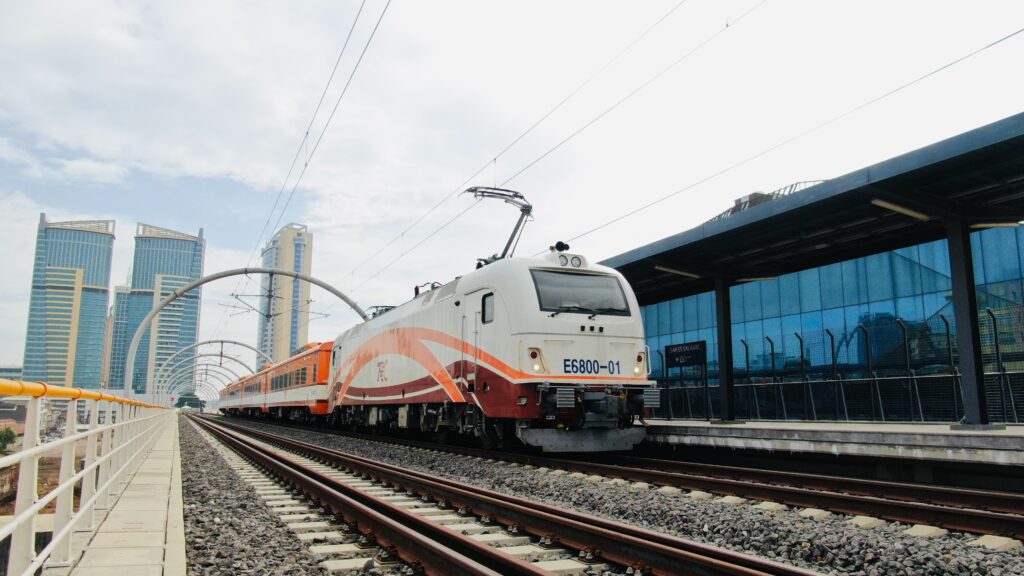

Tanzania’s investment in the SGR was born out of economic necessity, reducing transport costs, improving logistics and strengthening regional trade. Yet as the network expands inland and outward towards neighbouring countries, it is increasingly emerging as a powerful enabler of regional tourism, positioning Tanzania not only as a destination in its own right, but as the principal gateway to the Great Lakes region.
Dar es Salaam has long served as East Africa’s maritime anchor, linking landlocked neighbours such as Burundi, Rwanda, Uganda and the Democratic Republic of Congo (DRC) to global markets. The SGR extends this historic role inland, transforming the port city into the starting point of a regional tourism corridor that reaches deep into the continent.
By linking the coast to Morogoro and Dodoma, with works ongoing to extend the line to Tabora, Isaka and Mwanza, and with planned connections to Kigoma and Musongati, the railway is laying the foundation for seamless travel between the Indian Ocean and the heart of Central Africa. For international visitors, this opens a rare opportunity: to enter Africa through Tanzania and continue overland by rail across multiple countries, landscapes and cultures.
As rail connections to Burundi and eastern DRC take shape, Tanzania is steadily emerging as the preferred transit and staging country for regional travel, conferences, trade fairs and cross-border tourism circuits.
Time, cost and confidence: tourism’s quiet accelerators
Tourism across Africa has often been constrained not by a lack of attractions, but by distance, cost and unpredictability. The SGR directly addresses these challenges.
Travel time between Dar es Salaam and Dodoma has been reduced from up to ten hours by road to approximately three, while comfort, safety and reliability have improved significantly. For tourists, this means fewer logistical compromises and greater confidence to explore beyond traditional routes.
For regional travellers, from Kampala, Kigali, Bujumbura or Goma, the SGR strengthens Tanzania’s appeal as both an entry and transit point. Flights into Dar es Salaam followed by fast, affordable rail journeys inland offer a compelling alternative to congested road corridors.
The result is a gradual but meaningful shift: Tanzania is no longer merely a destination at the edge of regional itineraries, but a central hub around which regional travel is increasingly organised.
The railway’s regional significance lies not only in where it goes, but in what it enables.
As freight corridors stimulate trade between Tanzania and its neighbours, parallel tourism opportunities are emerging. Business travellers, traders and officials moving across borders create demand for hotels, restaurants and cultural experiences. Many of these travellers become tourists by extension, extending their stays, exploring cities and returning with families.
In the longer term, the SGR opens the door to multi-country tourism products: coastal tourism in Tanzania combined with inland cultural heritage, lake tourism around Lake Victoria and Lake Tanganyika, and onward journeys into Central Africa. Such regional packages have long been discussed, but rarely practical at scale.
Rail connectivity makes them viable.
Tourism gains amid major infrastructure investment
Transformative infrastructure comes with a price tag that matches its ambition. Tanzania’s SGR network, planned to run from the Indian Ocean to Lake Victoria and beyond, represents one of Africa’s most substantial railway investments.
According to official figures, the cost of constructing the first main phases of the line from Dar es Salaam towards Mwanza has been estimated at around USD 10 billion (approximately Tanzanian shillings 23.3 trillion), covering more than 1,200 kilometres of track. National budget reports indicate that over TSH 10.6 trillion has already been committed, reflecting the scale of public investment in building the project’s backbone.
Beyond the domestic network, regional extensions, such as links into Burundi and the DRC, require additional financing. A planned cross-border segment connecting Uvinza in western Tanzania to Musongati in Burundi is estimated to cost USD 2.15 billion, underscoring both Tanzania’s ambition and growing regional buy-in.
These investments are being financed through a combination of government resources, commercial borrowing and support from development banks and export credit agencies, a common approach for infrastructure of this scale in emerging markets.
At first glance, such figures may seem distant from the experience of individual travellers. Yet the cost of building the SGR must be understood in light of the value it unlocks, particularly for tourism.
Local lives, regional impact
Along the railway corridor, the regional story becomes deeply personal. In Dodoma, conference and business tourism is growing as the capital becomes easier to reach from both the coast and neighbouring countries. In Morogoro and Tabora, small hotels, restaurants and service businesses are benefiting from increased domestic and regional travel.
Employment generated during construction and operations, tens of thousands of jobs directly and indirectly, has strengthened household incomes and local enterprise. These communities are now better positioned to participate in tourism value chains, from accommodation and transport to food supply and cultural services.
For many Tanzanians, the SGR has also normalised rail travel as a modern, reliable option. That cultural shift matters: domestic tourism often provides the foundation upon which international tourism grows.
Tanzania’s SGR aligns closely with broader regional integration agendas within the East African Community (EAC) and the Southern African Development Community (SADC). By reducing transport costs and improving efficiency, it supports not only trade, but also the movement of people, an essential ingredient for regional tourism growth.
The railway complements investments in ports, airports and national airlines, creating a multi-modal transport ecosystem that enhances Tanzania’s competitiveness as a regional hub. For international tourists, this translates into smoother arrivals, easier onward travel and a more coherent journey.
Crucially, the emphasis on modern standards, digital systems, improved customs procedures and accessible infrastructure helps align Tanzania with global expectations while responding to regional realities.
Beyond infrastructure, towards integration
Tanzania’s wildlife, beaches and landscapes remain its greatest draw. What the SGR adds is integration: between coast and interior, between Tanzania and its neighbours, and between tourism and trade.
For the international visitor, the story of the SGR is not simply about speed or steel. It is about a country leveraging its geography to bring a region closer together. As modern trains continue to roll westward and across borders, Tanzania is quietly redefining itself, not just as a destination, but as the gateway through which regional tourism in East and Central Africa can truly flourish.
Notes to Editors
• This article positions Tanzania’s Standard Gauge Railway not primarily as a transport or engineering project, but as a strategic enabler of regional tourism integration across East and Central Africa. It reframes infrastructure investment through a tourism and mobility lens, highlighting second-order economic effects rather than construction milestones alone.
• The piece is policy-relevant and regionally framed. It speaks directly to audiences interested in infrastructure economics, regional integration, tourism development and trade facilitation, including policymakers, development finance institutions, tourism boards and private sector investors.
• All financial figures cited are drawn from official government statements and budgetary disclosures, using rounded estimates to reflect scale rather than exact project accounting. The article intentionally links large capital outlays to downstream value creation, particularly in tourism, services and local enterprise.
Media Contact
Information Services Department and Office of the Chief Government Spokesman
E-mail: maelezotv@gmail.com
Phone: +255 754 750 765, +255 698 856, +255 759 479 714, +255 713 381 904
Availability: EAT, UTC +3
ENDS