
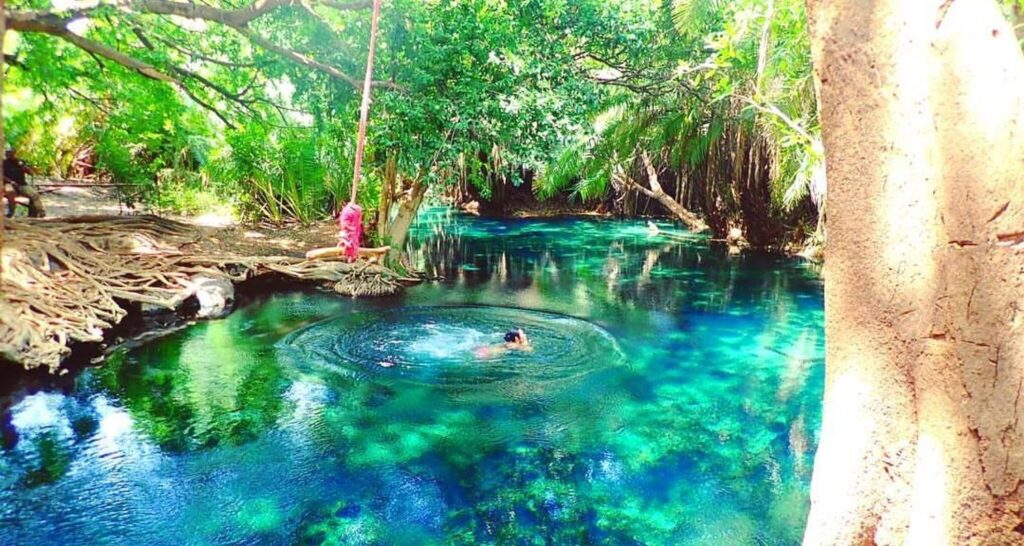
Beyond its dramatic beauty, the waterfall tells a deeper story about how tourism is reshaping livelihoods in a small mountain village that has turned its natural and cultural heritage into a growing source of employment, economic resilience and environmental conservation.
Perched at an altitude of about 1,500 metres, the waterfall is fed by streams flowing from the forest ecosystems surrounding Africa’s highest mountain. The cascade drops between 70 and 90 metres into a cold natural pool surrounded by thick vegetation and cooled by drifting mountain mist.
For visitors, the journey to the site is part of the attraction. Guided treks lasting between 30 and 45 minutes wind through banana plantations, coffee farms and narrow village footpaths that offer a glimpse into daily life on the fertile slopes of Kilimanjaro.
But unlike many tourism destinations built around passive sightseeing, Materuni’s appeal lies in the interaction between visitors and the local community.
“This is not just a walk,” said Elias Mushi, a local guide who has spent years leading tourists through the village trails.
“As we walk, we explain our crops, our traditions and our way of life. By the time visitors reach the waterfall, they understand the story of Materuni,” he said.
That connection between tourism and local life is increasingly attracting travellers searching for more authentic and sustainable experiences, reflecting a broader global shift in tourism trends away from conventional package tourism toward cultural immersion and eco-tourism.
While Tanzania is internationally known for iconic destinations such as Serengeti National Park and the beaches of Zanzibar, officials and tourism stakeholders say community-based destinations like Materuni are becoming increasingly important to the future of the country’s tourism industry.
According to Tanzanian tourism authorities, the sector contributes more than 17 percent of the country’s gross domestic product and supports over 1.5 million jobs. Policymakers are increasingly seeking ways to ensure tourism revenues reach rural communities rather than remaining concentrated in large safari operations and urban centres.
Materuni’s rise as a tourism destination began gradually in the late 1990s and early 2000s as growing numbers of climbers and tourists visiting Mount Kilimanjaro began exploring nearby villages in search of cultural experiences.
Recognising the opportunity, residents organised community groups to guide visitors to the waterfall and demonstrate traditional Chagga coffee-making practices. Over time, those informal activities evolved into a structured community tourism model supported by local authorities and tourism stakeholders.
Today, much of the tourism economy in Materuni remains community-owned and locally managed.
Young residents work as guides, women’s groups prepare traditional meals for tourists, farmers supply local produce and cultural performers entertain visitors with songs and dances rooted in Chagga traditions.
The result has been the creation of a broad network of economic opportunities in a rural area where employment options were once limited.
“For young people, this place changed everything,” Mushi said. “Before, many of us believed we had to leave for towns to find jobs. Now we can stay here, work and support our families.”
The economic impact is particularly visible among women, many of whom have developed small businesses linked to tourism, including food preparation, handicrafts and hospitality services.
“Tourism has helped me support my family and pay school fees,” said Maria Kweka, a local entrepreneur involved in village tourism activities.
“It has given me confidence and financial stability,” she said.
Central to the Materuni experience is coffee, which remains deeply tied to the culture and identity of the Chagga people who have lived on the slopes of Kilimanjaro for generations.
Visitors are invited to participate in the traditional coffee-making process, from harvesting ripe coffee cherries to roasting, pounding and brewing the beans using traditional methods. The experience is often accompanied by singing and rhythmic chants performed by villagers, transforming the activity into both a cultural lesson and a communal celebration.
“Coffee is our heritage,” said small-scale farmer Neema Kimaro.
“When visitors take part in the process, they understand the work and tradition behind every cup. That creates appreciation for what we produce,” she said.
Residents say combining tourism with agriculture has strengthened the village’s economic resilience by diversifying sources of income in an area historically dependent on coffee farming and vulnerable to fluctuating global commodity prices.
The tourism economy has also encouraged the growth of related businesses, including handicrafts, guiding services and small-scale accommodation facilities catering to international visitors.
At the same time, environmental conservation has become central to the village’s development strategy.
The waterfall depends on reliable water flows from the forests surrounding Mount Kilimanjaro, making environmental protection essential to both tourism and agriculture.
Local awareness campaigns and village by-laws encourage residents and visitors to protect water sources, avoid littering and preserve vegetation along trekking routes.
“Without this environment, there is no tourism,” said Agnes Mrema, a community tourism organiser.
“Protecting the forest and water means protecting our future and the future of our children,” she said.
The link between conservation and livelihoods has strengthened community support for protecting the surrounding ecosystem, residents say.
Healthy forests ensure reliable water supplies for farming and maintain the natural beauty that attracts visitors to the area.
Analysts say Materuni reflects a growing international focus on sustainable and community-based tourism models that seek to distribute economic benefits more equitably while preserving cultural heritage and reducing environmental damage.
Across Africa and other developing regions, governments and development agencies are increasingly promoting eco-tourism as a tool for rural development, poverty reduction and conservation.
Materuni’s proximity to Mount Kilimanjaro also gives it strategic importance within Tanzania’s broader tourism industry. Many climbers and travellers visiting the mountain extend their stays to experience village life, creating additional economic activity outside the country’s traditional safari destinations.
Peter Nkya, a tourism officer in Moshi, said travellers increasingly want experiences that connect them with local communities and culture.
“Tourists today are looking for more than sightseeing,” he said.
“They want experiences that feel personal and authentic. Places like Materuni provide that while helping local communities benefit directly from tourism.”
However, the village also faces growing challenges as visitor numbers increase.
Poor road infrastructure, especially during rainy seasons, continues to affect access to the area. Community leaders also say more investment is needed in training, facilities and marketing to meet international tourism standards while ensuring growth remains sustainable.
There are also concerns about maintaining the village’s cultural identity and ensuring tourism revenues continue to benefit residents broadly rather than a small number of operators.
“We want development, but we must also protect what makes Materuni unique,” Nkya said.
“Our culture and environment are the foundation of this tourism.”
For visitors like Daniel Reeves from the United Kingdom, the authenticity of the experience is what makes the village stand out.
“I have visited many places in Africa, but this feels different,” he said.
“Here, you are not just looking at nature. You feel connected to the people and the community.”
As Tanzania continues expanding and diversifying its tourism industry, Materuni is increasingly being viewed as a model for how rural communities can use tourism to create jobs, strengthen local economies and protect cultural and environmental heritage.
For residents of the village, the waterfall has become far more than a scenic attraction.
It represents a shift from economic uncertainty toward opportunity and sustainability in a rapidly changing world.
And in the steady roar of falling water beneath the forests of Mount Kilimanjaro, Materuni continues to demonstrate how tourism can transform not only landscapes, but lives.
Notes to Editors
· Materuni Waterfalls is located on the southern slopes of Mount Kilimanjaro, approximately 15 kilometres from Moshi in northern Tanzania.
· The site sits at an altitude of about 1,500 metres above sea level and features a waterfall drop estimated between 70 and 90 metres.
· Tanzania’s tourism sector contributes over 17% to national GDP and supports more than 1.5 million jobs, making it one of the country’s leading economic sectors.
Media Contact:
Information Services Department and Office of The Chief Government Spokesman
E-mail: maelezotv@gmail.com
Phone: +255 754 750 765; +255 754 698 856; +255 759 714; +255 713 381 904
Availability: EAT, UTC +3

