
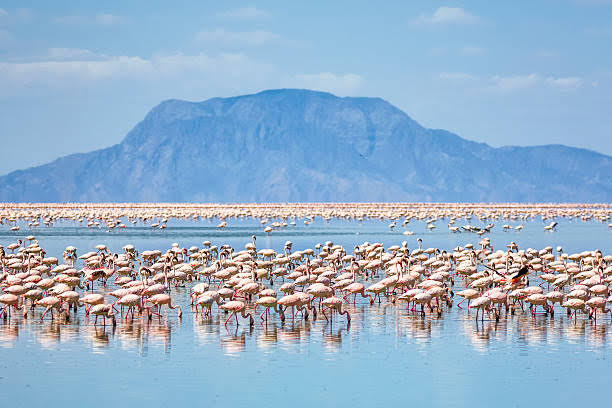
From the flamingo-filled waters of Lake Natron to the wildlife-rich plains of Tarangire National Park, these ecosystems flourish within an environment defined by tranquillity, safety and coordinated conservation efforts.
As highlighted in the original feature, northern Tanzania presents a striking ecological contrast, where volcanic landscapes and seasonal wildlife migrations coexist in delicate balance. Yet what sustains this balance is not only nature’s resilience, but also the broader national context in which it exists.
Tanzania has, for decades, maintained a reputation as one of Africa’s most peaceful and politically stable countries an essential foundation for conservation, tourism and community livelihoods.
In places such as Lake Natron, where thousands of flamingos gather annually to breed, the uninterrupted cycles of nature depend heavily on a secure and well-governed environment. The absence of conflict, coupled with structured environmental policies, allows such fragile ecosystems to thrive undisturbed.
Similarly, Mount Oldonyo Lengai’s dramatic volcanic activity unfolds within a landscape that remains accessible and safe for researchers, tourists and surrounding communities alike.
Further south, Tarangire National Park exemplifies how peace and environmental management intersect to sustain rich biodiversity. During the dry season, the park transforms into a sanctuary for wildlife, with elephants, zebras and wildebeest converging around permanent water sources.
This seasonal migration is not merely a natural occurrence; it is supported by deliberate conservation strategies, inter-district cooperation and long-term planning efforts made possible by a stable governance framework.
The role of institutions such as the Tanzania National Parks Authority, alongside local communities and development partners, underscores how security and environmental sustainability are closely intertwined.
Collaborative initiatives to protect key wildlife corridors, including Kwakuchinja and the Simanjiro Plains, demonstrate a proactive approach to safeguarding biodiversity while minimising human-wildlife conflict. These efforts are reinforced by a broader national commitment to peace, ensuring that conservation policies are implemented consistently and effectively.
Moreover, the country’s safety and stability significantly enhance its appeal as a global tourism destination. Visitors to Tarangire experience close encounters with elephants beneath ancient baobab trees, observe rare species and witness vibrant birdlife all within a secure and welcoming environment. Initiatives such as the Royal Tour have further elevated Tanzania’s profile as a peaceful destination where natural beauty meets cultural richness.
Importantly, the benefits of this stability extend beyond tourism revenues. Peaceful conditions enable local communities, including the Maasai, to preserve cultural traditions that are deeply intertwined with the natural environment.
Baobab trees, for instance, are not only ecological assets but also cultural symbols embedded in folklore and oral history. This harmony between people and nature reflects a broader national ethos of coexistence, unity and shared responsibility.
At a strategic level, Tanzania’s sustained peace has direct implications for environmental resilience. Conservation measures, such as the development of artificial dams and solar-powered boreholes in Tarangire, demonstrate forward-looking adaptation to climate variability. These interventions ensure that wildlife continues to thrive even during prolonged dry periods, reinforcing the park’s role as a refuge within the northern ecosystem.
The ecological link between Lake Natron and Tarangire further illustrates how interconnected systems benefit from a stable national framework. Flamingos depend on Natron’s alkaline waters for breeding, while large mammals rely on Tarangire’s rivers and pastures for survival. This continuity is sustained by coordinated policies, secure landscapes and the absence of disruptions that could otherwise fragment these ecosystems.
Ultimately, northern Tanzania’s dry-season haven is more than a natural spectacle; it is a reflection of a nation that has successfully aligned peace, conservation and development. The country’s tranquillity provides the foundation upon which wildlife thrives, communities coexist and tourism continues to grow.
In a region where environmental and socio-political pressures often intersect, Tanzania stands out as a model of how stability can translate into sustainable natural resource management. The scenes described from elephants gathering along the Tarangire River to flamingos colouring Lake Natron pink are not merely products of nature, but outcomes of a peaceful and secure environment that allows both ecosystems and people to prosper.
As Tanzania continues to promote its natural attractions on the global stage, maintaining this peace remains essential. It is this enduring stability that ensures the country’s landscapes remain not only breathtaking but also resilient, accessible and sustainably managed for generations to come.
Notes to Editors
· Lake Natron is East Africa’s primary breeding site for flamingos, while Tarangire National Park is renowned for its large elephant herds and dry-season wildlife migrations.
· Mount Ol Doinyo Lengai, an active volcano, contributes to the region’s distinctive volcanic landscape and ecological diversity.
· Conservation and park management are overseen by the Tanzania National Parks Authority (TANAPA) in collaboration with local communities and development partners.
Media Contact:
Information Services Department and Office of The Chief Government Spokesman
E-mail: maelezotv@gmail.com
Phone: +255 754 750 765; +255 754 698 856; +255 759 714; +255 713 381 904
Availability: EAT, UTC +3